
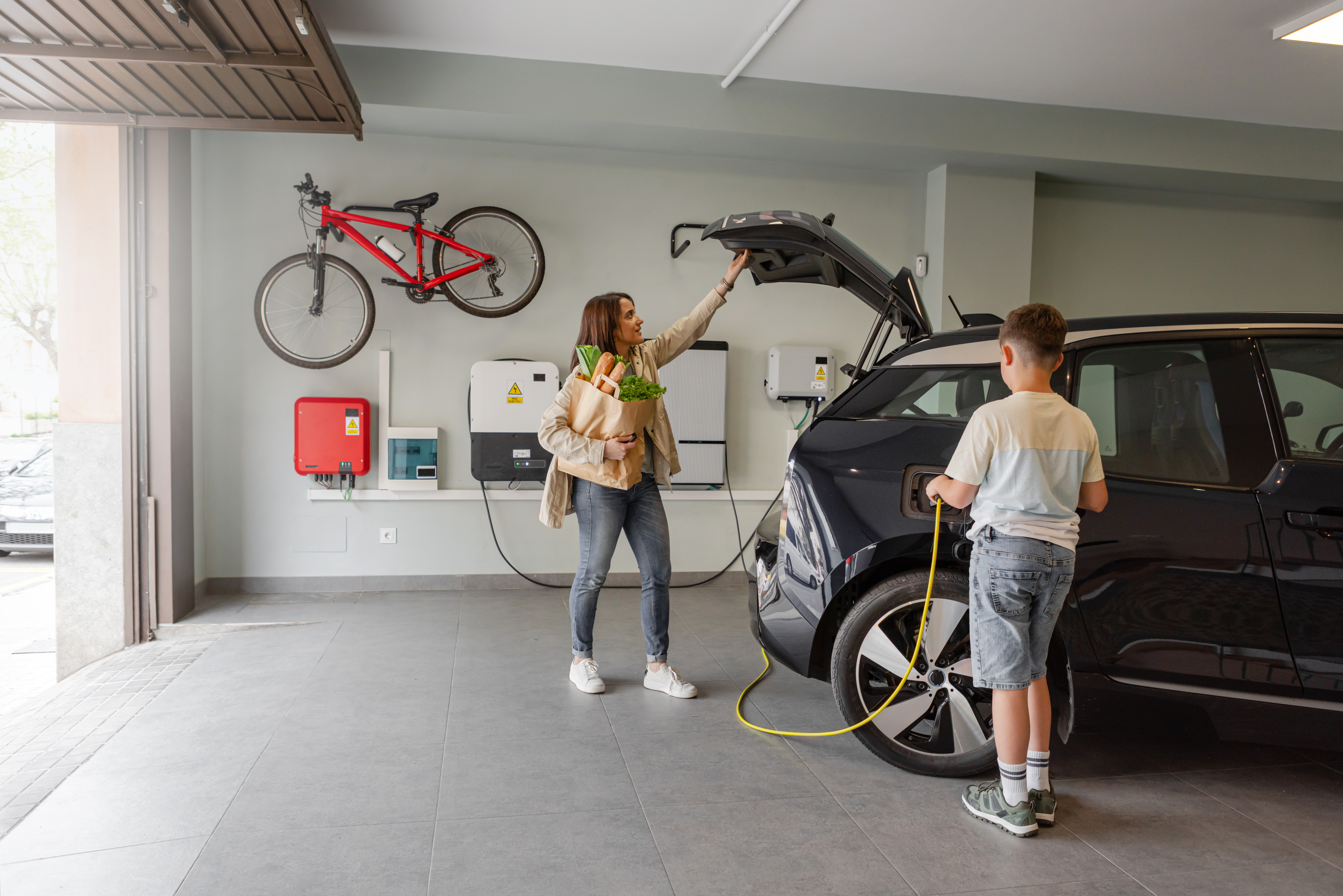
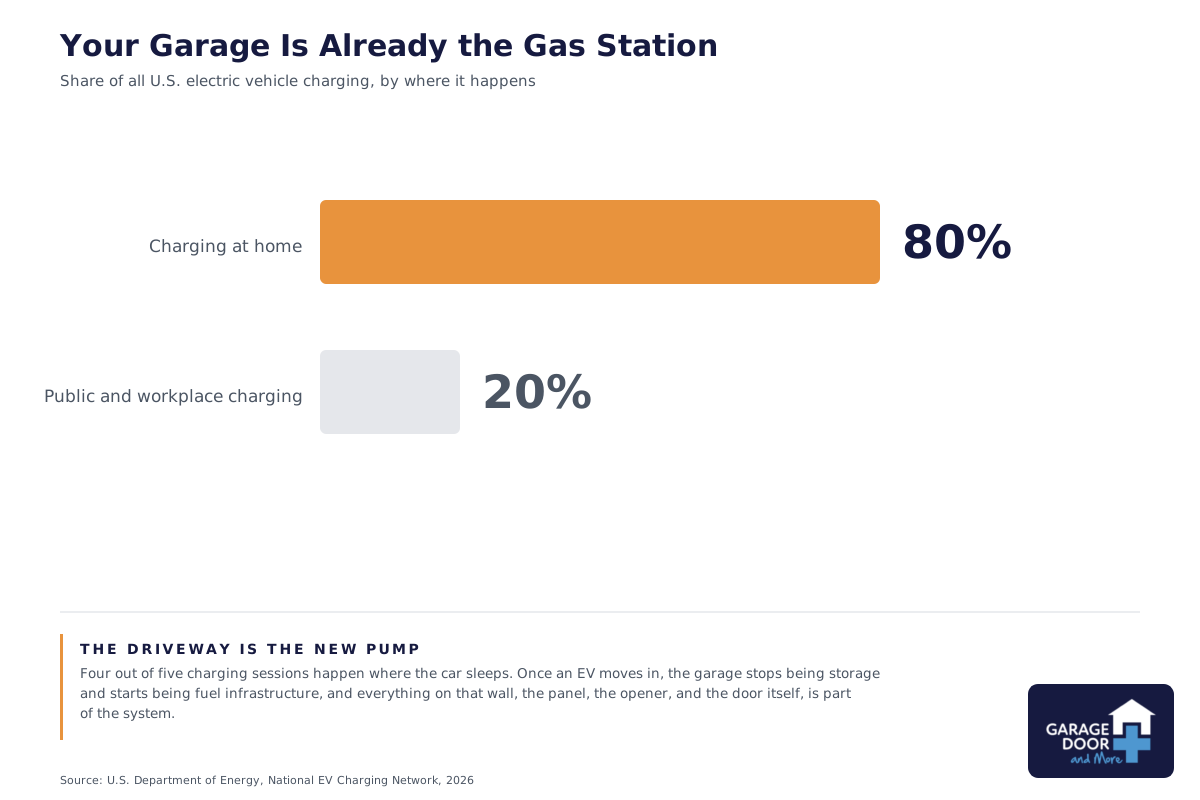
The day an electric vehicle backs into your garage, that garage becomes a fuel station. About 80 percent of all EV charging in the United States happens at home, according to the U.S. Department of Energy, which means the room most builders treated as a drywall box with a light bulb now does the job a gas station used to do. We hang and service garage doors for a living, and over the past few years, we have watched the same scene repeat across Charlotte driveways: the car arrives, the electrician follows, and the door, the opener, and the insulation get asked to do work nobody planned for. This article walks through what to get right, in order, and where the honest money goes.
Start With the Circuit, Not the Charger
The charger you can buy in an afternoon; the electricity behind it is the real project. A Level 1 setup plugs into a standard 120-volt outlet and adds roughly 2 to 5 miles of range per hour, which suits a plug-in hybrid and almost nobody else. A Level 2 charger runs on a 240-volt circuit, the same class of power as your dryer, and adds 10 to 20 miles of range per hour. Argonne National Laboratory puts that in practical terms: a Level 2 unit can restore up to about 250 miles over a 10-hour overnight charge, which covers a week of commuting in one sleep.
That circuit is not a casual add. The National Electrical Code treats EV charging as a continuous load under Article 625, so the circuit gets sized at 125 percent of the charger’s output. A 48-amp charger rides a 60-amp breaker, and a panel already feeding an HVAC system, a water heater, and a kitchen may not have 60 amps to give. Some homes need a load calculation; some need panel work.
Here is our first position, and it costs us nothing to say because we do not sell chargers: do not buy the charger before a licensed electrician has looked at your panel. The same bright line we draw at torsion springs applies here in reverse. We will not send a customer up a ladder to swap a spring under tension, and no electrician worth hiring will tell you a 240-volt continuous-load circuit is a weekend project. Garage doors are our trade. High-amperage circuits are theirs. Hire accordingly.
What the Install Costs, and the Tax Credit That Just Expired
Argonne National Laboratory reports the average U.S. cost to install a Level 2 home charger, equipment and labor together, at about $1,800 as of 2025. The single biggest variable is distance: every foot of heavy-gauge wire between your panel and the charger location adds cost, which is one more reason the charger’s spot on the wall is a planning decision, not an afterthought.
Now the part most of the internet has not caught up with. The federal 30C credit, which returned 30 percent of charger and installation costs up to $1,000 for homes in eligible census tracts, expired for equipment placed in service after June 30, 2026. It is gone as of two weeks before this article’s publication, and no extension has passed. Page one of Google is still telling homeowners to claim it. Budget the full number instead, and check Duke Energy and other utility programs for rebates that survive, because those change on their own schedules.
Give the Charger a Wall the Door Never Uses
Chargers typically mount 36 to 48 inches off the floor, within reach of the car’s charging port, and installers will steer you toward the wall nearest the panel because it is the cheapest run. Before you agree, look up. A sectional garage door owns more of your garage than you think: vertical track on both sides, horizontal track overhead, and a torsion assembly loaded with several hundred pounds of stored force above the opening. A charger mounted inside the door’s travel path, or where the cable can drape across the threshold, is a charger waiting for an accident.
“Give the charger its own wall. Anything mounted in the track’s path or hanging near the spring line takes a hit sooner or later, and a live 240-volt box takes that hit worse than a shelf full of paint cans does.” The Technicians at Garage Door and More
Three placement rules from our side of the trade. First, keep the unit and its holster clear of both vertical tracks and the door’s full travel, including the overhead sweep. Second, keep the cable off the floor on a hook or retractor; a cable pinched under the bottom seal chews through weather stripping and can hold the door off its seal all night. Third, mind the photo-eye sensors mounted about six inches off the floor on each side of the opening. A charging cable looped through that sight line will stop the door from closing, and we have taken more than one “broken sensor” call that turned out to be a cord. In a two-car garage, the wall between the bays is usually the right answer: either vehicle can reach it, and the door hardware never comes near it.
An Insulated Door Is Battery Equipment Now
A lithium battery is a chemical machine, and cold chemistry runs slow. Real-world data from Recurrent’s 2025-2026 winter study of more than 30,000 U.S. vehicles shows the average EV keeps 78 percent of its maximum range at 32 degrees and 70 percent at 20 degrees, with the best model holding 88 percent at freezing and the worst just 69 percent. The car loses twice: the cold pack delivers less energy, and the car spends charge heating the battery and the cabin before it moves a foot.
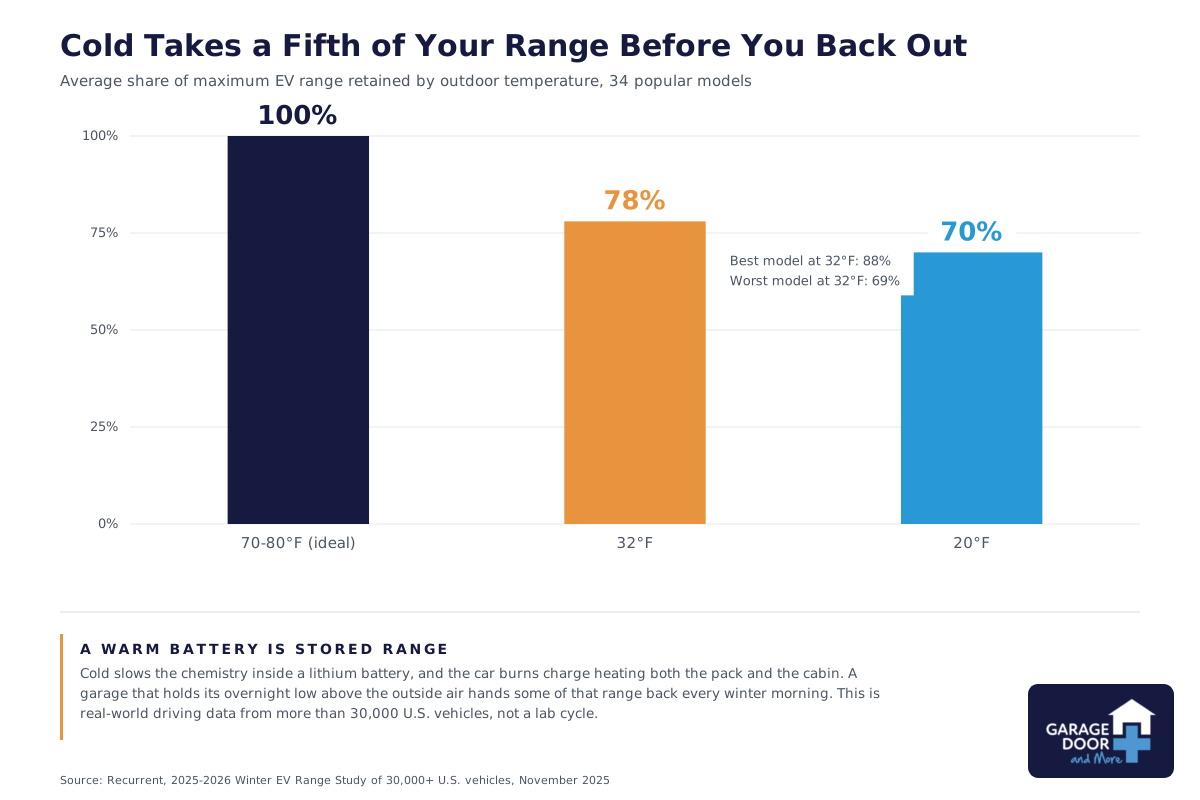
Charlotte is not Minneapolis, but January and February mornings below freezing are routine here, and that is exactly the range where the curve starts to bite. This is why we now tell EV owners that door insulation is equipment, not comfort. An attached garage with an uninsulated, builder-grade door tracks the outdoor low all night. A door with a real garage door R value, paired with intact weather stripping for garage doors around the perimeter and along the bottom seal, holds the garage above that low. Recurrent’s own guidance backs the logic: keep the car plugged in so it warms the pack from wall power, and precondition before you drive. A warmer garage means the wall has less warming to pay for. Our garage winterization guide covers the rest of the envelope.
An honest limit belongs here. A door upgrade will not hold an unheated garage at 70 degrees, and it does not need to. Every degree the garage holds above the overnight low is charge the car never spends warming itself, morning after morning, for the life of the vehicle.
“An uninsulated door on an attached garage is a hole in the side of your house the size of a wall. Park a battery on wheels behind it and you start paying for that hole every cold morning.” The Technicians at Garage Door and More
The Opener Joins the Electrical Conversation
The charger gets a dedicated circuit; your opener should not share it. That is not our rule, it is the point of a dedicated continuous-load circuit, and it saves you from the nuisance trip that leaves a half-charged car behind a door that will not lift.
Power outages deserve more thought once an EV lives in the garage, because an outage now takes out your fuel supply and your biggest exit at the same moment. Every opener has a red manual release cord, and every driver in the house should know how to open garage door manually before the first storm, not during it. Better still, a garage door opener battery backup lifts the door dozens of times on stored power, which is why we consider it a necessary spec, not an option, for any EV household with an attached garage.
Connectivity earns its keep here too. A smart garage door opener confirms from your phone that the door actually closed after you plugged in for the night, and a LiftMaster garage door opener powered by myQ can share alerts with the rest of the house. If your opener predates safety-reversal standards or strains on an insulated door’s added weight, compare current residential garage door openers before the charger install, so the electrician can plan the garage’s circuits once instead of twice.
The Curve Says Get the Garage Ready Now
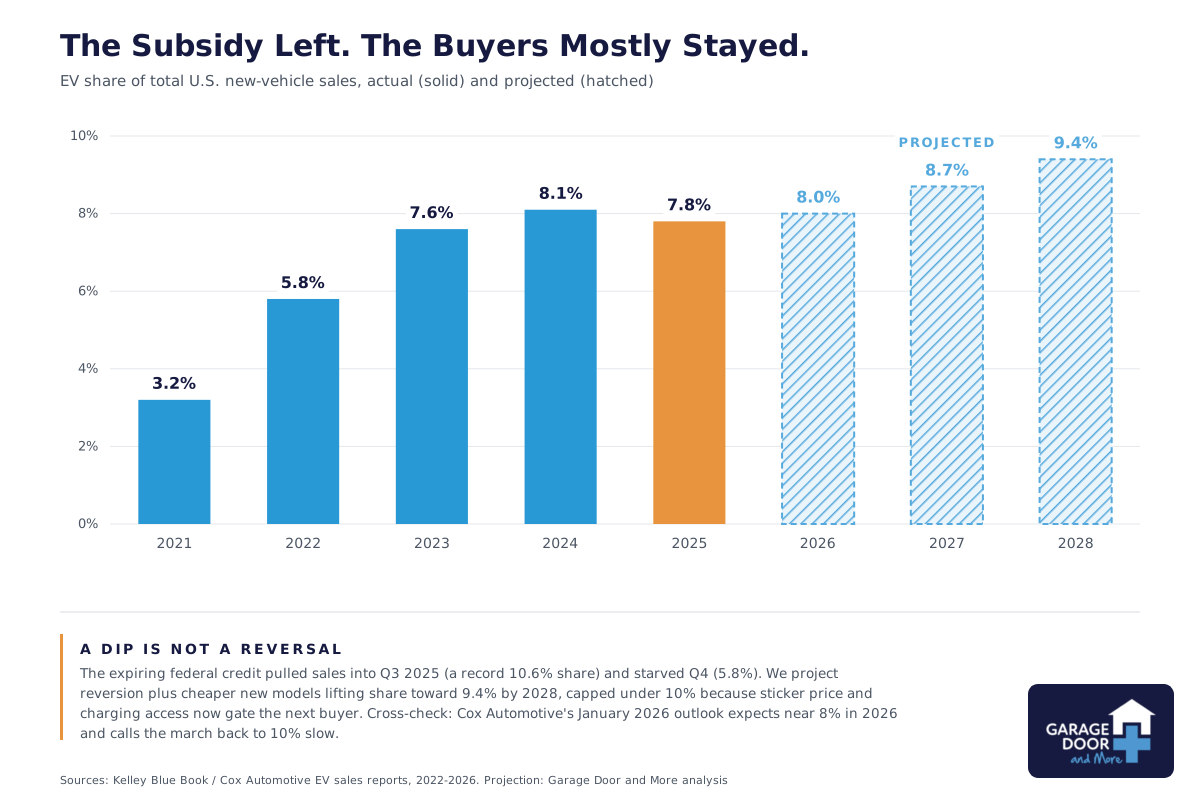
The national numbers took a hard turn in late 2025, and it is worth reading them honestly rather than through a headline. EVs were 3.2 percent of U.S. new-vehicle sales in 2021, 5.8 percent in 2022, 7.6 percent in 2023, and 8.1 percent in 2024. Then the federal purchase credit expired: buyers rushed in during the third quarter of 2025 for a record 10.6 percent share, the fourth quarter collapsed to 5.8 percent, and the full year settled at 7.8 percent. Cox Automotive’s January 2026 outlook expects share near 8 percent this year and calls the climb back toward 10 percent slow. A subsidy cliff moved sales around in time; it did not delete the buyers.
North Carolina’s picture is steadier, because registrations measure the fleet on the road rather than one year’s sales. The state’s NCDOT registration data shows roughly 10,000 zero-emission vehicles in 2018, 80,000 by late 2023, and more than 100,000 during 2024. Cars stay registered for years, and off-lease EVs from the record 2023 through 2025 model years are now being resold into second and third households, which puts a floor under the count even in a slow sales year. We project the fleet near 170,000 by 2028. That is real growth, and it is also far short of the 1.25 million-by-2030 goal in Executive Order 246; we see nothing in the data that puts the state on that pace, and we would rather say so than repeat the target as a forecast.
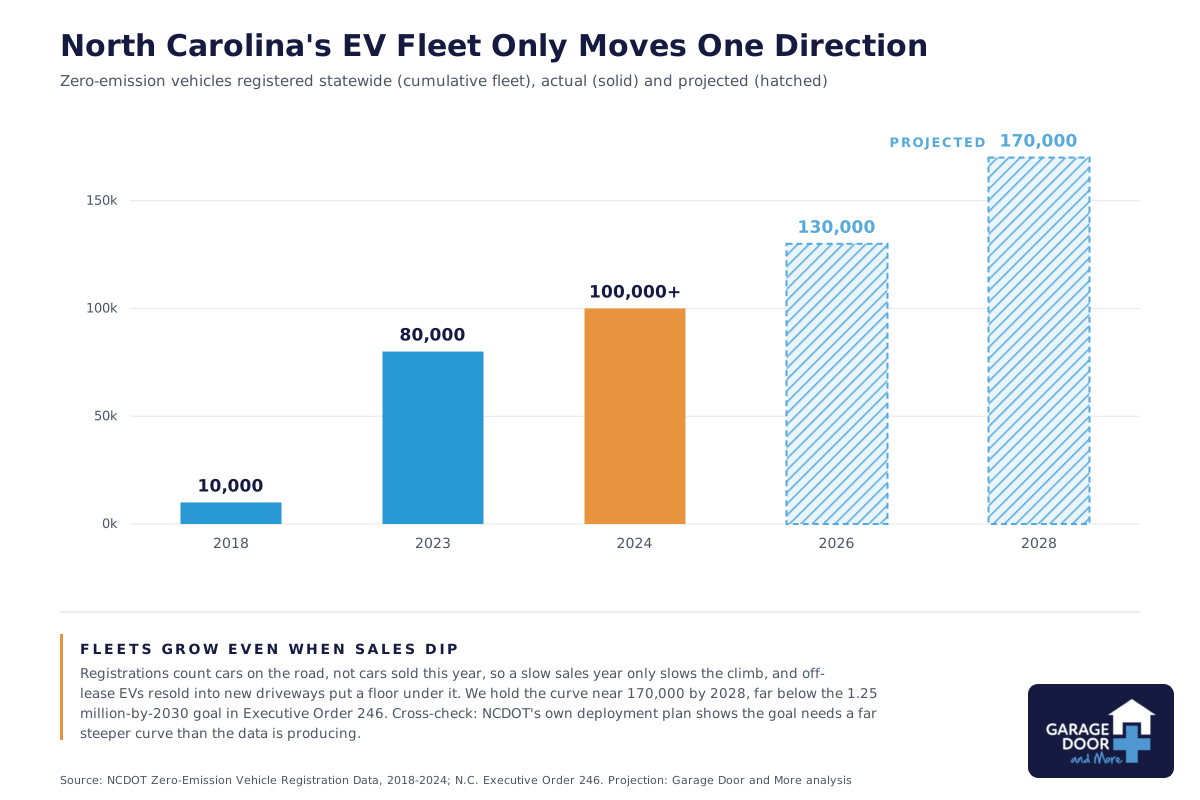
What does a door company want you to take from two adoption charts? Timing. Every one of those registrations is a garage that needs a circuit, a placement decision, and in many cases an insulation upgrade, and electricians in the Charlotte metro are already booking that work in waves. Preparing the garage before the car arrives costs the same as preparing it after, minus the weeks of Level 1 trickle-charging in between.
The Resale Math Backs the Visible Upgrade
If the door itself is due, the numbers are on your side. Zonda’s 2025 Cost vs. Value Report puts a national-average garage door replacement at $4,672 in job cost against $12,507 in estimated resale value, a 268 percent return that ranked first among the 28 projects tracked, ahead of a steel entry door at 216 percent, stone veneer at 208 percent, a minor kitchen remodel at 113 percent, and a midrange bath remodel at 80 percent. The South Atlantic region that includes Charlotte came in at 228 percent. One caution we insist on printing: those resale values are estimates from surveyed real estate professionals, not measured sale prices, so treat the direction as solid and the decimal as soft.
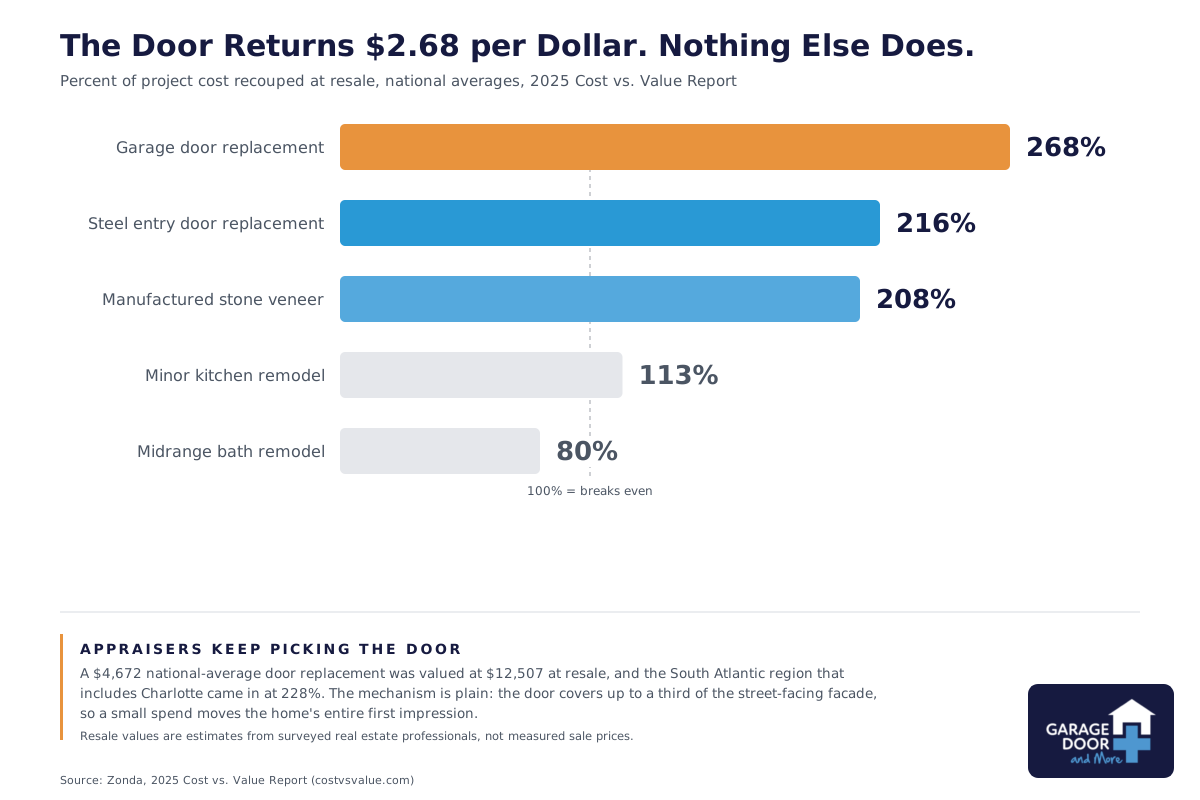
For an EV household the case stacks: the same garage door replacement that leads the resale table is also the moment you buy the insulation the battery wants, and the 2025 report notes the top-returning doors were insulated steel at R-12 or better. The question does a new garage door increase home value has a documented answer; whether yours is the door that should be replaced is a separate question, which brings us to the part where we talk you out of spending money.
What We Would Tell You in Your Driveway
Buying an EV is not, by itself, a reason to replace a garage door. Steel doors commonly run two decades or more, and how long do garage doors last depends more on spring cycles and maintenance than on what parks behind them. If your door is under 15 years old with sound panels and healthy hardware, keep it: fresh perimeter and bottom-seal weather stripping, an insulation assessment, and a proper garage door maintenance visit will get the garage EV-ready for a small fraction of a new door. That advice costs us a door sale, and it is the same advice we would give our own families, which is exactly why you can trust the rest of this article.
Replace when the math says so: an uninsulated builder-grade door on an attached garage, rot or delamination at the bottom panels, a door too far gone to seal, or an opener and door pair old enough that you would be spending repair money twice. Then do the sequencing right. Electrician first for the load calculation and circuit, charger placed on a wall the door never touches, door and opener decisions made once, together.
The car turned your garage into infrastructure. We can make sure the door is ready to act like it.