
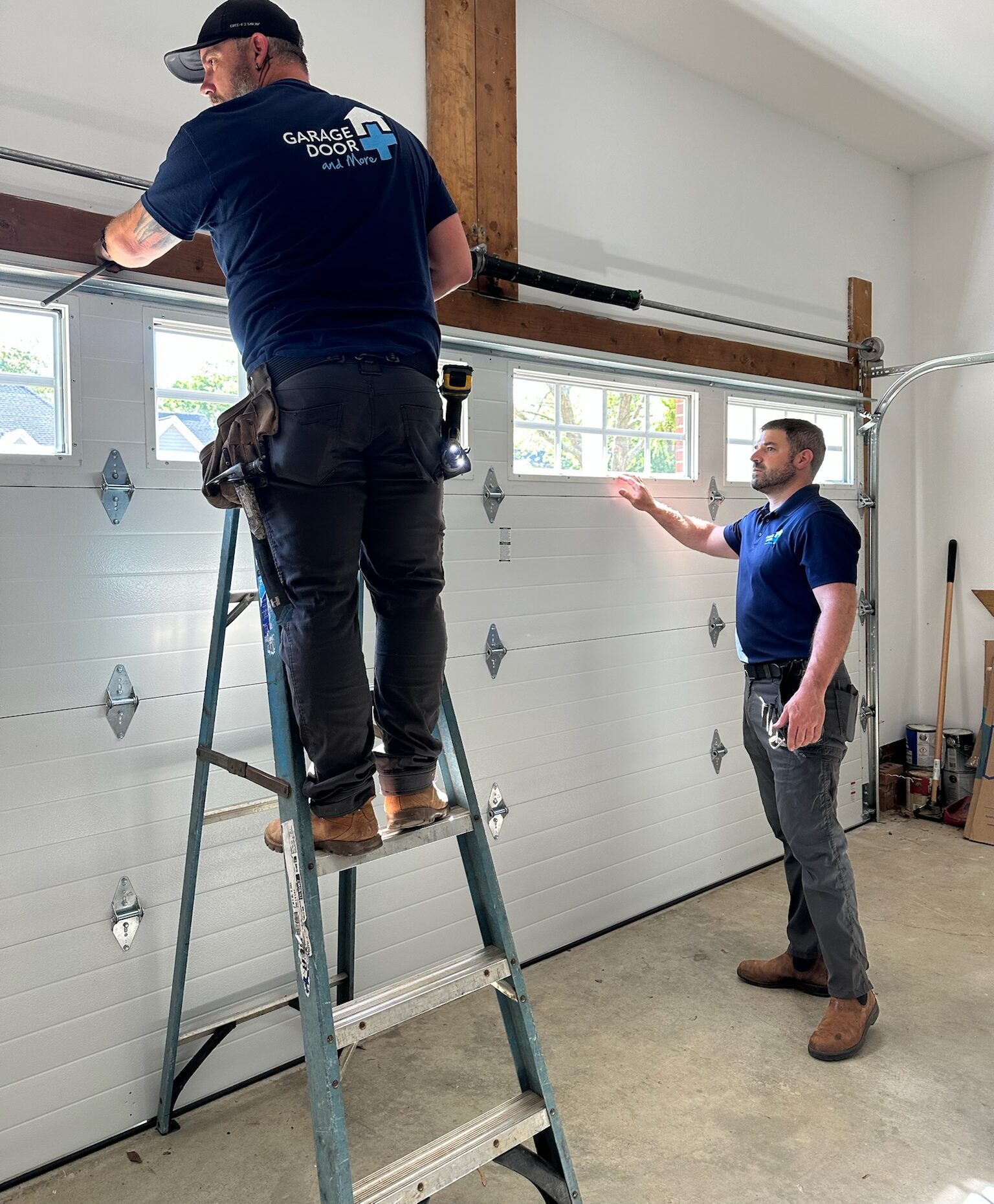
If your garage door suddenly refuses to open, or the opener sounds like it’s struggling while the door barely moves, a broken spring is often the reason. It’s one of the most common garage door repairs we handle at Garage Door and More, and it’s also one of the most misunderstood. Homeowners sometimes assume the opener is broken, or they try to force the door manually, both of which can make the situation worse. Here’s what you’re dealing with, why it happens, and how to handle it safely.
What Does a Garage Door Spring Actually Do?
Your garage door weighs anywhere from 150 to 400 pounds depending on its size and material. The spring system is what makes it possible for the opener, or your own arm, to lift that weight with minimal effort. Springs store mechanical energy when the door closes and release that energy to counterbalance the door’s weight during opening. Without a functioning spring, you’re lifting the full weight of the door with nothing to offset it.
Residential garage doors use one of two spring types. Torsion springs sit horizontally above the door opening on a metal shaft, and they twist to store tension. Extension springs run along the horizontal tracks on either side of the door and stretch to create tension. Most modern homes have torsion springs because they last longer, operate more smoothly, and are generally safer when they break. To understand which system is in your garage and how they compare, see our detailed breakdown of torsion vs. extension springs.
How Do You Know If a Spring Is Broken?
A broken spring doesn’t always make a dramatic noise, though torsion springs can snap with a loud bang that sounds like something hit the garage. Other times, homeowners just notice the door won’t function normally. Here are the most reliable signs:
Signs pointing to a broken garage door spring:
- Door won’t open past a few inches: The opener engages and pulls, but the door only lifts 6 to 8 inches before the opener’s safety mechanism stops it. This happens because the opener senses excessive resistance.
- Visible gap in the spring: Torsion springs sit on a shaft above the door. If you can see a visible separation in the coil, the spring has broken.
- Door is extremely heavy to lift manually: Disconnect the opener and try lifting the door by hand. A door with a functioning spring should lift with reasonable effort and stay up on its own. If it won’t stay up or feels like dead weight, the spring is gone.
- Loud bang from the garage: A torsion spring releasing suddenly under tension makes a sound some describe as a gunshot or something falling. If you heard this while the door was closed and now it won’t open, the spring broke.
- Bent or bowed top section: When an opener tries to lift a door with a broken spring, it can pull on the top panel and cause it to bow or buckle before the safety reversal activates.
“The most common call we get is someone saying their opener sounds like it’s running but the door won’t open. Nine times out of ten, that’s a spring. The opener is doing its job; there’s just no spring to help it with the load. Forcing the opener repeatedly in that condition can burn out the motor.” — The Team at Garage Door and More
Why Do Springs Break? The Role of Charlotte’s Climate
Springs are rated by cycle count. Each time your door opens and closes, that counts as one cycle. A standard torsion spring is typically rated for 10,000 cycles, though higher-quality springs are available at 20,000 to 30,000 cycles. For a household that opens the garage door 4 times a day, a 10,000-cycle spring lasts roughly 7 years.
Charlotte’s humidity plays a real role in accelerating spring wear. Moisture promotes surface rust on the coils, which creates friction during operation and causes the metal to fatigue faster than it would in a drier climate. This is especially common in homes where the garage isn’t climate-controlled. For more on how local conditions affect spring longevity, our blog on why garage door springs break in Charlotte’s humid climate covers this in detail.
Common factors that shorten spring lifespan:
- High daily usage: Households with multiple cars or people who use the garage as a primary entrance put significantly more cycles on springs than those who use it once or twice a day.
- Lack of lubrication: Springs need periodic lubrication to reduce friction and slow corrosion. Neglected springs degrade faster regardless of cycle count.
- Improper tension settings: Springs that were installed with the wrong tension setting for the door’s weight are working harder than they should on every cycle.
- Temperature swings: Metal contracts in cold weather and expands in heat. Repeated thermal cycling, common in Charlotte’s transitional seasons, stresses the coils over time.
Why You Should Never Replace a Spring Yourself
Garage door springs are under hundreds of pounds of tension even when the door is in the closed position. A spring that breaks or slips during replacement can cause serious injury. The tools required to properly wind or unwind a torsion spring, winding bars, specifically, require technique and strength to use safely. Using the wrong tool or making an error during winding can cause the spring to release violently.
We address this in more detail on our page about why you should never repair a garage door yourself, but the short version is this: spring replacement is not a project where watching a tutorial makes you sufficiently prepared. The risk of injury is real, and the cost of professional replacement is not high enough to justify the exposure.
“We’ve responded to calls where homeowners attempted a spring replacement and ended up with injuries or a door that came completely off its tracks. The tension involved in a torsion spring is hard to appreciate until you’re standing in front of it. This is one repair that genuinely needs a professional.” — The Team at Garage Door and More
Torsion vs. Extension Spring Replacement: What Does Your Door Have?
Knowing your spring type matters when budgeting for replacement and setting expectations for the repair timeline.
Spring type comparison for replacement purposes:
| Factor | Torsion Spring | Extension Spring |
|---|---|---|
| Location | Above the door, on a metal shaft | Along the horizontal tracks, each side |
| Typical Cycle Life | 10,000–30,000 cycles | 7,000–15,000 cycles |
| Replacement Cost (Charlotte) | $150 – $300 (parts + labor) | $100 – $200 (per spring, parts + labor) |
| Safety When Broken | Contained on shaft, lower risk | Can thrash loose; safety cables required |
| Balance Quality | More consistent door balance | Can cause uneven lifting over time |
| Replace Both at Once? | Yes, both springs even if one breaks | Yes, both sides to maintain balance |
One question we hear often is whether to replace only the broken spring or both at the same time. We always recommend replacing both. Springs on the same door age at the same rate, so if one has broken, the other is close behind. Replacing both during a single service call saves you a second repair bill within months, and the cost difference is minimal since the labor is already on-site.
What to Do Right Now If Your Spring Is Broken
If you’ve identified or suspect a broken spring, the most important steps are straightforward:
Immediate steps when a spring breaks:
- Stop using the opener: Running the opener repeatedly against a non-functioning spring can burn out the motor or warp the top door panel. Disconnect it and leave the door in place.
- Don’t try to lift the door manually for daily use: While you can manually open the door in a true emergency, doing so repeatedly without spring tension puts strain on your back and on the door hardware.
- Keep vehicles in the garage if needed: If a car is trapped, our technicians can typically access it during a same-day or emergency service call without fully completing the repair first.
- Schedule service promptly: A broken spring doesn’t fix itself, and waiting extends how long your garage is non-functional.
How Long Does Spring Replacement Take?
For most residential doors, spring replacement takes between 45 minutes and 90 minutes depending on the spring type, door weight, and whether any related components need attention. Our team carries commonly sized torsion and extension springs on every truck, so the majority of jobs don’t require a follow-up trip for parts.
After replacing the springs, we balance and test the door through several full cycles, adjust tension as needed, and check the opener’s force settings to make sure everything is calibrated correctly with the new spring tension.
“We don’t just put the spring on and call it done. We balance the door, check the cables, look at the drums, and make sure the opener settings match the spring tension. Skipping those steps means the new spring works harder than it should and wears out faster.” — The Team at Garage Door and More
How Garage Door and More Can Help With Your Spring Repair
A broken spring stops your garage cold, but it’s a repair our team handles every day across Charlotte and the surrounding communities. Whether your door stopped working this morning or you’ve been managing a struggling opener for weeks, we can get it assessed and repaired with minimal disruption to your routine.
If you need broken garage door spring repair or have questions about upgrading to a higher-cycle spring for your level of use, reach out to Garage Door and More to schedule a service visit. We serve Charlotte and the surrounding areas with same-day availability on most repairs.