Your garage door relies on one of two spring systems to function: torsion or extension. Knowing which type you have affects everything from repair costs to safety concerns. Most Charlotte homeowners don’t think about their garage door springs until something breaks, but understanding the differences between these systems helps you make informed decisions when repairs become necessary.
What Are Torsion Springs and How Do They Work?
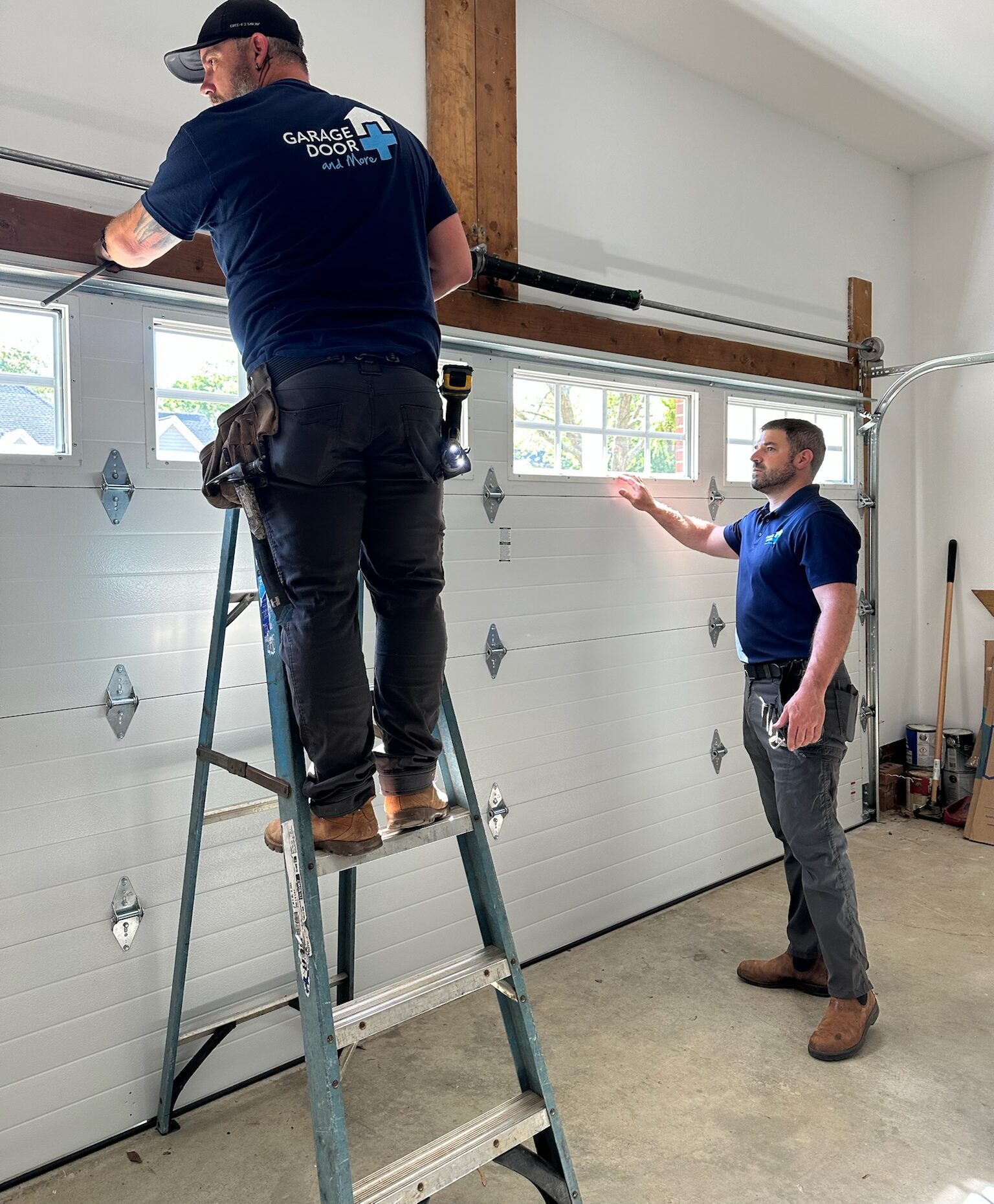
Torsion springs mount horizontally on a metal shaft above your garage door opening. When your door closes, the springs wind tighter, storing energy through torque. Opening the door releases this stored energy, helping lift the door’s weight. The system uses one or two springs depending on your door size and weight.
The mechanical advantage comes from rotational force rather than stretching. A torsion spring’s metal rod runs through the spring’s center, with the spring anchored to a stationary cone on one end and a winding cone on the other. As the door moves, the shaft rotates, winding or unwinding the spring. This rotation distributes stress evenly across the entire spring rather than concentrating it at specific points.
Key Components of a Torsion Spring System:
- Torsion Shaft: A solid steel rod typically 1 inch in diameter that runs through the spring and connects to cable drums on each end, transmitting the spring’s force to lift the door.
- Winding Cones: Metal fittings on each spring end that allow technicians to safely wind the spring and adjust tension without the spring unwinding dangerously.
- Center Bearing Plate: A stationary bracket mounted to the wall above the door that supports the torsion shaft and keeps it properly aligned during operation.
- Cable Drums: Grooved wheels on the shaft ends where cables wind as the door opens, converting the spring’s rotational energy into vertical lifting motion.
- Stationary Cones: Fixed anchor points that prevent the spring from rotating at one end, creating the torque needed to counterbalance the door’s weight.
Single versus dual torsion systems serve different purposes. Single-spring systems work well for lighter doors up to 150 pounds, typically found on single-car garages. Dual-spring systems handle heavier doors, distribute weight more evenly, and provide a backup if one spring fails. When one spring breaks in a dual system, the door remains somewhat functional, while a single-spring failure leaves the door completely inoperable.
“Torsion springs outlast extension springs in most applications because they distribute stress across the entire coil rather than concentrating it at attachment points. For Charlotte’s humid climate, this even stress distribution also means less vulnerability to corrosion-induced failure.” – The Team at Garage Door and More
What Are Extension Springs and How Do They Function?
Extension springs stretch along the horizontal tracks on both sides of your garage door. These springs extend when the door closes, storing energy through elongation. When you open the door, the springs contract, pulling the door upward through a pulley system connected to lift garage door cables.
The spring attaches to the track hanger at the rear and connects to a pulley assembly near the front. As the door descends, the spring lengthens, creating tension that helps lift the door when the garage door opener activates. The pulley system redirects the horizontal spring force into vertical lifting power.
Main Parts of an Extension Spring System:
- Extension Springs: Long coiled springs that mount parallel to the horizontal tracks, typically 6-8 feet long depending on door height and weight requirements.
- Pulley Assembly: A wheel mechanism at the front of the track that redirects the spring’s pulling force downward, connecting to lift cables that attach to the door’s bottom corners.
- Safety Cables: Steel cables running through the spring’s center that prevent the spring from becoming a dangerous projectile if it breaks during operation.
- Mounting Brackets: Heavy-duty metal attachments that secure the spring’s rear end to the track support structure and wall framing.
- S-Hooks and Clips: Connection hardware that links the spring to the pulley cable system, representing the highest-stress point in the entire mechanism.
Safety cable requirements matter significantly with extension springs. Building codes in most areas require safety cables running through the spring’s center to contain a broken spring. Without these cables, a snapping spring can whip around the garage at high speed, potentially causing serious injury or property damage. Charlotte area homes built after 1993 typically include safety cables, while older installations may lack this protection.
Comparison of Spring Operating Principles:
| Feature | Torsion Springs | Extension Springs |
|---|---|---|
| Energy Storage Method | Rotational torque through winding | Linear tension through stretching |
| Mounting Location | Above door on horizontal shaft | Along both side tracks |
| Number Required | 1-2 springs | 2 springs (one per side) |
| Stress Distribution | Even across entire coil | Concentrated at attachment points |
| Space Requirements | 12-18 inches above door | Minimal overhead clearance |
| Failure Mode | Spring breaks at coil | Spring or attachment fails |
Which Spring Type Lasts Longer in Charlotte’s Climate?
Charlotte’s humidity affects both spring types differently, making lifespan a key consideration when choosing between systems or planning for garage door spring replacement for Charlotte homes.
Torsion springs typically last 15,000 to 20,000 cycles in standard conditions, translating to 7-10 years for average use. Charlotte’s humid climate reduces this to 10,000-15,000 cycles or 5-8 years. The tightly wound coils trap moisture between wraps, creating localized corrosion that weakens specific sections. Once rust forms inside the coil, you can’t effectively clean or lubricate these areas, accelerating deterioration.
Extension springs usually provide 10,000 to 15,000 cycles in dry climates, or 4-7 years of service. Our humid conditions reduce this to 7,000-12,000 cycles or 3-6 years. The constant stretching and contracting creates stress concentrations at the spring hooks and connection points. These areas corrode faster because they experience both moisture exposure and repeated flexing that breaks down protective coatings.
Factors Affecting Spring Longevity in Humid Climates:
- Coating Quality: Powder-coated or galvanized springs resist corrosion 40-60% better than painted or bare steel versions, making coating choice more critical in humid areas than dry regions.
- Wire Gauge: Thicker wire (11-gauge versus 14-gauge) provides more material for corrosion to penetrate before structural failure occurs, extending life by 2-3 years in humid conditions.
- Cycle Frequency: Springs used 4-6 times daily wear differently than those used 10-12 times daily; higher usage accelerates both mechanical wear and corrosion exposure.
- Garage Environment: Attached garages with climate control experience less moisture accumulation than detached or uninsulated garages, potentially extending spring life by 20-30%.
Temperature swings compound humidity effects on both spring types. Spring and fall in Charlotte bring daily temperature variations of 30-40 degrees. Metal expands when heated and contracts when cooled, creating microscopic cracks in the spring wire. These cracks allow moisture penetration that accelerates internal corrosion. Torsion springs handle these cycles slightly better because their winding tension helps resist crack formation, while extension springs develop cracks more readily at high-stress points.
“We see extension springs fail more frequently in Charlotte homes because the attachment points corrode faster in our humidity. The constant stretching motion at these corroded areas creates a perfect scenario for sudden failure. Torsion springs distribute wear more evenly, so they tend to give more warning before complete failure.” – The Team at Garage Door and More
How Do Installation and Repair Costs Compare?
Cost differences between torsion and extension spring systems influence both initial garage door installation and long-term maintenance expenses.
Extension spring installation typically costs $150-$200 for both springs, making them the more economical option upfront. The installation process takes 1-2 hours for experienced technicians. The springs themselves cost $40-$80 for the pair, with labor comprising the majority of the total expense. Many homeowners choose extension springs when budget constraints exist or when replacing springs on older doors nearing the end of their useful life.
Torsion spring installation runs $200-$350 for a standard residential door. Single-spring systems fall at the lower end of this range, while dual-spring installations cost more. The springs themselves represent $75-$150 of the total cost. Installation requires 2-3 hours because proper tensioning demands precision and specialized tools. The higher upfront cost reflects both material quality and the expertise needed for safe installation.
Complete Cost Breakdown Over 10 Years:
| Cost Factor | Extension Springs | Torsion Springs |
|---|---|---|
| Initial Installation | $150-200 | $200-350 |
| Expected Replacements (10 years) | 2-3 times | 1-2 times |
| Replacement Labor Each Time | $100-150 | $125-200 |
| Annual Maintenance Costs | $75-100 | $60-85 |
| Total 10-Year Cost | $1,050-1,550 | $950-1,350 |
Long-term economics favor torsion springs for most applications. While extension springs cost less initially, their shorter lifespan means more frequent replacements. Over a typical 10-year period, you’ll replace extension springs 2-3 times versus 1-2 times for torsion springs. When you factor in labor costs for each replacement plus the inconvenience of more frequent service calls, torsion springs often prove more economical.
Emergency repair costs add another consideration. When a spring breaks unexpectedly, emergency service typically adds $50-100 to the standard repair price. Extension springs fail more suddenly and completely, often requiring immediate emergency service. Torsion springs typically show warning signs before complete failure, allowing you to schedule repairs during normal business hours and avoid emergency charges.
What Safety Differences Exist Between the Two Systems?
Safety considerations vary significantly between torsion and extension springs, affecting both installation requirements and potential hazards during operation or failure.
Extension springs pose higher projectile risks when they break. A failing extension spring under full tension can snap and fly across the garage at dangerous speeds. The spring’s stretched position stores significant energy that releases violently during failure. Safety cables mitigate this risk by containing the broken spring pieces, but older systems lacking these cables create genuine safety hazards. We’ve seen broken extension springs punch through drywall, shatter windows, and damage vehicles parked inside.
Torsion springs fail differently. When a torsion spring breaks, it loses tension and unwinds rapidly, but the spring remains attached to the shaft. The metal rod running through the spring’s center prevents it from becoming a projectile. The main danger comes from the sudden release of tension causing the door to fall if someone is underneath. Dual torsion systems provide partial functionality even when one spring fails, giving you time to schedule repair without complete door failure.
Safety Features and Risks by Spring Type:
- Containment During Failure: Torsion springs stay mounted on their shaft when breaking, while extension springs require safety cables to prevent dangerous flight across the garage space.
- Partial Operation After Failure: Dual torsion systems often allow limited door operation with one broken spring, while a single extension spring failure on either side makes the door completely inoperable and unbalanced.
- Installation Danger Level: Torsion springs require specialized winding bars and techniques that make DIY installation extremely dangerous, while extension springs appear simpler but still present serious risks.
- Injury Severity Potential: Extension spring failures can cause cuts, bruises, and impact injuries from flying debris, while torsion failures mainly risk crushing injuries from sudden door drops.
Professional installation becomes more critical for torsion springs. The high tension required for proper operation creates extreme forces during winding. Attempting DIY torsion spring installation without proper training and tools has caused numerous serious injuries, including broken bones and deep lacerations. The winding bars can slip during tensioning, causing the spring to unwind violently. Extension springs also present dangers during installation, but the risks concentrate at specific attachment points rather than throughout the entire tensioning process.
“We respond to DIY installation accidents several times each year, and they’re almost always more severe with torsion springs. The forces involved exceed what most people expect. Extension springs present risks too, but torsion spring installation absolutely requires professional expertise and specialized equipment.” – The Team at Garage Door and More
Which System Works Better for Different Door Types?
Door weight, size, and configuration determine which spring system performs better for your specific application. Making the right choice prevents premature failure and improves long-term reliability.
Lightweight single-car doors (130-150 pounds) function adequately with either system. Extension springs offer the budget-friendly option for basic steel doors without insulation. Torsion springs provide smoother operation and longer life but may represent overkill for simple applications. If you plan to keep the door for many years or want minimal garage door repair needs, torsion springs justify their higher cost even on lighter doors.
Heavy insulated doors demand torsion spring systems. Doors weighing 180-250 pounds put excessive stress on extension springs, reducing their already-limited lifespan to 2-4 years in Charlotte’s climate. The distributed load handling of torsion springs becomes necessary for these heavier applications. Double-car garage doors almost always use torsion systems because the door width makes extension spring placement impractical and the weight exceeds what extension springs reliably handle.
Spring System Recommendations by Door Type:
| Door Specification | Door Weight | Recommended System | Reason |
|---|---|---|---|
| Single car, non-insulated | 130-150 lbs | Either (extension if budget-limited) | Both systems adequate for this weight |
| Single car, insulated | 150-180 lbs | Torsion preferred | Better longevity and smoother operation |
| Double car, non-insulated | 180-220 lbs | Torsion required | Weight exceeds extension spring capacity |
| Double car, insulated | 220-280 lbs | Dual torsion required | Single spring insufficient for weight |
| Custom wood or carriage house | 250-350 lbs | Heavy-duty dual torsion | Specialty springs needed for extreme weight |
Ceiling height limitations sometimes dictate spring choice. Torsion systems need 12-18 inches of clearance above the door opening for proper mounting. Garages with low ceilings, overhead obstructions, or ceiling-mounted storage may lack adequate space for torsion installation. Extension springs require minimal overhead clearance since they mount along the side tracks. If you have less than 12 inches of headroom above your door, extension springs may represent your only practical option.
Specialty doors like carriage house styles or custom wood doors almost exclusively use torsion systems. These doors often weigh significantly more than standard options and may have unique balance requirements. The adjustability of torsion springs allows technicians to fine-tune tension for custom applications. Extension springs come in limited configurations that may not properly match unusual door specifications.
How Does Each System Perform During Daily Operation?
Operational characteristics affect your daily experience with your garage door, from noise levels to smoothness of movement. These differences become more noticeable over time as components age.
Torsion spring systems operate more quietly because the spring movement stays concentrated above the door rather than along the side tracks. The pulley assemblies required for extension springs create additional friction points that generate squeaking and grinding noises. The garage door rollers also work harder in extension spring systems because the lifting force comes from the sides rather than being evenly distributed across the door width.
Balance and smoothness differ noticeably between systems. Torsion springs provide consistent force throughout the door’s entire travel range. The rotational energy release stays steady whether the door is opening or closing. Extension springs deliver varying force levels depending on their stretch. Maximum force occurs when fully extended with the door closed, while minimum force happens with the door open and springs contracted. This variation can cause jerky movement, particularly as springs age and lose tension.
Operational Performance Characteristics:
- Noise Generation: Torsion systems typically operate at 60-70 decibels during normal use, while extension systems generate 70-80 decibels because of additional pulleys and lateral force creating track friction.
- Opening Speed Consistency: Torsion springs maintain steady lifting force, producing uniform door speed, while extension springs accelerate the door as it opens and the spring contracts toward its neutral state.
- Vibration Transmission: The central mounting point of torsion systems concentrates vibration in one location, while extension springs transmit vibration along both side tracks into the garage walls and ceiling.
- Adjustment Precision: Torsion tension adjusts in quarter-turn increments for fine control, while extension spring adjustment involves moving hooks and cables with less precision in final tension.
Wear patterns affect long-term performance differently. Torsion springs maintain consistent operation until near the end of their lifespan, then show rapid performance decline. You’ll notice little change in door operation for years, followed by obvious problems over weeks or months. Extension springs degrade more gradually, with slowly increasing noise, rougher operation, and reduced lifting power developing over time. This gradual decline sometimes goes unnoticed until a spring finally breaks.
Cold weather impacts extension springs more severely. When temperatures drop below 40 degrees, extension springs contract slightly, reducing their effective length and changing tension characteristics. The door may resist opening in cold weather or fail to stay open at normal heights. Torsion springs maintain more consistent performance across temperature ranges because the winding tension adapts to metal contraction. Charlotte’s relatively mild winters minimize this difference, but we still see more cold-weather operational issues with extension spring systems.
What Maintenance Requirements Differ Between Systems?
Maintenance demands vary between torsion and extension springs, affecting both the time you’ll invest in upkeep and the professional service needs over the system’s lifetime.
Torsion springs require lubrication every 3-4 months for optimal performance. Apply silicone or lithium-based spray lubricant along the entire coil length, allowing excess to drip away. The tightly wound coils benefit from regular lubrication that prevents moisture intrusion and reduces friction between coil wraps. Check the center bearing plate for wear and verify the cable drums remain properly aligned on the shaft. Annual professional inspection catches bearing wear before it affects spring performance.
Extension spring maintenance involves more components. Lubricate the springs themselves every 3-4 months, but also service the pulleys, cables, and attachment points. The pulley bearings need separate lubrication since they work independently of the springs. Inspect safety cables for fraying or damage every six months. Check S-hooks and connection clips for corrosion or deformation that could lead to sudden failure. The additional components mean more potential maintenance points requiring regular attention.
Annual Maintenance Task Comparison:
| Maintenance Task | Torsion System Time | Extension System Time | Frequency |
|---|---|---|---|
| Spring lubrication | 10 minutes | 15 minutes | Every 3-4 months |
| Hardware inspection | 15 minutes | 25 minutes | Every 6 months |
| Balance testing | 5 minutes | 5 minutes | Every 6 months |
| Safety feature check | 5 minutes | 15 minutes | Every 6 months |
| Professional service | 45 minutes | 60 minutes | Annually |
Adjustment frequency differs between systems. Extension springs need regular tension adjustments as they stretch over time. You may need adjustments every 1-2 years to maintain proper door balance. Torsion springs hold their tension better and typically require adjustment only every 3-5 years or when you notice operational changes. Professional technicians perform these adjustments safely, though extension spring adjustments cost less because they involve simpler procedures.
Corrosion prevention demands more attention with extension springs in Charlotte’s climate. The stretched spring position creates larger gaps between coils where moisture accumulates. The attachment points represent particular concerns since they combine high stress with moisture exposure. Clean these areas thoroughly during each maintenance session and apply rust-preventive lubricants. Torsion springs need similar corrosion attention but benefit from their more compact coil arrangement that sheds moisture more effectively.
“Homeowners often neglect extension spring pulleys and cables while focusing on the springs themselves. These components fail just as often as the springs in our experience. A comprehensive maintenance approach addresses the entire system, not just the most obvious parts.” – The Team at Garage Door and More
When Should You Convert from One System to Another?
Converting between spring systems makes sense in specific situations, though the decision involves weighing conversion costs against long-term benefits.
Extension to torsion conversion costs $400-$600 for most residential doors. The price includes new torsion springs, mounting hardware, cable drums, and professional installation. You’ll also need a torsion shaft and center bearing plate if your door lacks these components. The conversion requires 3-4 hours of skilled labor because technicians must remove the old system completely and install new mounting points for the torsion assembly.
The conversion makes economic sense when you’re already planning significant garage door replacement or upgrade work. If you’re installing a heavier insulated door, adding windows, or replacing multiple worn components simultaneously, the incremental cost of converting to torsion springs becomes more reasonable. Combining the conversion with other major work spreads labor costs across multiple improvements.
Situations Favoring System Conversion:
- Repeated Extension Spring Failures: If you’ve replaced extension springs three or more times in five years, conversion costs less over the next decade than continuing with a failing system type.
- Door Weight Increase: Adding insulation, replacing panels with heavier materials, or installing decorative hardware that adds 30+ pounds makes torsion springs necessary for reliable long-term operation.
- Safety Concerns: Older extension spring systems lacking safety cables present genuine hazards; converting to torsion eliminates the projectile risk entirely rather than retrofitting safety features.
- Noise Complaints: If garage door noise bothers you or your neighbors, particularly in attached garages sharing bedroom walls, torsion systems reduce operational sound by 20-30%.
Torsion to extension conversion rarely makes sense. The only scenario justifying this change involves severe headroom limitations where new construction or remodeling reduced overhead clearance below the 12-inch minimum for torsion installation. The conversion costs similar amounts to the reverse process but delivers inferior performance and shorter lifespan. If headroom becomes an issue, consider alternative door configurations or garage opener relocation before downgrading to extension springs.
Partial conversions don’t work reliably. Some homeowners ask about using one torsion spring with one extension spring to reduce costs. This mixed approach creates uneven door balance that damages tracks, bends the door, and causes premature component failure. Garage doors require matched spring systems on both sides for safe, reliable operation. Any conversion should replace the entire spring system rather than mixing technologies.
How Do Building Codes and Insurance Affect Spring Choice?
Local regulations and insurance requirements sometimes influence which spring system you can install, particularly in new construction or major renovation situations.
Building codes in North Carolina generally don’t mandate specific spring types for residential garages. The codes focus on safety features like emergency release mechanisms and photo-eye sensors for automatic openers. Extension spring systems must include safety cables in new installations, per International Residential Code Section R309.4. Existing systems without safety cables aren’t required to add them unless you’re performing major renovations that trigger current code compliance.
Insurance considerations rarely favor one spring type directly. Some insurers ask about garage door age and condition during homeowner policy applications, but they typically don’t specify spring requirements. Claims related to spring failures fall under standard homeowner coverage when they cause property damage. The frequency of claims might affect your rates over time, making the more reliable torsion system indirectly beneficial for insurance purposes.
Regulatory and Insurance Considerations:
- New Construction Requirements: Builders installing extension spring systems must include safety cables and use springs rated for at least 10,000 cycles, making quality components mandatory rather than optional.
- Permitted Work Scope: Major garage door panel replacement or complete door replacement may trigger inspection requirements that force older extension systems to add safety cables retroactively.
- Liability Protection: Professional installation documentation helps protect against liability claims if someone is injured by a failing spring, making DIY installation risky from an insurance perspective.
- Home Sale Inspections: Pre-sale home inspections often flag missing safety cables or excessively worn springs, potentially affecting sale negotiations or requiring repairs before closing.
HOA restrictions sometimes affect spring visibility. Some homeowner associations prohibit any garage door hardware visible from the street. Torsion systems mount entirely inside the garage, while extension springs may be partially visible depending on door design and track configuration. Check your HOA covenants before installing new springs if you live in a community with architectural guidelines. Most modern track configurations hide extension springs adequately, but older open-track designs may expose them.
Commercial applications face stricter requirements. Commercial garage door installation typically requires torsion systems rated for high-cycle use. Building codes classify commercial doors differently and mandate additional safety features. If you operate a business from your home garage, verify whether commercial standards apply to your installation. Using residential-grade extension springs in commercial applications violates code and creates serious liability exposure.
FAQs About Torsion and Extension Springs
Can I replace just one spring in a dual torsion system?
Replacing both springs together prevents a second service call within weeks when the other spring fails. Paired springs experience identical wear cycles and environmental exposure. The labor cost for replacing two springs together is only marginally higher than replacing one, making single-spring replacement economically inefficient for most situations.
Why do extension springs cost less than torsion springs?
Extension springs use simpler manufacturing processes and require less material than torsion springs. The installation demands fewer specialized tools and takes less time. Though extension springs cost less upfront, their shorter lifespan means you’ll replace them more frequently, potentially costing more over a decade than choosing torsion springs initially.
How can I tell which spring system my door has?
Look above your garage door opening. Torsion springs mount horizontally on a metal shaft spanning the door width. Extension springs run along the horizontal tracks on both sides of the door, stretching parallel to the ceiling. If you see springs along the sides, you have extension springs.
Do torsion springs require more maintenance than extension springs?
Torsion springs actually require less maintenance because they have fewer moving parts. Extension systems include pulleys, safety cables, and multiple attachment points that all need regular inspection and lubrication. Torsion systems need lubrication and occasional balance checks but involve simpler maintenance overall.
Which spring type is safer for homes with children?
Torsion springs present fewer projectile risks because they remain mounted on their shaft when breaking. Extension springs without safety cables can become dangerous projectiles. If you have extension springs, verify safety cables run through their centers. Both systems require keeping children away from moving garage doors regardless of spring type.
Can I upgrade to heavier springs on my existing system?
Upgrading spring weight capacity requires professional assessment. Heavier springs increase lifting force, which may exceed your track, roller, and opener capabilities. Your door’s weight determines proper spring sizing, and randomly increasing spring strength creates balance and safety issues. Consult professionals before changing spring specifications.
How does garage door size affect spring choice?
Single-car doors (8-9 feet wide) work with either system, while double-car doors (16-18 feet wide) almost always require torsion springs. The wider span makes extension spring placement impractical and the increased door weight exceeds what extension springs reliably handle long-term.
What happens if one extension spring breaks but the other doesn’t?
The door becomes severely imbalanced and dangerous to operate. The working spring pulls one side while the other side has no counterbalance, causing the door to tilt and potentially jump the tracks. Disconnect your opener immediately and call for professional repair rather than attempting to operate an imbalanced door.
The team at Garage Door and More helps Charlotte homeowners make informed decisions about their spring systems. We install both torsion and extension springs based on your door specifications, budget, and long-term goals. Our technicians assess your current system, explain your options clearly, and recommend solutions that balance cost with reliability. Whether you need broken spring repair or want to convert to a better system, we provide expert service backed by warranties on parts and labor. Contact us today for professional guidance on garage door springs that will keep your door operating safely for years to come.