Charlotte homeowners face a hidden enemy when it comes to their garage doors: humidity. The moisture in our air doesn’t just make summer days feel sticky; it actively works against the metal components keeping your garage door operational. When you hear that loud snap or notice your door won’t open properly, a broken garage door spring is often the culprit, and Charlotte’s climate accelerates this failure in ways most people don’t realize.
What Makes Charlotte’s Climate So Hard on Garage Door Springs?
Charlotte sits in a humid subtropical zone where relative humidity averages 69% year-round. This persistent moisture creates conditions that metal components particularly hate. Your garage door springs endure thousands of cycles each year while constantly exposed to this moisture-heavy air.
The science behind spring failure in humid conditions comes down to three main factors. Moisture promotes rust formation on the steel coils, which creates rough spots and weak points in the metal. Temperature fluctuations cause the metal to expand and contract, creating microscopic cracks that worsen over time. The combination of these stresses with the normal wear from lifting a 150-pound door multiple times daily means springs in our region typically fail 20-30% sooner than in drier climates.
Charlotte’s Humidity Impact on Garage Components:
- Summer Humidity Peaks: June through August sees humidity levels reach 75-85%, creating ideal conditions for accelerated corrosion on unprotected metal surfaces.
- Temperature Swings: Spring and fall bring daily temperature variations of 30-40 degrees, causing repeated expansion and contraction that weakens metal over time.
- Morning Dew Accumulation: Cool overnight temperatures create condensation that settles on garage door components, giving moisture extended contact time with springs.
- Storm Front Pressure Changes: Rapid barometric pressure shifts during our frequent thunderstorms put additional stress on already weakened springs.
“We see spring failures spike during our humid summer months and again in early fall when temperature changes are most dramatic. The combination of moisture and thermal stress creates a perfect storm for metal fatigue. Homeowners who invest in preventive measures can extend spring life by years, not just months.” – The Team at Garage Door and More
How Do Different Spring Types Handle Charlotte’s Weather Conditions?
Not all garage door springs respond to humidity the same way. Understanding which type you have helps you predict maintenance needs and plan for eventual replacement.
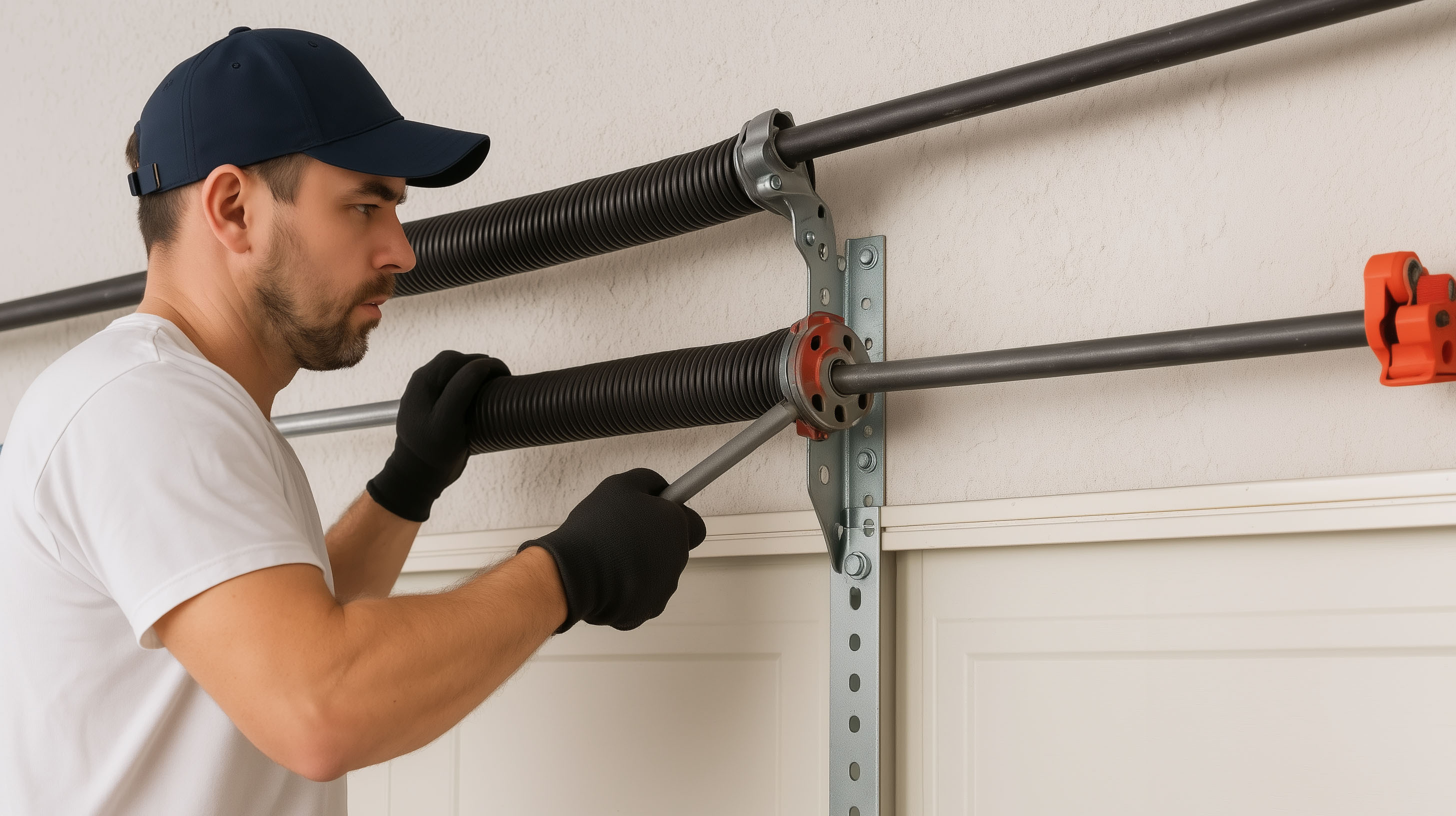
Torsion springs mount above your garage door and twist to provide lifting force. These springs typically last 10,000-20,000 cycles in moderate climates but may only reach 7,000-15,000 cycles in Charlotte’s humid conditions. The tightly wound coils trap moisture between wraps, making rust more likely to develop unseen until failure occurs.
Extension springs stretch along the horizontal tracks on each side of your door. While they experience less moisture trapping than torsion springs, they face higher stress concentrations at the hook connections. These connection points corrode faster in humid air, creating weak spots where breaks commonly start.
Spring Performance Comparison in Humid Climates:
| Spring Type | Dry Climate Lifespan | Charlotte Lifespan | Main Failure Point | Maintenance Frequency |
|---|---|---|---|---|
| Standard Torsion | 7-9 years | 5-7 years | Coil corrosion | Every 6 months |
| Coated Torsion | 10-12 years | 8-10 years | End bearing | Annually |
| Standard Extension | 6-8 years | 4-6 years | Hook attachment | Every 6 months |
| Safety Cable Extension | 7-9 years | 5-7 years | Pulley system | Every 6 months |
Powder-coated or oil-tempered springs resist corrosion better than standard options. The protective coating creates a barrier between the steel and humid air. While these springs cost 30-50% more upfront, they typically last twice as long in our climate, making them more economical over the door’s lifetime.
What Warning Signs Indicate Your Spring Is Failing?
Springs rarely fail without warning. Recognizing early signs helps you schedule garage door repair before you’re stuck with a door that won’t open.
Visual inspection reveals several telltale problems. Look for rust spots or discoloration on the spring coils, which indicate corrosion has started. Check for gaps between coils that weren’t there before, suggesting the spring has stretched and lost tension. Notice any coating that’s flaking or peeling away, exposing bare metal to moisture.
Performance changes often appear before visible damage becomes obvious. Your door may start moving more slowly or jerking during operation. You might hear grinding, squeaking, or scraping noises that weren’t present before. The door could fail to stay open at certain heights or slam down faster than normal when closing.
Critical Warning Signs Requiring Immediate Attention:
- Visible Separation in Coils: A gap of 1/4 inch or more between spring coils means the spring has lost significant tension and could fail at any moment during operation.
- Door Won’t Stay Open: If your door falls closed when you try to leave it open, the springs no longer provide enough counterbalance force to hold the door’s weight.
- Uneven Movement: A door that tilts to one side or moves at different speeds on each side indicates one spring has weakened or failed completely.
- Loud Snapping Sound: A sudden bang from your garage signals spring failure and means you need professional help right away to safely operate your door.
“The biggest mistake homeowners make is ignoring small changes in how their door operates. That slight squeak or slower movement is your garage door telling you something needs attention. Catching these issues early means a simple adjustment or lubrication instead of emergency spring replacement.” – The Team at Garage Door and More
Which Preventive Measures Extend Spring Life in Humid Conditions?
Regular maintenance makes the difference between springs lasting five years versus ten in Charlotte’s climate. The right approach protects your investment and prevents inconvenient failures.
Proper lubrication creates a moisture barrier while reducing friction that causes wear. Use silicone-based or lithium-based lubricants specifically designed for garage door springs. Apply lubricant to all coils every three months during humid months and every six months during drier periods. Spray a light coating along the entire length of each spring, allowing excess to drip away. This regular application prevents rust from starting and keeps springs moving smoothly.
Balance testing catches problems before they become emergencies. Disconnect your garage door opener and manually lift the door halfway. A properly balanced door stays in place when you release it. If the door falls or rises, your springs need adjustment. Performing this test quarterly helps you catch spring weakening before complete failure occurs.
Seasonal Maintenance Schedule for Charlotte Homeowners:
| Season | Task | Why It Matters | Tools Needed |
|---|---|---|---|
| Spring | Deep clean and lubricate | Remove winter moisture buildup | Degreaser, lubricant |
| Summer | Inspect for rust, apply extra lubricant | Counter high humidity effects | Lubricant, wire brush |
| Fall | Balance test, check connections | Prepare for temperature swings | Level, wrench set |
| Winter | Light lubrication, clear debris | Prevent moisture from freezing | Lubricant, cleaning cloth |
Dehumidification helps when possible. If your garage stays closed most of the time, running a dehumidifier during humid months reduces moisture exposure. Aim for humidity levels below 50% inside the garage. While this won’t completely eliminate corrosion risk, it slows the process significantly. Improved ventilation also helps; installing vents or leaving windows cracked allows air circulation that prevents moisture accumulation.
When Should You Replace Rather Than Repair Your Springs?
Knowing when to invest in replacement saves money and prevents safety risks. Springs have a finite lifespan, and sometimes repair doesn’t make economic sense.
Age plays a major role in this decision. If your springs are more than seven years old in Charlotte’s climate, replacement becomes more cost-effective than repair. At this age, you’re approaching the end of the spring’s useful life anyway. Repairing one spring when both are the same age just delays the inevitable second repair by a few months.
The cost comparison favors replacement when springs show multiple problems. Repairing a spring typically costs $150-200, while complete garage spring replacement for Charlotte homes runs $250-400 for both springs. If you’re facing repair costs for both springs or repeated repairs within a short period, replacement gives you a fresh start with new components.
Replacement Indicators:
- Both Springs Show Wear: When you have two springs and one fails, the other typically breaks within weeks because they’ve experienced identical stress and exposure to humidity.
- Visible Rust on Multiple Coils: Surface rust on one or two coils can be addressed, but extensive corrosion across the spring means the metal integrity is compromised throughout.
- Previous Repairs Failed Quickly: If a repaired spring breaks again within six months, the spring has reached the end of its functional life and needs replacement.
- Upgrade Opportunity: Replacing old standard springs with powder-coated or oil-tempered versions provides better corrosion resistance worth the extra investment in our humid climate.
“We recommend replacing both springs together even if only one has failed. The labor cost is nearly identical, and you avoid a second service call when the other spring breaks a few weeks later. Plus, you get matched springs that balance your door properly.” – The Team at Garage Door and More
What Role Does Professional Service Play in Spring Longevity?
Professional garage door spring service for Charlotte homeowners catches problems DIY maintenance misses. Trained technicians bring experience and specialized tools that make a real difference in spring performance and safety.
Professional inspections identify issues invisible to homeowners. Technicians check spring tension with calibrated tools, detecting weakening before it affects door operation. They examine mounting brackets and bearings for wear that affects spring performance. They test the balance system’s overall condition, not just individual components. This complete system approach prevents related problems from developing.
Proper installation techniques matter tremendously for spring life. Springs must have correct tension for your specific door weight and track configuration. Incorrectly tensioned springs work harder and fail faster, sometimes in half the expected time. Professional installation matches spring specifications to your door, applies proper winding technique, and sets up the system for long-term reliability.
Professional Service Value Points:
- Safety Equipment and Training: Spring installation involves high tension that can cause serious injury if handled incorrectly; professionals have the tools and knowledge to work safely.
- Warranty Protection: Many manufacturers require professional installation for warranty coverage, meaning DIY installation could void your spring warranty completely.
- Code Compliance: Professional installers know local building codes and install safety features like containment cables required in many jurisdictions.
- System Optimization: Technicians adjust all related components including cables, rollers, and tracks to work together efficiently, reducing wear on new springs.
Annual professional service complements your regular maintenance routine. Schedule inspections before humid season begins, typically in late April or early May. This timing allows you to address any issues before the worst humidity arrives. The technician can apply professional-grade lubricants, make precision adjustments, and replace worn parts before they cause spring damage.
How Does Garage Door Weight Affect Spring Life in Humid Climates?
The weight of your garage door directly impacts how hard your springs work, and this relationship becomes more critical in humid conditions where springs already face additional stress.
Heavier doors demand more from their springs with every cycle. A standard single-car garage door weighs 130-150 pounds, while double-car doors range from 200-250 pounds. Insulated doors add 20-30 pounds to these figures. Each time your door opens or closes, the springs must overcome this weight against gravity. In humid conditions where the springs already face corrosion weakening, the extra stress from door weight accelerates failure.
Material choices affect both weight and spring lifespan. Steel doors without insulation offer the lightest option but provide poor temperature control. Insulated steel doors balance weight and efficiency well. Wood doors, while attractive, weigh significantly more and put maximum stress on springs. When combined with Charlotte’s humidity attacking the springs, wood doors often need spring replacement every 4-5 years compared to 6-8 years for lighter alternatives.
Door Weight Impact on Spring Performance:
| Door Type | Average Weight | Spring Cycles Expected | Humidity Impact Factor |
|---|---|---|---|
| Single Steel (No Insulation) | 130 lbs | 12,000-15,000 | Low |
| Single Steel (Insulated) | 155 lbs | 10,000-13,000 | Moderate |
| Double Steel (Insulated) | 220 lbs | 8,000-11,000 | Moderate-High |
| Wood (Single Layer) | 180 lbs | 7,000-9,000 | High |
| Wood (Insulated) | 210 lbs | 6,000-8,000 | High |
Upgrading springs to match your door weight prevents premature failure. Many homes have undersized springs installed to save costs during construction. These springs work at higher stress levels constantly, which shortens their life even before humidity factors in. A professional assessment can determine if your current springs match your door’s requirements or if upgrading to higher-cycle springs makes sense for your situation.
“When we replace garage doors, we always verify the spring system can handle the new door’s weight. Installing a heavier insulated door on springs sized for a lighter door is like putting regular tires on a heavy truck. They’ll work for a while, but they’ll fail much sooner than they should.” – The Team at Garage Door and More
What Impact Do Opener Settings Have on Spring Stress?
Your garage opener settings significantly affect how much work your springs do, particularly regarding force and speed adjustments that control door movement.
Improper force settings make your opener work harder than needed, which transfers stress to the springs. If your opener’s closing force is set too high, it pulls the door down harder than gravity alone would, making the springs fight against both the door weight and the opener. If opening force is too high, the springs must work against the opener’s upward pull during the controlled closing phase. Both scenarios create unnecessary spring stress that compounds humidity-related weakening.
Speed settings interact with spring tension in ways most homeowners don’t recognize. A door set to move too quickly experiences momentum that springs must absorb at the end of each cycle. This repeated impact stress creates micro-fractures in the metal that worsen over time. Slower operation spreads the stress more evenly across each cycle, reducing the cumulative damage to springs already fighting corrosion.
Opener Configuration for Spring Preservation:
- Force Adjustment Testing: Your opener should stop immediately when you place slight upward resistance on a closing door; if it continues pushing, the force setting is too high and stressing your springs.
- Travel Limit Calibration: The door should stop within 1 inch of fully open and fully closed positions; overshooting either position creates jarring stops that damage springs and other components.
- Speed Reduction Benefits: Slowing your door operation by 20-30% reduces stress on springs and related components while only adding 2-3 seconds to operation time.
- Safety Sensor Alignment: Properly aligned sensors prevent the door from reversing unnecessarily mid-cycle, which creates additional spring stress from repeated direction changes.
Regular opener maintenance protects your springs indirectly. When garage door rollers stick or tracks develop resistance, your opener compensates by using more force. This increased force translates to more spring stress. Keeping the entire system clean and properly adjusted reduces the work both your opener and springs must perform.
How Can You Identify Quality Springs When Choosing Replacements?
The spring market includes products ranging from basic to professional-grade, and knowing the differences helps you make informed decisions about broken garage door spring repair in Charlotte.
Wire gauge determines spring strength and longevity. Professional-grade springs use 11-gauge or 12-gauge wire, while economy springs often use 14-gauge wire. The thicker wire resists stress better and lasts significantly longer, particularly in demanding conditions like Charlotte’s humid climate. A 11-gauge spring typically provides 25,000-30,000 cycles compared to 10,000-15,000 cycles for 14-gauge equivalents.
Coating types affect corrosion resistance dramatically. Powder-coated springs have a baked-on protective layer that resists moisture better than paint or bare metal. Oil-tempered springs undergo a heat treatment process that strengthens the metal and provides some corrosion resistance. Galvanized springs have a zinc coating that protects against rust. Each coating type has different costs and benefits worth considering for our climate.
Spring Quality Indicators:
| Feature | Economy Grade | Standard Grade | Professional Grade |
|---|---|---|---|
| Wire Gauge | 14-gauge | 12-13 gauge | 11-gauge |
| Cycle Rating | 10,000 | 15,000-20,000 | 25,000-30,000 |
| Coating | None/Paint | Basic galvanized | Powder-coated |
| Expected Life (Charlotte) | 3-4 years | 5-7 years | 8-12 years |
| Cost Range | $75-125 | $125-200 | $200-350 |
Manufacturer reputation matters when selecting springs. Well-known brands invest in quality control and material consistency that affects long-term performance. Generic or no-name springs may use inconsistent steel quality or inadequate coating processes. While branded springs cost more upfront, the extended life and reliability in harsh conditions like ours makes them worth the investment. Professional garage door repair companies typically use commercial-grade springs from established manufacturers rather than consumer-grade products available at home improvement stores.
What Environmental Controls Can You Add to Your Garage?
Beyond spring maintenance, controlling your garage environment slows corrosion and extends the life of all metal components, not just springs.
Ventilation improvements reduce moisture accumulation significantly. Installing ridge vents or gable vents allows hot, humid air to escape while drawing in drier air from lower openings. Adding soffit vents creates natural air circulation that prevents moisture from settling on metal surfaces. For detached garages, leaving windows cracked during humid months provides simple but effective ventilation without security concerns.
Dehumidification systems offer active moisture control. Stand-alone dehumidifiers rated for 1,500-2,500 square feet handle most two-car garages effectively. Models with automatic humidity sensors turn on when moisture levels rise and shut off when conditions improve, preventing energy waste. The investment of $200-400 for a quality dehumidifier pays back through extended component life and reduced corrosion throughout your garage.
Garage Environmental Improvements:
- Weatherstripping Replacement: New weatherstripping around your garage door prevents humid outside air from entering while allowing dry indoor air to circulate; replace deteriorated strips every 2-3 years.
- Insulation Addition: Insulating garage walls and ceiling moderates temperature swings that cause condensation, reducing the moisture springs encounter daily.
- Floor Sealing: Coating concrete floors with epoxy or other sealers prevents ground moisture from evaporating into the garage air and settling on metal components.
- Strategic Fan Placement: Ceiling fans or box fans positioned to move air across the door mechanism prevent stagnant humid pockets where corrosion accelerates.
Temperature control prevents condensation formation. While climate-controlling your entire garage may be impractical, targeted temperature management helps. A small space heater on cool mornings when condensation forms most heavily prevents moisture from settling on springs and other metal parts. This selective heating approach costs far less than full climate control while protecting components during high-risk periods.
How Do Seasonal Changes Affect Your Spring Maintenance Needs?
Charlotte’s distinct seasons each bring different challenges for garage door springs, and adjusting your maintenance approach accordingly extends spring life substantially.
Spring and fall create the most challenging conditions through rapid temperature fluctuations. A day that starts at 45 degrees and climbs to 75 degrees by afternoon causes significant expansion and contraction in metal springs. This repeated thermal stress, combined with high humidity from seasonal rains, accelerates wear and corrosion. During these transitional seasons, increase lubrication frequency to every 4-6 weeks rather than the standard quarterly schedule.
Summer humidity requires extra attention to moisture protection. Morning condensation forms on cool metal springs when warm, moisture-laden air enters your garage. This daily moisture exposure creates ideal corrosion conditions. Combat this by running a dehumidifier during June through September, particularly in the early morning hours when condensation is most likely. Apply a lighter lubricant more frequently rather than heavy lubricant less often to maintain the protective coating without gumming up the mechanism.
Seasonal Maintenance Priorities:
| Season | Primary Concern | Recommended Action | Frequency |
|---|---|---|---|
| Spring (Mar-May) | Temperature swings, pollen buildup | Clean thoroughly, check tension, lubricate | Monthly |
| Summer (Jun-Aug) | High humidity, condensation | Extra lubrication, dehumidify | Bi-weekly |
| Fall (Sep-Nov) | Temperature swings, debris | Clean, balance test, lubricate | Monthly |
| Winter (Dec-Feb) | Cold temperatures, ice formation | Check for ice, light lubrication | Every 6 weeks |
Winter brings different challenges despite lower humidity. Cold temperatures make metal more brittle, increasing break risk when springs are already weakened by summer corrosion. Lubricants can thicken in cold weather, reducing their effectiveness. Switch to cold-weather formulated lubricants when temperatures regularly drop below 40 degrees. Check for ice formation around springs after winter storms, as freezing water can create extreme stress points that trigger failure.
FAQs About Garage Door Springs in Charlotte
How often should Charlotte homeowners replace garage door springs?
Most springs in Charlotte’s humid climate need replacement every 5-7 years, compared to 7-10 years in drier regions. Professional-grade powder-coated springs can last 8-12 years with proper maintenance. Track your door’s cycles and schedule replacement when approaching 10,000 cycles for standard springs or when you notice performance changes.
Can I replace one spring or should I replace both?
Replace both springs together even if only one breaks. Paired springs experience identical wear and environmental exposure, so the second spring typically fails within weeks of the first. Replacing both saves you a second service call and provides matched springs that balance your door properly.
What’s the best type of spring for Charlotte’s humidity?
Powder-coated or oil-tempered torsion springs resist corrosion best in our climate. While they cost 30-50% more than standard springs, they typically last twice as long. The 11-gauge wire versions provide the best combination of strength and corrosion resistance for Charlotte conditions.
Is spring replacement a DIY project?
Spring replacement involves high tension and serious injury risk if done incorrectly. Professional installation provides proper tensioning, safety equipment use, and warranty protection. Many manufacturers void warranties for DIY installation. Professional service costs $250-400 for both springs installed, which includes safe removal and disposal of old springs.
How does garage door insulation affect spring life?
Insulated doors weigh 20-30 pounds more than uninsulated versions, putting extra stress on springs. This added weight reduces spring life by 15-20% in humid climates. If upgrading to an insulated door, verify your springs can handle the extra weight or upgrade to higher-rated springs simultaneously.
What lubrication works best in humid conditions?
Silicone-based or lithium-based lubricants designed specifically for garage doors provide the best moisture protection. Avoid WD-40 and similar products, which clean but don’t provide lasting lubrication. Apply thin coats every 4-6 weeks during humid months, wiping away excess to prevent dirt accumulation.
Can a broken spring damage my garage door opener?
Yes, when a spring breaks, your opener must lift the entire door weight alone, straining the motor and drive mechanism. This can burn out the opener motor or strip gears within days. If your spring breaks, disconnect the opener and call for professional repair before attempting to operate the door.
Why do springs break more often in summer?
Summer combines the worst conditions: high humidity that accelerates corrosion, temperature extremes that stress metal, and increased door usage as people are more active. The springs also work harder lifting doors that expand slightly in heat. These factors combine to create peak failure rates during June through August.
The technicians at Garage Door and More understand how Charlotte’s humid climate affects your garage door springs and all related components. Our team provides thorough inspections, quality spring installations, and maintenance services designed specifically for our local conditions. We stock professional-grade, corrosion-resistant springs that perform reliably in humid climates and back our work with comprehensive warranties. If you’re experiencing spring problems or want to prevent them before they start, contact our team for expert garage spring replacement in Charlotte. We’ll assess your door’s condition, recommend the best solutions for your situation, and keep your garage door operating safely year-round.
