
The garage door is the largest opening in your house, and in a North Carolina windstorm it is usually the first part of the building to fail. Once it goes, the storm is no longer outside. Wind pours through a 16-foot breach, pressurizes the garage like a balloon, and pushes up on the roof deck and out on the walls from the inside while the storm pulls from the outside. The Department of Energy’s Building America Solution Center documents this exact sequence: a failed garage door can raise internal pressures until windows, walls, and the roof give way. That is why wind rating deserves a place in every replacement decision in this state, from Wilmington to Waxhaw. This guide covers what the physics does to your door, what North Carolina code requires at your address, what Hurricane Helene proved about inland wind, and what the insurance and resale math now says about buying the stronger door.
Why the Door Fails First
A two-car door presents about 112 square feet of thin, hinged steel to the wind, held at the edges by rollers riding in light-gauge track. Nothing else on your house combines that much sail area with that little support. Engineers classify garage doors as components and cladding, part of the building’s skin, and the load on that skin does not grow in a straight line. Wind force rises with the square of wind speed. The velocity-pressure equation in ASCE 7, the standard behind every U.S. building code, works out to about 1,032 pounds of push on a 16 x 7 ft. door at 60 mph. At 130 mph, the low end of a Category 4 hurricane, the same door carries roughly 4,846 pounds. That is a full-size SUV parked sideways against thin-gauge steel and a set of hinges.
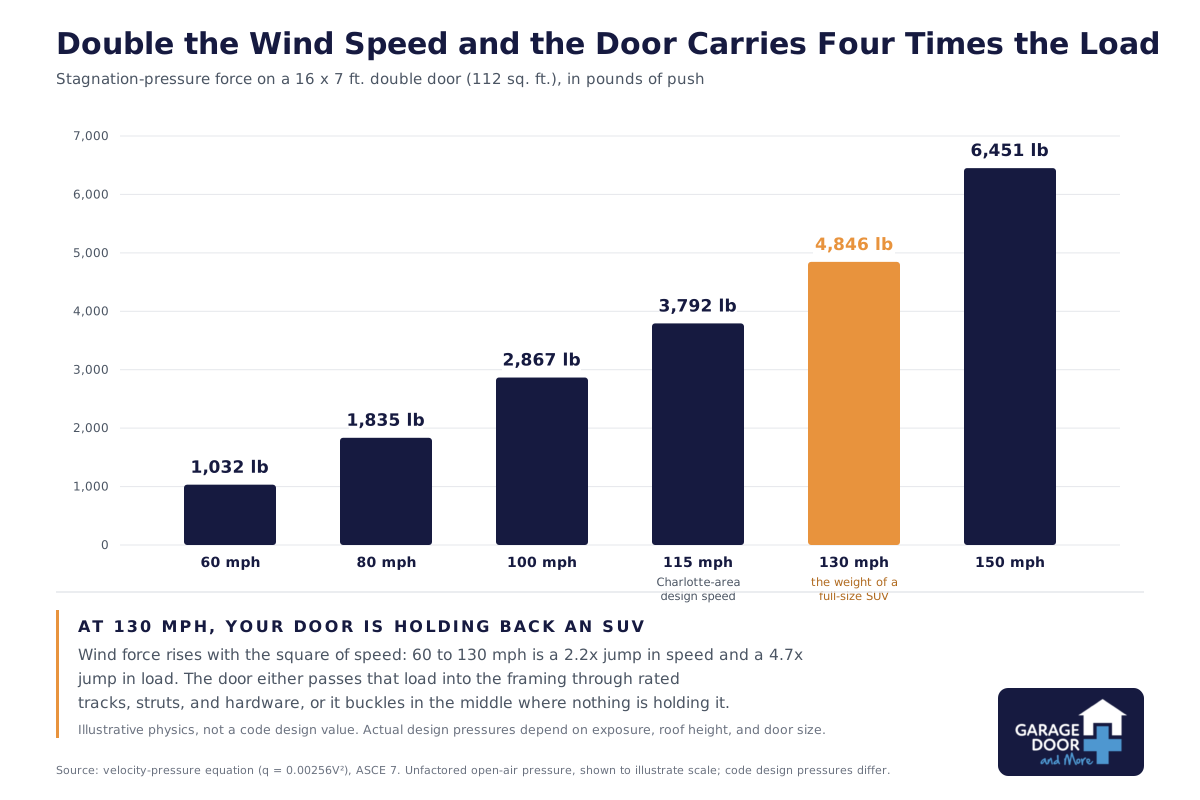
The failure itself follows a script we have seen on plenty of driveways. An unreinforced double door starts to wobble in gusts because it is wide enough to flex in the middle, where no strut is bracing it. The panels bow, the rollers pop out of the track, and the door either collapses inward or gets sucked out of the opening. Suction matters as much as push: storm wind racing across the face of the door creates negative pressure that pulls panels out of their tracks, which is why photos of storm damage show as many doors lying in the yard as lying in the garage. From that moment the house is an open vessel, and the roof above the garage takes combined loads it was never designed for.
The Technicians at Garage Door and More: “Every door we pull out of a yard after a storm has the same thing in common. No struts, light track, and nobody had looked at it in fifteen years. The wind finds the door nobody thought about.”
What North Carolina Code Actually Requires
Every garage door installed in this state has to meet a design pressure set by the North Carolina Residential Code, which takes its wind numbers from the ASCE 7-16 engineering standard. The floor is 9.6 pounds per square foot (PSF) even in the calmest inland zone, and the requirement climbs with your local design wind speed. DASMA’s wind load guide for the North Carolina code, published by the manufacturers’ association whose members build about 95% of the sectional doors sold in the U.S., spells out the table: a 16 x 7 ft. door on a single-story suburban home needs to resist 10.7 PSF of positive pressure at a 120 mph design speed and 16.7 PSF at 150 mph. The suction numbers run higher still, from 11.9 to 18.6 PSF across the same range.
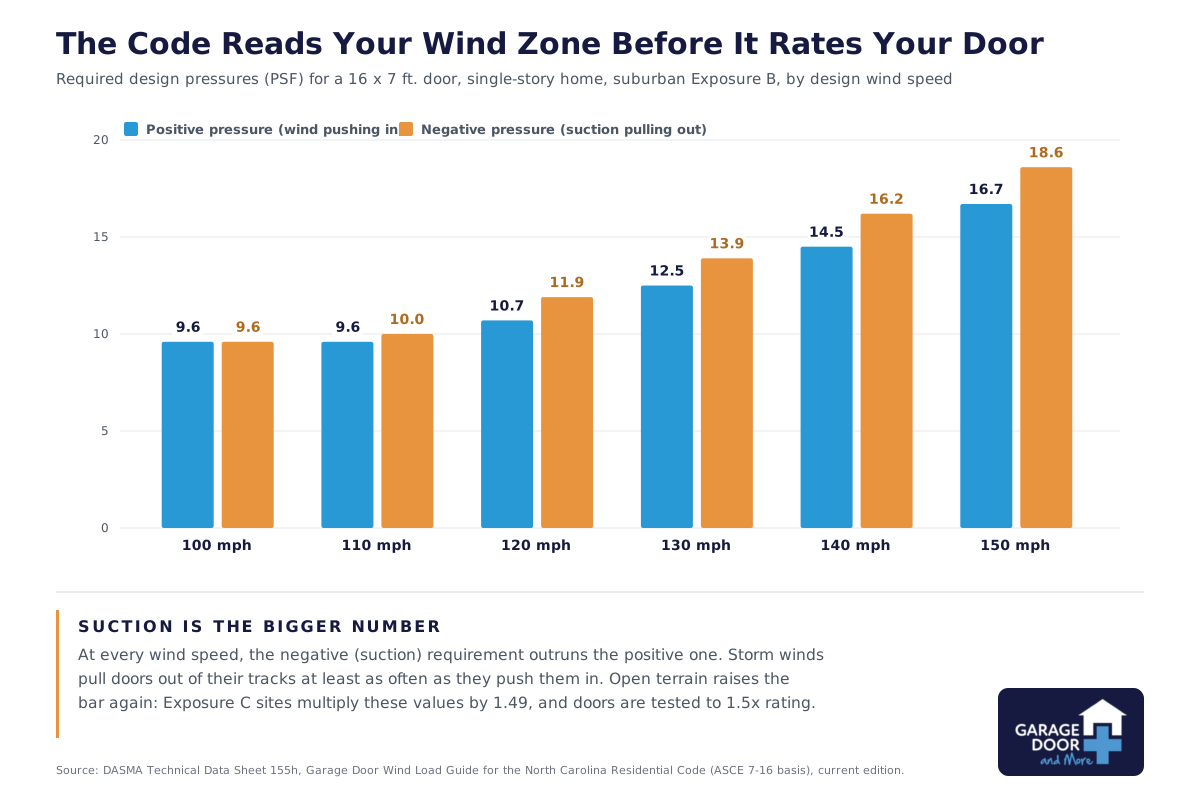
Three details in that table decide what door your address needs. First, geography: design wind speeds around the Charlotte metro sit near the low end of the map, while the coastal counties climb to 140 mph and beyond, which is why a door that passes inspection in Matthews would never pass in Morehead City. Second, terrain: those table values assume suburban “Exposure B” with houses and trees breaking up the wind. A home on open ground, a hilltop lot, or a golf-course edge falls under Exposure C, and the required pressures multiply by 1.49. Third, proof: rated doors are tested to ANSI/DASMA 108 or ASTM E-330, held at 1.5 times their design pressure for 10 seconds in both directions, and they carry a permanent label on the inside face listing the model and its positive and negative ratings.
That label is our first checkpoint on any storm-readiness visit, and it leads to a position we will defend on any driveway: an unlabeled door is an unrated door. If your door carries no design-pressure label, price its wind resistance at zero, because that is how the wind will price it. Doors older than about 15 years predate most of the current wind provisions anyway, which is roughly the point where how long garage doors last becomes a live question for springs and panels too. Plan the replacement on your calendar instead of the storm’s, and have the new door specified and permitted through a professional garage door installation, because the rating on the box only counts when the tracks, jamb brackets, and fasteners go in exactly as tested.
Helene Ended the Inland Exemption
Hurricane Helene put hurricane-force gusts on North Carolina ground hundreds of miles from its landfall. The National Hurricane Center’s final report on Helene, published in 2025, records a Category 4 landfall at 140 mph in Florida, a forward speed near 28 mph that carried destructive wind deep inland, gusts of 101 mph near Banner Elk and 106 mph on Mount Mitchell, and a 65 mph gust at Charlotte Douglas International Airport. National Weather Service surveys found gusts held in the 40 to 50 mph range for hours across south Charlotte and Gaston County, with pockets near 70 mph. Those are not coastal numbers. They landed on the same Piedmont neighborhoods where most garage doors have never been asked a wind question in their lives.
The 2026 season forecast does not change our advice. NOAA’s 2026 Atlantic outlook calls for a below-normal season, 8 to 14 named storms with 1 to 3 major hurricanes, because a strong El Niño is expected to add wind shear over the Atlantic. Read that as scheduling advice, never as permission to wait. Quiet-forecast years have produced some of the worst U.S. landfalls on record, a point NOAA’s own forecasters make each May, and one storm on your street outweighs a whole season of statistics. Buy the door for your geography, since the wind map of North Carolina does not change with the forecast. A below-normal year is simply the easiest time to get on an installation schedule, before the first named storm turns every wind-rated door in the state into a backordered item.
The Rating Lives in the Hardware
A wind-rated door earns its pressure numbers from a package of parts working together: horizontal steel struts across the panels, heavier-gauge or reinforced track, upgraded jamb brackets anchored into the framing, stronger hinges and rollers, and end stiles that spread load into the whole assembly. Manufacturers engineer and test the package as one unit, and on the street a rated door looks identical to an unrated one in the same style. You give up nothing in appearance, and if you compare garage doors across our residential lines you will find wind-load packages available on most models, insulated ones included. The insulation question rides along for free here, since the thicker sandwich construction that raises a door’s garage door R-value also stiffens the panel against bowing.
Aftermarket bracing kits are the corner we tell homeowners not to cut. Bolting heavy struts onto an old door adds real weight, and the torsion springs above the door were sized for the old weight. An overloaded counterbalance makes the door slam, strain the opener, and fail early, and the original light-gauge track and jambs were never rated for storm loads in the first place. Worse, some homeowners try to make these changes themselves on hardware that stores hundreds of pounds of stationary tension. Springs and cables under load injure people every year, which is why we explain how the counterbalance works in detail and still hold the line that you should never DIY a garage door spring repair or any modification that changes what those springs carry.
The Technicians at Garage Door and More: “A strut kit on a tired door is a set of new muscles bolted to an old skeleton. The panel might hold, and then the track lets go instead. Rated doors pass tests as a system because they fail as a system.”
The Insurance Math Now Favors the Stronger Door
The strongest storm-performance data in the country now comes from homes built to the FORTIFIED standard, the beyond-code program from the Insurance Institute for Business & Home Safety (IBHS). A 2025 analysis by the University of Alabama’s Center for Risk and Insurance Research with the Alabama Department of Insurance, reported in the IBHS 2025 Year in Review, examined more than 40,000 properties hit by Hurricane Sally in 2020. FORTIFIED homes were over 70% less likely to file a claim, and when they did file, the damage was 22% less severe. Your garage door sits inside that story: the FORTIFIED Silver designation requires the garage door to be pressure-rated for the site’s design wind speed, because a sealed roof means little above a door that blows out.
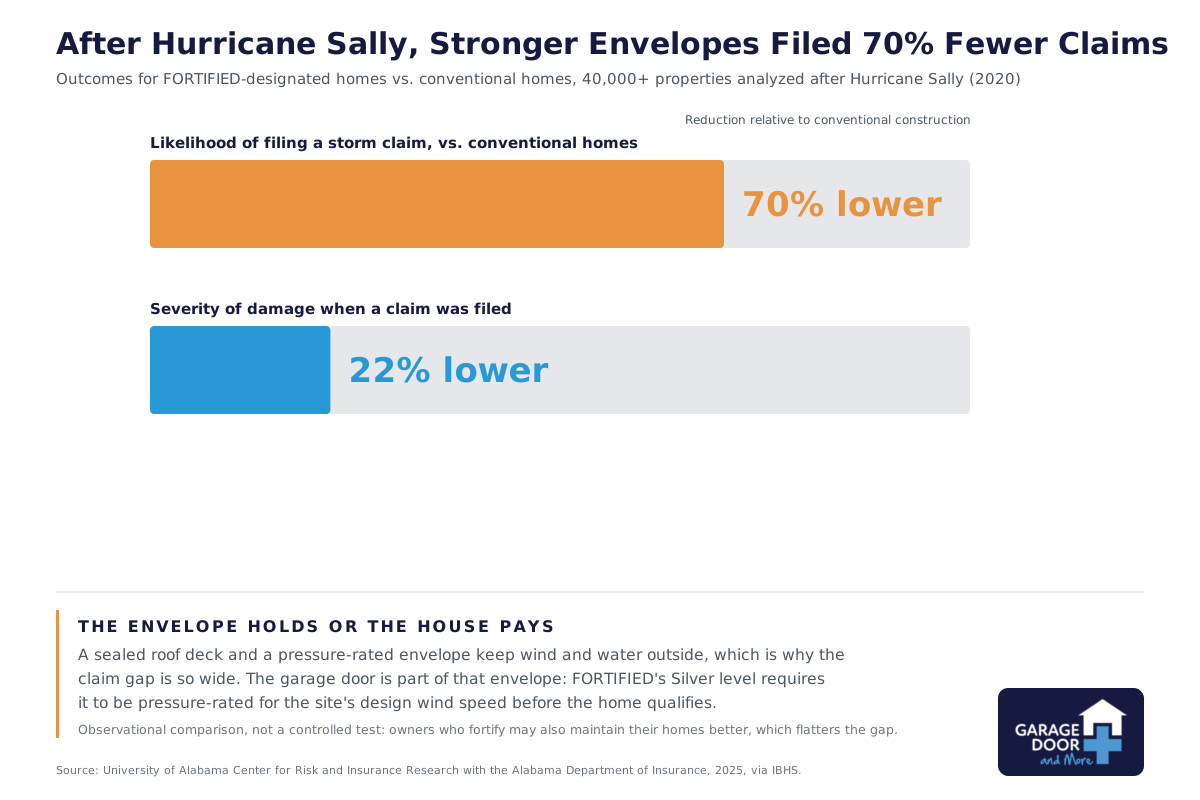
The Sally comparison is observational: families who fortify a home may also maintain it better in other ways, so the direction of the effect is hard to argue with even if the exact size deserves caution.
North Carolina is adopting this standard faster than any other state. The North Carolina Insurance Underwriting Association, which has put more than $100 million into FORTIFIED grants since 2016, celebrated the state’s 15,000th FORTIFIED roof in March 2025. By year’s end North Carolina had passed 20,000 designations after adding more than 7,000 in 2025 alone, the most of any state, and the national program crossed 100,000 designations in May 2026, with more than half of all designations earned in the last three years. NCIUA grants pay up to $10,000 toward upgrades on the Outer Banks and up to $6,000 in 18 other coastal counties, and its policies now include a $5,000 stronger-roof endorsement. Our projection below reads that curve forward.
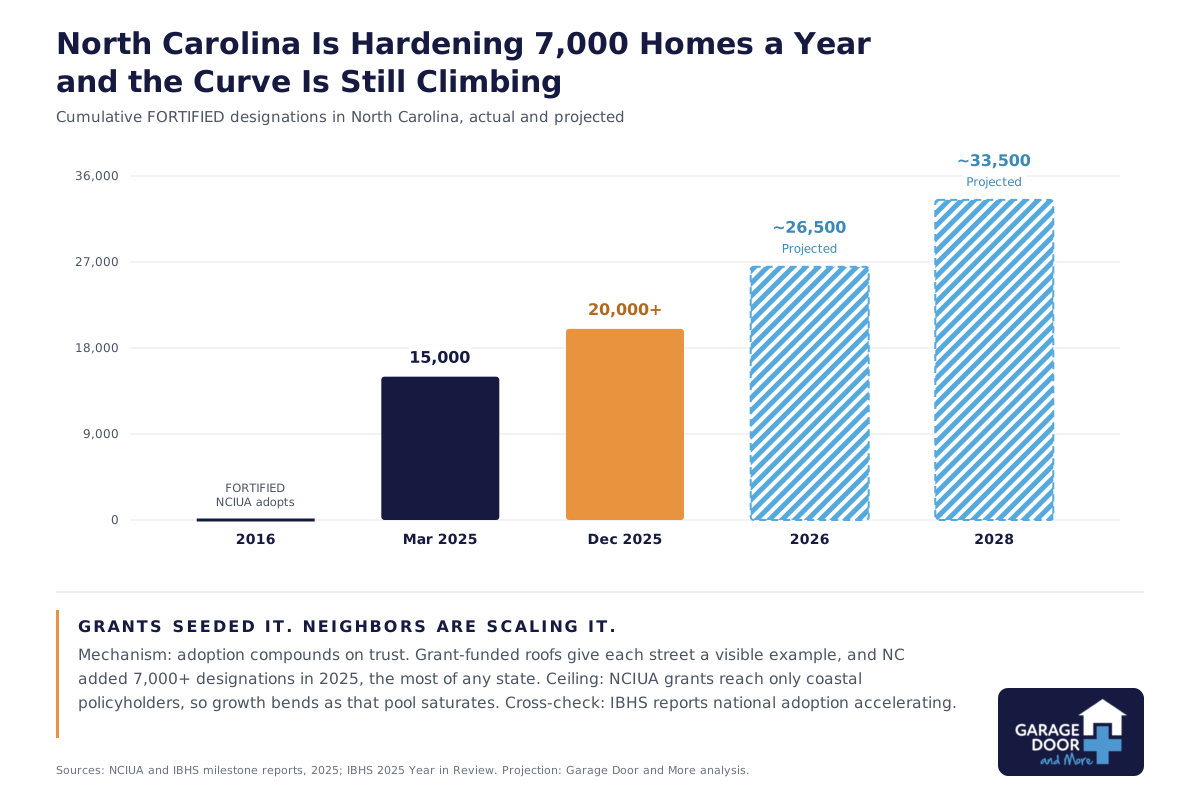
Projection: Garage Door and More analysis based on trust-threshold adoption, where each grant-funded roof gives a street a visible example and insurer credits compound demand, assuming growth bends toward roughly 33,500 by 2028 because NCIUA grants reach only coastal policyholders and that subsidized pool saturates, cross-checked against IBHS’s 2026 reporting that national adoption is accelerating with more than half of all designations earned since 2023.
Premiums are the other half of the ledger. In January 2025 the N.C. Department of Insurance settled the Rate Bureau’s request for a 42.2% average homeowners increase down to 7.5% on June 1, 2025 and another 7.5% on June 1, 2026, with territory increases capped at 35% and no new filings allowed before June 2027. The same settlement revised the state’s wind mitigation credits, the discounts tied to verified upgrades. The Rate Bureau said publicly that it expects to be back with another significant request when the freeze lifts, and the Government Accountability Office reported in 2026 that many coastal North Carolina ZIP codes already saw inflation-adjusted premium increases above 50% from 2019 to 2024, with homes in the highest wind-risk areas paying about 58% more than similar homes one risk tier down. Rates are set by everyone else’s losses. Mitigation credits, and whether home insurance covers garage door damage at your house in the first place, are the only parts of that equation a homeowner actually controls.
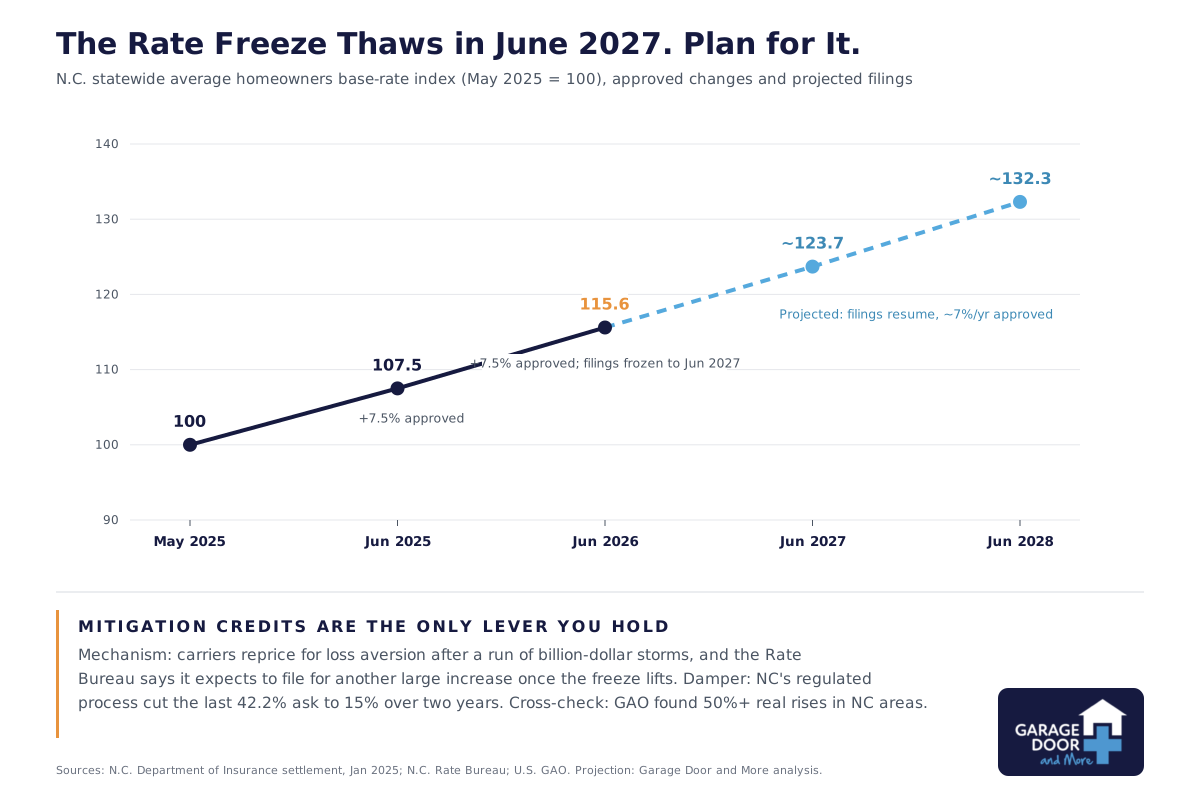
Projection: Garage Door and More analysis based on loss-averse repricing, since carriers and reinsurers keep raising prices after a run of billion-dollar storm years and the Rate Bureau has said it will file again, assuming approved increases near 7% per year once the freeze lifts in June 2027 because North Carolina’s regulated process cut the last 42.2% request to 15% over two years, cross-checked against the GAO’s 2026 findings on premium growth in wind-exposed North Carolina ZIP codes.
What It Costs and What Comes Back
Garage door replacement is the highest-return project in American remodeling, and it is not close. Zonda’s 2025 Cost vs. Value Report puts the national average job at $4,672 with a Realtor-estimated resale value of $12,507, a 268% return that ranked first among the roughly 28 projects in the study. Those resale figures come from real estate professionals’ estimates rather than measured sale prices, so treat the exact percentage gently and the ranking seriously: the door has held the top spot for six of the last seven editions. A wind-load package adds to the price of the door through its struts, track, and hardware, and it is the cheapest that protection will ever be, because it rides in on a replacement you were already making. Our guide to how much a new garage door costs breaks down the base numbers by material and style.
The repair-first rule still applies, and it costs us door sales to say so. If your door is under 15 years old, the panels are sound, and a spring or cable has failed, fix the part and keep your money; our own breakdown of when to repair or replace a garage door draws that line in detail. A wind rating is a replacement-time decision. When the door ages out, gets hit, or fails a label check, that is the moment to buy the rating once and carry it for the next 20 years, and a garage door replacement quoted to your wind zone and exposure category is how it should arrive.
The Technicians at Garage Door and More: “If a $220 spring buys your door eight more good years, we will tell you that with a $2,400 door sitting on the truck. The day the door itself is done, spend the extra on the rated package. You are buying the one part of the storm you get to decide in advance.”
The Driveway Test We Give Every Homeowner
Stand inside your garage with the door down and run four checks. Find the label: no design-pressure sticker means no rating, and a door built before roughly 2010 almost never has one. Count the struts: a double door with fewer than two horizontal reinforcements across the back will flex in the middle, and flex is where failure starts. Read your lot: open terrain behind or beside the house pushes you toward Exposure C loads, nearly half again higher than the standard table. Then look at the track and springs for rust, frayed cable, or loose jamb brackets, the quiet failures a yearly garage door maintenance visit catches before a storm does.
Fail any of those checks and the fix is a conversation, never a panic. We are a family-owned Charlotte company with more than 1,000 reviews, we quote repair before replacement when repair serves you, and when a door does come down in a storm we treat a car trapped behind a dead door as the same-day problem it is. Request a garage door quote and ask us to spec it against your wind zone. The wind already knows your address. Your door should too.