The choice between a wall-mount and a ceiling-mount garage door opener comes down to two questions, and noise is not one of them: does your door run on torsion springs, and do you have real plans for your ceiling. If the answer to the first is no, the wall mount is off the table before price enters the picture. If the answer to the second is no, the wall mount’s $250 to $500 hardware premium buys you very little that a good belt drive doesn’t already deliver. We install both every week across Charlotte, and the honest version of this comparison is shorter than the internet makes it look.
How the Two Openers Move Your Door
A ceiling-mount opener is the machine most garages already have: a motor hung from the ceiling that drags a trolley along a rail, pulling the door up its tracks with a chain, a belt, or a stationary chain the motor rides along (a direct drive). The motor does not lift the door’s weight by itself. The springs do the lifting; the opener supplies motion and control. Our guide on how garage door springs work covers that counterbalance job in detail.
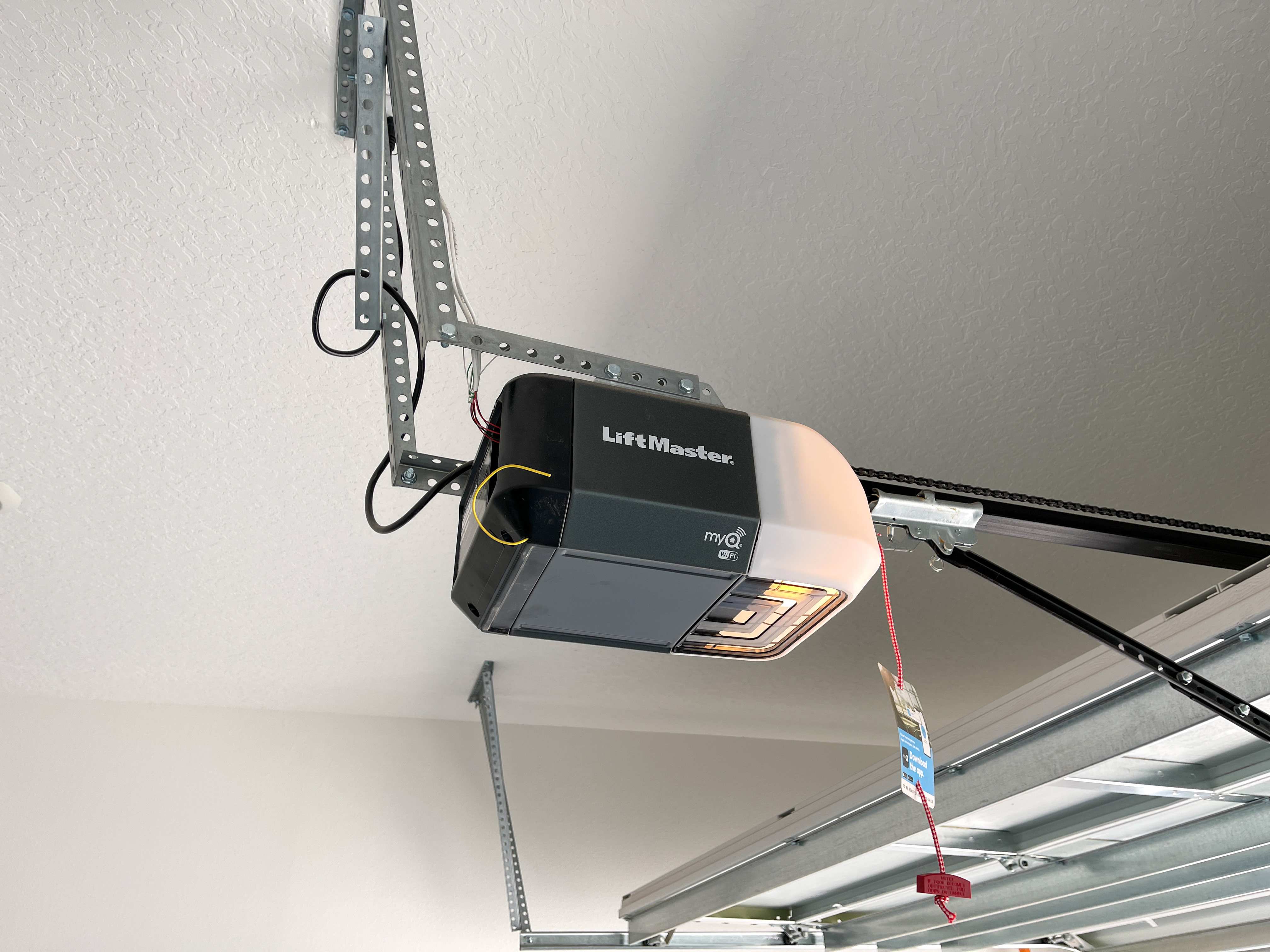
A wall-mount opener, also called a jackshaft or side-mount opener, skips the rail entirely. It bolts to the wall beside the door and clamps directly onto the torsion bar, the steel shaft above the door that the springs wind around. When it runs, it rotates that bar, and the cables wound on the drums at each end raise or lower the door. No trolley, no rail, no hardware hanging over your car. That one mechanical difference drives everything else in this comparison: the price, the compatibility rules, and what you actually get for the money.
The Spring Test Comes First
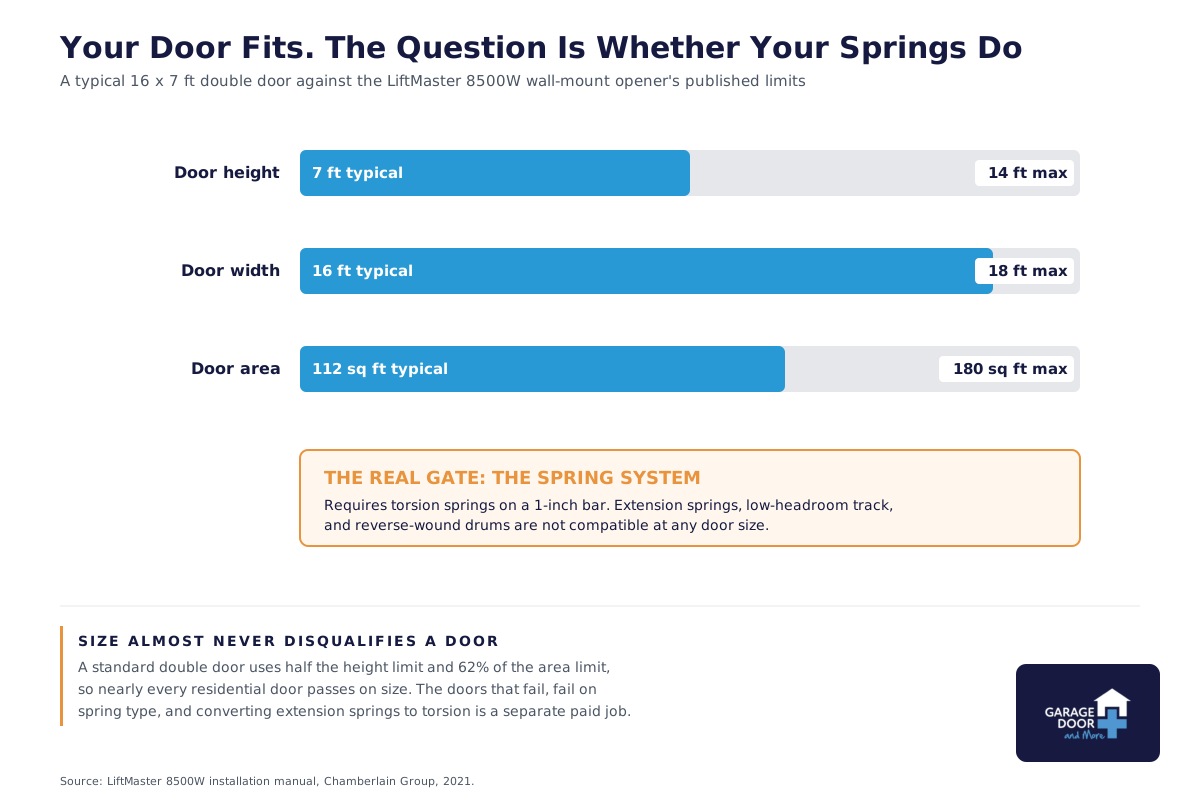
Because a jackshaft opener works by turning the torsion bar, a door without a torsion bar cannot use one. That single requirement disqualifies more garages than any spec sheet. Doors counterbalanced by extension springs, the long springs that stretch along the horizontal tracks, have no shaft to drive. The same goes for low-headroom track setups with outside pickup drums and for reverse-wound drum configurations. The LiftMaster 8500W installation manual (2021), the flagship residential wall mount, is blunt about it: sectional doors with torsion assemblies only, on a 1-inch torsion bar, for doors up to 14 feet tall, 18 feet wide, and 180 square feet.
Read those limits against a normal house and you see the point: size almost never disqualifies a door. A typical 16 by 7 foot double door uses half the height ceiling and 62% of the area ceiling. The doors that fail this test fail on spring type. If you’re weighing the difference, our comparison of torsion vs extension springs explains why torsion systems earn their place, and an extension-spring door can be converted. That conversion is spring work under extreme tension, which makes it a professional garage door spring replacement job, and it adds a few hundred dollars to the project before the opener is even unboxed. Weight matters too, since the springs must be matched to the door before any opener goes on; here’s how much a garage door weighs and why that number decides more than horsepower.
“Half the wall-mount calls we get end in the first five minutes. If your springs stretch along the tracks instead of winding on a bar above the door, the conversation is over before price ever comes up.”
— The Technicians at Garage Door and More
What Each One Costs
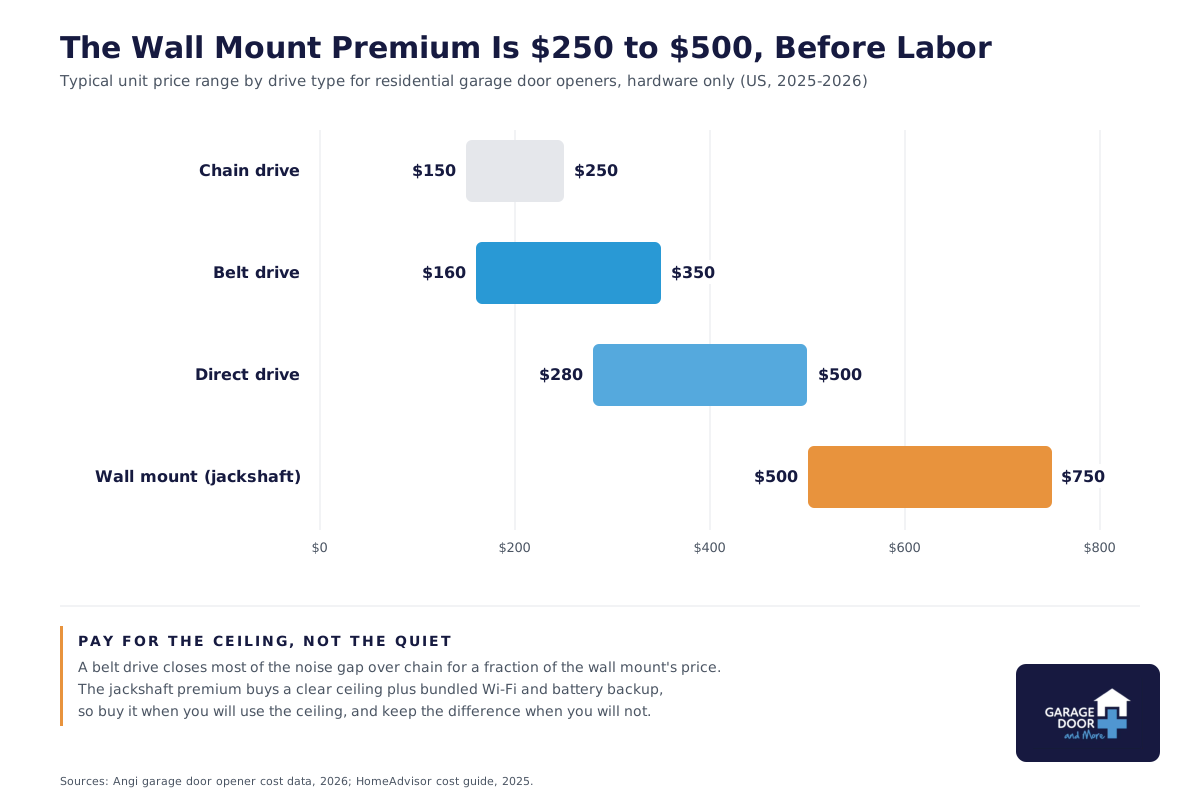
The hardware gap is real and it is not small. Per Angi’s 2026 cost data, a chain-drive unit runs $150 to $250 and a jackshaft unit runs $500 to $750, with direct drives at $280 to $500 in between. HomeAdvisor’s 2025 guide puts belt-drive units at $160 to $350. Labor sits on top of all of those, and a wall-mount install often costs more in labor too, since the torsion bar has to be inspected, sometimes trimmed, and the opener aligned square to it. Browse our residential garage door openers to see where specific units land inside those ranges.
Buy the Wall Mount for the Ceiling, Not the Silence
Here is where we part ways with most of what ranks on this topic. Nearly every comparison sells the jackshaft on quiet operation. Quiet is real, but it is the wrong reason to spend the premium, because a belt drive already solves the noise complaint for a fraction of the cost. The rail’s vibration path into your framing is what wakes the household, and swapping a chain for a reinforced belt removes most of it. If noise is your whole complaint, read our breakdown of choosing a belt or chain garage door opener and keep several hundred dollars in your pocket.
The wall mount is a space purchase. It earns its premium in four specific garages:
First, the garage where the ceiling is the storage plan: overhead racks, kayaks, a car lift. Second, the garage where a rail physically cannot go, because the ceiling is vaulted, obstructed by ducts, or the door runs high-lift or full-vertical track. Third, the garage under a bedroom or bonus room, where removing the ceiling-mounted vibration source entirely beats dampening it. Charlotte builds a lot of these; homes with two-car and larger garages dominate new construction, with 66% of new single-family homes completed in 2022 carrying a two-car garage and another 19% built for three or more cars, per NAHB analysis of Census Survey of Construction data, and the bonus-room-over-garage floor plan is standard in those neighborhoods. Fourth, the tall or oversized door, where high-lift track and a shaft-driven opener are the correct engineering rather than a preference.
If none of those four describes your garage, our advice costs us a sale: skip the jackshaft.
“If your ceiling is empty and staying empty, keep the four hundred dollars. A belt drive will get you nearly all the quiet, and you will never miss the thing the wall mount actually does.”
— The Technicians at Garage Door and More
Smart Control and Battery Backup Come Standard on the Wall
One honest point in the jackshaft’s favor: the feature set is bundled, not optional. Every 8500W ships as a LiftMaster garage door opener powered by myQ with Wi-Fi built in, plus an automatic deadbolt lock, an LED light you position where you want it, and battery backup rated by LiftMaster for 30 hours of standby or up to 20 cycles in 24 hours. On budget ceiling mounts, a garage door opener battery backup is a $50 to $150 add-on and Wi-Fi varies by model, so a fairly equipped belt drive narrows the price gap you saw in the chart above.
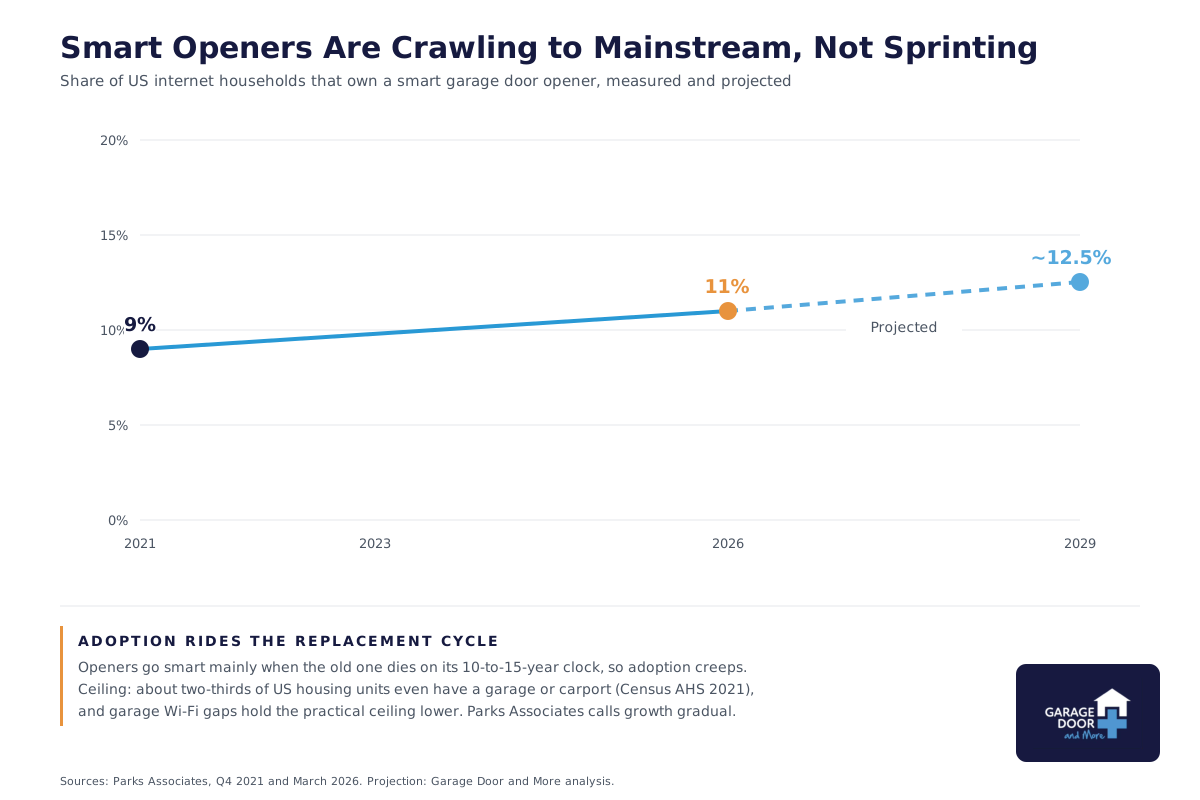
Whether the connected features matter to you is a separate question, and the national data says most homeowners are still deciding. Parks Associates reported in March 2026 that smart garage door opener ownership has reached 11% of US internet households, up from 9% at the end of 2021, with a flat stretch of 7 to 9% in between. That is a crawl, not a wave, and the mechanism is simple: most people go smart when the old opener dies, so adoption moves at the speed of the 10 to 15 year replacement cycle. We wrote separately about whether a smart garage door opener pays its way; the short version is that remote monitoring is the feature owners keep using after the novelty fades.
The Boom-Era Replacement Wave Is Peaking Now
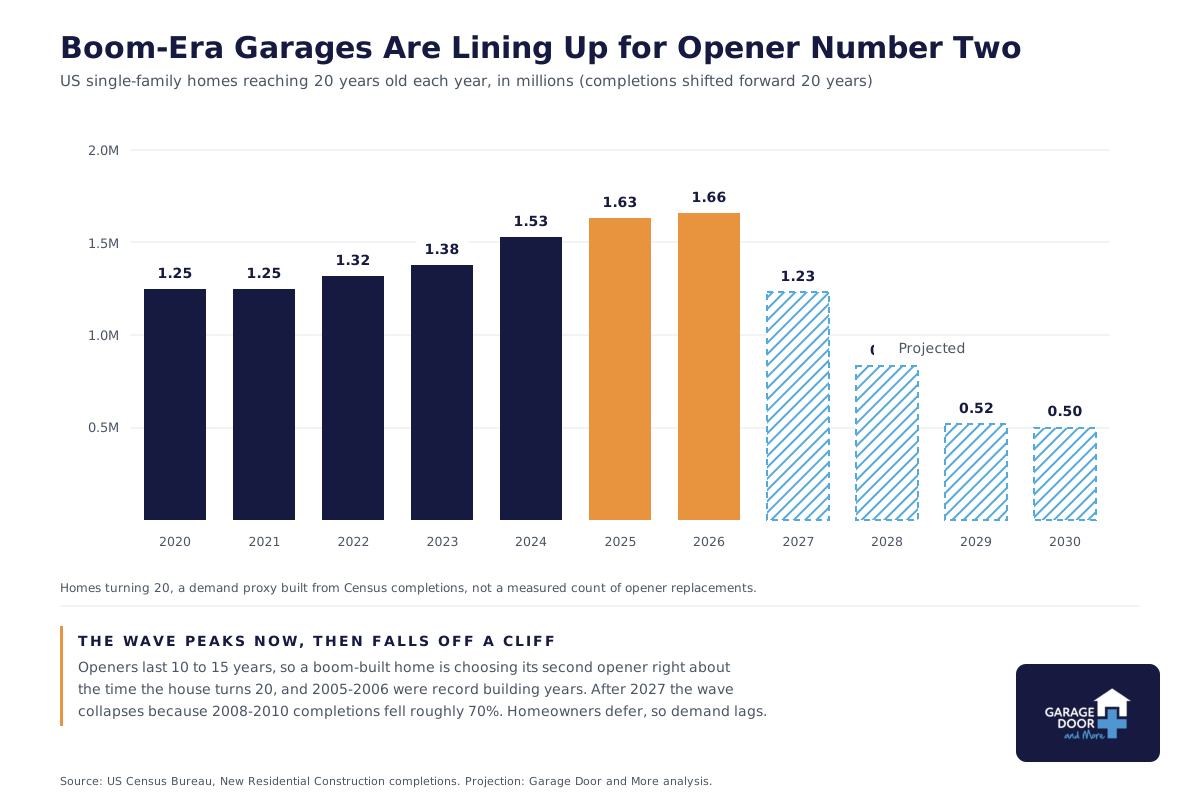
If your house went up during the mid-2000s building boom, this decision is probably closer than you think. Census Bureau completions data shows US builders finished about 1.63 million single-family homes in 2005 and 1.66 million in 2006, the two biggest years on either side of the crash. Those homes turn 20 in 2025 and 2026. An opener lasts 10 to 15 years per HomeAdvisor’s 2025 figures, so a boom-built home is typically shopping for opener number two right about now, and the first question worth asking is how long do garage door motors last compared to the door hanging under them. The wave then falls off a cliff: 2008 through 2010 completions dropped roughly 70% from the peak, so the neighborhoods lining up for this decision are overwhelmingly the 2000s ones.
The practical takeaway: choose your opener before it chooses its moment. A dying opener announces itself with straining, stalling, and phantom reversals, and the day it quits is rarely a convenient one. If yours is showing those signs, our garage door opener repair in Charlotte team can often revive it the same day, and we will tell you plainly when a $150 repair buys years and when the unit is done. Repair first, replace when the math says so. That has been our rule for decades and it applies to openers the same as doors.
The Repairs You Should Never Touch
Everything a jackshaft opener connects to sits under extreme tension. The torsion bar, the springs wound around it, the cables and drums it drives: these store enough energy to break bones, and they are exactly the parts a wall-mount installation handles. LiftMaster’s own manual states the 8500W is intended for installation by trained garage door technicians, and it may require adjustments to the springs and track. We will explain how every one of these parts works, in as much detail as you want. We will not walk you through adjusting them, and no article should. A ceiling-mount swap on an existing, balanced door is a plausible weekend project for a careful homeowner. A jackshaft install is not.
The Driveway Verdict
Run the two questions from the top. Torsion springs on a 1-inch bar, and a ceiling you intend to use, obstruct, or quiet completely: the wall mount is worth every dollar of its premium, and it is the better machine for high-lift and oversized doors besides. Torsion springs but an ordinary garage with an empty ceiling: a mid-range belt drive with battery backup is the smart money, and you can compare garage door opener models side by side before deciding. Extension springs: the jackshaft conversation starts with a spring conversion, and whether that is worth doing depends on the age and condition of the whole door, which is a judgment call we are glad to make with you in your driveway rather than for you in a blog post.