
Key takeaways
- Garage door springs are tensioned steel coils that counterbalance a door weighing 150 to 400 pounds.
- Residential doors use torsion springs on a shaft above the door or extension springs alongside the horizontal tracks.
- Clopay lists 10,000 cycles as the industry-standard spring rating, about 6 to 7 years at Forbes Home’s figure of 1,500 cycles a year.
- DASMA says spring systems “should be repaired only by trained professionals” and advises replacing both springs on a two-spring door.
- Garage Door and More recommends lubricating springs every 6 months and testing door balance once a year.
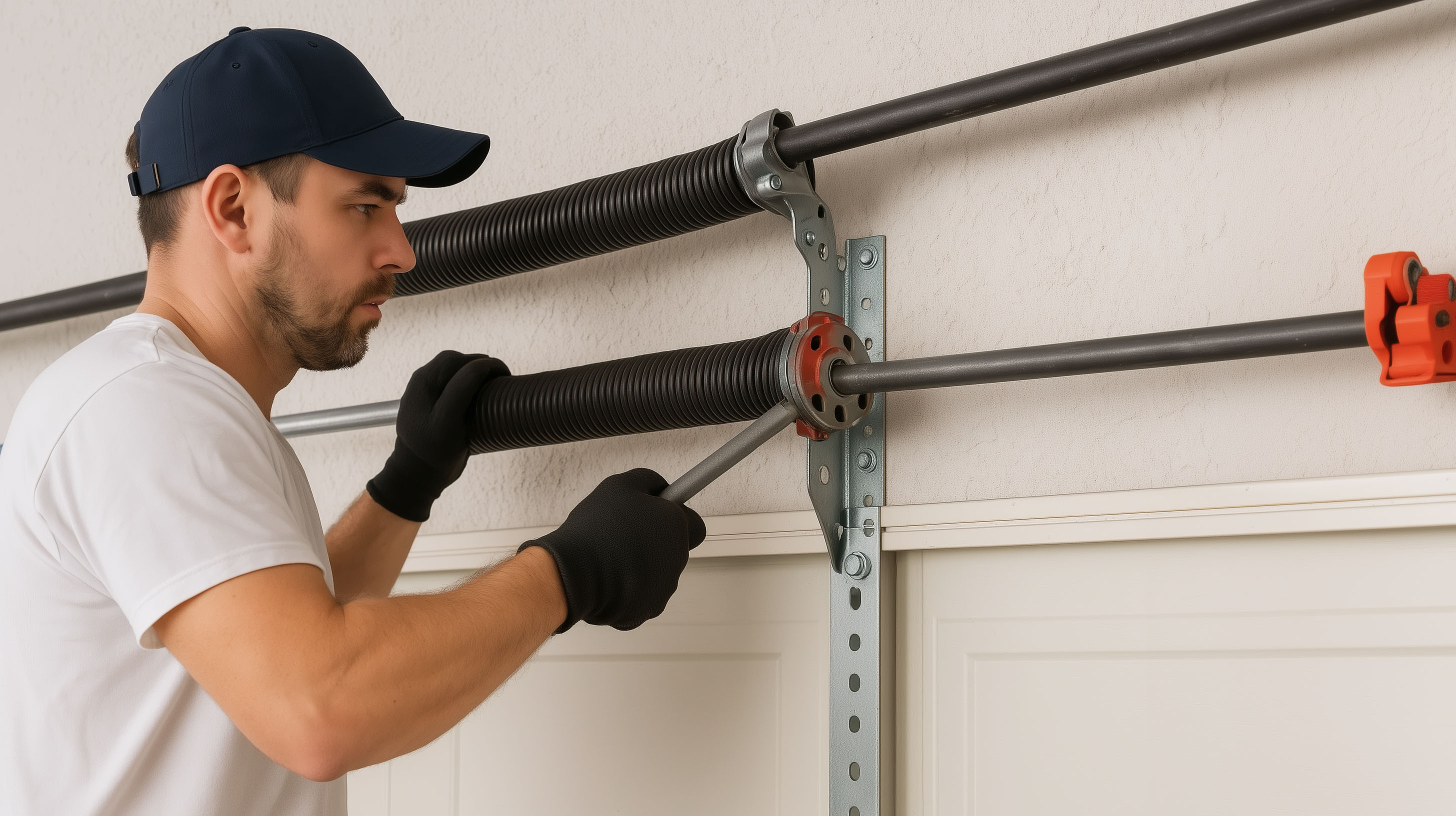
A garage door spring is a tightly wound steel coil that stores energy to counterbalance the weight of your overhead door, so the door opens smoothly with minimal effort from the opener or from you. DASMA, the Door & Access Systems Manufacturers Association, calls springs “arguably the most important and most dangerous part” of a garage door. Garage Door and More services torsion and extension springs across Charlotte, Matthews, Indian Trail and nearby towns.
What are the types of garage door springs?
The two types of garage door springs used in residential doors are torsion springs and extension springs. Each design has its own strengths and installation requirements.
| Spring type | Location | Mechanics | Common uses |
|---|---|---|---|
| Torsion springs | Mounted above door | Twist to store energy | Heavier doors, commercial style |
| Extension springs | Alongside tracks | Stretch to store energy | Lightweight residential doors |
- Torsion springs wrap around a metal shaft and generate torque to turn the cable drums.
- Extension springs stretch along the horizontal tracks and lift with straight-line tension.
- Torsion springs handle heavier doors; extension springs suit lighter, single-car doors.
If your door uses extension springs, look for a safety cable through each one. DASMA notes the cable “can keep that broken spring contained.”
How do springs counterbalance a garage door?
Springs counterbalance a garage door by storing energy as the door closes and releasing it as the door opens. Garage doors weigh between 150 and 400 pounds, so without springs the opener would struggle. With balanced springs, the door feels nearly weightless when you activate the opener.
Spring life is measured in cycles, and a heavier door gets a heavier spring, not a different rating. Clopay lists 10,000 cycles as the industry standard, with upgrades to 25,000, 50,000 or 100,000. Forbes Home puts the average door at over 1,500 cycles a year.
| Spring cycle rating | Approximate life at 1,500 cycles per year |
|---|---|
| 10,000 (industry standard) | About 6-7 years |
| 25,000 | About 16 years |
| 50,000 | About 33 years |
- The more a spring winds or stretches, the more counterbalance it provides.
- One cycle equals one full open and close.
- Safe turns on a torsion spring depend on door height and spring specification.
If you run the door six or eight times a day, a standard spring can wear out in four or five years, and a high-cycle spring is the cheaper choice over time.
What are the signs of garage door spring wear?
The main signs of garage door spring wear are a gap in the coil, an uneven door, sluggish movement and loud clanging. Springs eventually lose tension or break, and catching wear early prevents sudden failures.
| Warning sign | Possible cause | Immediate action |
|---|---|---|
| Gap in coil | Spring fracture | Stop using door |
| Door imbalance | Uneven tension | Contact technician |
| Sluggish operation | Reduced tension | Schedule maintenance |
| Loud clanging | Loose hardware or worn spring | Inspect and tighten |
- A visible gap in the coil means the spring has broken or is about to.
- An imbalanced door sags on one side when you lift it halfway.
- A sudden loud bang from the garage often means a spring snapped.
Springs can break without warning, so Garage Door and More technicians recommend a professional assessment at the first hint of wear.
What are the safety risks of garage door springs, and what precautions help?
Garage door springs store enough energy to cause serious injury. Never attempt spring adjustments or replacements without proper tools and training; DASMA says “Spring systems are dangerous and should be repaired only by trained professionals.”
| Risk | Hazard description | Preventive measure |
|---|---|---|
| Recoil injury | Spring snaps and whips back | Wear protective gear and use winding bars |
| Door drop | Uneven tension causes door to slam | Secure door with clamps |
| Hardware failure | Bolts or cables break under load | Inspect and replace worn parts |
- Technicians use winding bars made for torsion springs, never screwdrivers.
- Safety glasses, gloves and long sleeves reduce injury risk.
- The door is clamped to the track before any spring work.
Lift cables and bottom brackets carry the same tension, and DASMA says cables should be replaced “only by a trained technician.”
How do you maintain garage door springs so they last longer?
You maintain garage door springs with lubrication, balance tests, hardware checks and a yearly professional tune-up. Garage Door and More recommends this schedule.
| Maintenance task | Frequency | Benefit |
|---|---|---|
| Lubricate springs | Every 6 months | Reduces friction and corrosion |
| Balance test | Annually | Confirms proper tension |
| Hardware inspection | Every 3 months | Identifies loose or damaged parts |
- Spray silicone lubricant on the coils.
- For a manual lift check, disconnect the opener and lift the door by hand.
- Book an annual tune-up for spring tension adjustments.
Lubrication and balance tests are safe do-it-yourself jobs; anything that changes spring tension is not. Garage Door and More walks every customer through a short maintenance routine.
What does professional garage door spring replacement involve?
Professional garage door spring replacement takes about 90 minutes over five steps: securing the door, removing the old spring, installing the new one, calibrating tension and testing. On a two-spring door, DASMA advises replacing both springs even if only one is broken.
| Step | Description | Approximate time |
|---|---|---|
| Door securing | Clamp door to track, disconnect opener | 15 minutes |
| Old spring removal | Unwind torsion or detach extension springs | 20 minutes |
| New spring installation | Measure, cut, and install correct spring | 30 minutes |
| Tension calibration | Adjust turns or stretch for balance | 15 minutes |
| Final testing | Operate door manually and via opener | 10 minutes |
- Wire size and length are measured to match your door’s weight.
- Tension is set to the manufacturer’s specifications.
- The final check covers safety sensors and door alignment.
How can Garage Door and More help with your garage door springs?
Garage Door and More inspects, lubricates, adjusts and replaces torsion and extension springs for Charlotte-area homeowners, with same-day appointments Monday through Friday, 8:00 a.m. to 5:30 p.m. Call (980) 263-0092 to schedule a spring safety inspection.