
The most expensive thing summer heat does to your garage door happens in January. July rarely snaps a spring outright. What July does is thin the lubricant, bake the weatherstripping, and stretch every steel part through a daily expand-and-contract cycle, so the fatigued coil fails on the first cold morning that contracts it hard. Treat summer prep as a season of its own and you miss the point. Summer is when winter failures get scheduled, and this article walks through how to cancel the appointment: what heat does to the door, what it does to the opener, and how to cool and ventilate the garage in an order that doesn’t waste your money.
Charlotte summers are getting hotter, and your garage feels every degree
Charlotte now works through eleven more days at or above 95°F each summer than it did in 1970, and the average summer runs about 2°F warmer, according to a 2021 Climate Central analysis of NOAA station data for the city. The same analysis found Charlotte’s urban core averages about 6°F hotter than the surrounding countryside, because pavement, rooftops, and parking lots store daytime heat and release it overnight. Concrete works like a battery. It charges all afternoon and discharges into the evening, which is why a garage that faced the sun at 4 pm is still radiating at 9.
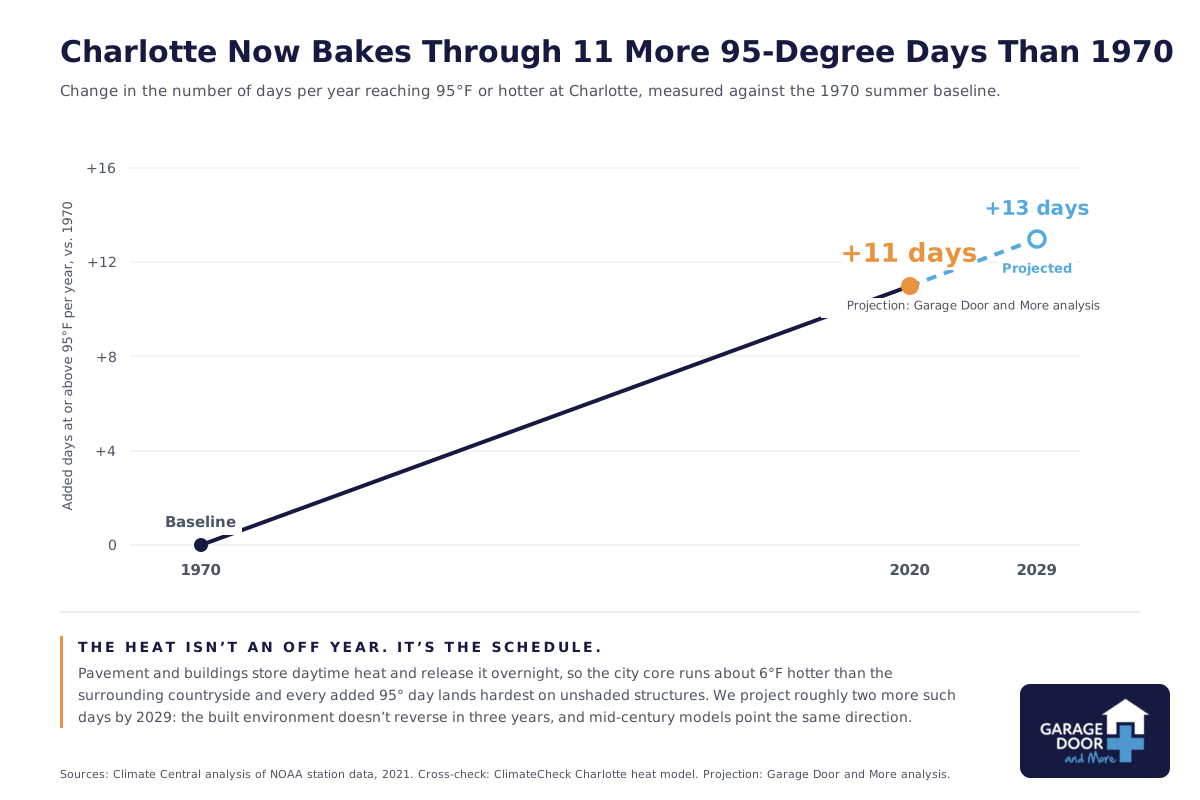
Projection: Garage Door and More analysis based on the decadal warming trend and Charlotte’s growing urban heat island, assuming the 2020 level as a floor because the built environment and banked emissions do not reverse within three years, cross-checked against ClimateCheck’s Charlotte model, which points the same direction with a steeper mid-century curve of roughly 40 days above 95.6°F by 2050.
Your garage concentrates that trend. A closed, unshaded garage takes solar load on the door and roof all day with no conditioned air to bleed it off, and the slab keeps radiating long after sunset. Everything below assumes that reality: the door, the opener, and anything you store out there spend the Charlotte summer in the hottest room on the property.
What heat does to the door itself
Steel grows when it heats. The growth is small per part, yet a garage door system is twenty-plus feet of track, hinge, and roller built to tolerances measured in fractions of an inch, so a door that glides at 7 am can drag by 5 pm. That afternoon-only rubbing is a diagnostic gift. A door that binds all day has a hardware problem; a door that binds only in the heat has an expansion problem, and it usually traces to a track that was already slightly out of line before summer magnified it.
Lubricant fails quietly at the same time. High temperatures thin the film on rollers, hinges, and the spring coil until metal starts riding on metal, and dry metal grinds itself down with every cycle. If the door has picked up a squeal or rattle since June, start with garage door lubrication using a garage-rated synthetic, not a penetrating oil. We put lubrication in early summer, not just at the fall visit, because July is when the film breaks down. A fall-only schedule protects the door for the season it needs the least help.
Rubber takes the third hit. Heat and UV dry the bottom seal and the side stops until they crack, flatten, and pull away, and every gap they leave feeds hot outside air into the space you’re trying to keep cool. Press a thumbnail into the bottom seal: pliable rubber springs back, cooked rubber holds the dent or crumbles. Replacing weather stripping for garage doors costs less than almost any other fix in this article and does more for garage temperature per dollar than any gadget.
Then comes the deferred bill. A summer of extra cycles on degraded lubricant, with steel flexing through a wide daily temperature swing, adds fatigue the spring carries silently into December, and cold steel loses ductility, so the coil fails at its weakest point on a frigid morning. When that happens, the fix is garage door spring repair by a technician, full stop. A loaded torsion spring stores enough energy to break bones, and no summer-prep savings are worth touching one.
What heat does to the opener
The most common July opener call we run isn’t a broken opener. It’s the sun. Safety sensors read an infrared beam across the door opening, and low, direct afternoon light can flood a sensor and mimic an obstruction, so the door refuses to close at 5 pm and behaves perfectly the next morning. Before you book anyone, check whether a garage door sensor light is red or blinking during the failure window. If it is, and the lenses are clean and the brackets tight, shade the sun-side sensor with a small visor and the problem usually disappears. That check costs nothing, and it cancels a service call you don’t need.
“Half the ‘dead opener’ calls we get in July close just fine by the time the truck arrives, because the sun moved. Look at the little sensor lights before you spend a dime on anybody, including us.”
The Technicians at Garage Door and More
Real heat trouble shows up as thermal overload. An opener motor working in a very hot garage sheds heat slowly, and several cycles in quick succession can trip its internal protection and shut it down until it cools, usually 15 to 30 minutes. If the door is stuck and the car is inside, pull the red release cord and open the garage door manually, then lock it and let the motor rest. One shutdown on a 98° afternoon is the design working. Repeated shutdowns mean the motor is straining against a heavier problem, often a door thrown out of balance by the spring wear described above, and that combination is worth a garage door opener repair visit before the motor cooks itself.
Whatever you do, leave the force settings alone. Turning up the force so a struggling opener can muscle the door closed does not fix anything; it deletes the safety margin that makes the door reverse when it meets a child, a pet, or a bumper. If the garage door won’t open and heat, sensors, and the manual release don’t explain it, diagnose the cause instead of overriding the symptom.
Cooling and ventilation, in the order that works
Spend in this order: seal, insulate, ventilate, and only then condition. Homeowners regularly run it backwards, pricing a mini-split for a garage that leaks air around a cracked bottom seal, and cooling an unsealed garage is paying to air-condition the driveway. The sequence matters because each step multiplies the one after it.
Seal first. Fresh bottom and perimeter seals close the gaps that feed hot air in at ground level, for well under the cost of any equipment.
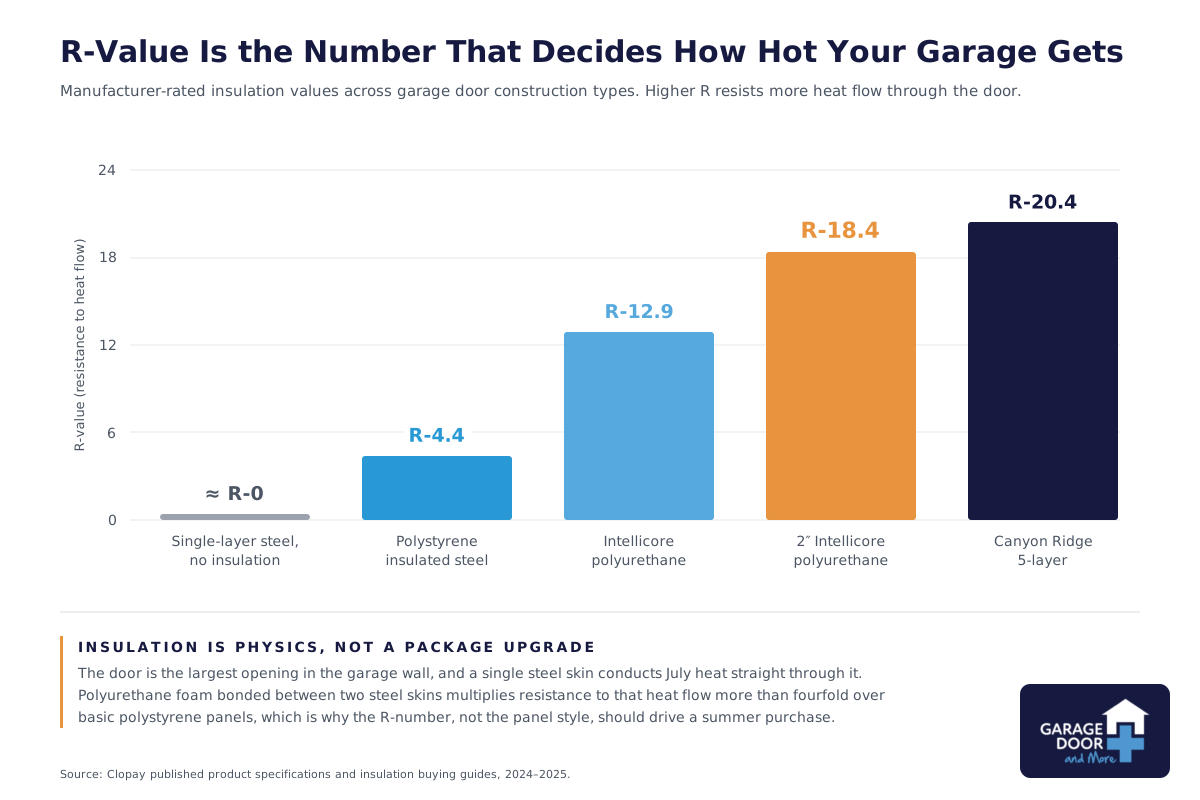
Insulate the door second. The door is the largest opening in the garage envelope, and its garage door R-value decides how fast July conducts through it. The spread between constructions is wide. Clopay’s published specifications run from roughly R-0 for a single-layer steel door, to R-4.4 for basic polystyrene insulated steel, to R-12.9 and R-18.4 for Intellicore polyurethane models, up to R-20.4 for a Canyon Ridge five-layer door. That is the difference between a steel skin that conducts afternoon heat straight through and a foam-core panel that carries more than four times the heat resistance of entry-level insulation. You can compare specific models side by side on our garage door R-value chart.
Ventilate third. A sealed, insulated garage still gains heat, so give that heat a way out. Open the door during the cool morning and evening hours to flush the space, close it before the afternoon peak, and use a fan high on the wall or ceiling to push the hottest air out while cooler air enters low. Heat stratifies; the exhaust belongs up where the heat is. One caution: never leave the door cracked open and unattended as a ventilation shortcut. An open door is an invitation, and a fan accomplishes the same air movement without unsecuring the house.
Condition last, and only with a reason. If the garage doubles as a gym or workshop you use through the afternoon, a mini-split or window unit makes sense after the first three steps have shrunk the load it must fight. If the garage just parks cars and stores boxes, sealing, insulating, and ventilating will carry it through a Charlotte summer without a compressor.
What the door upgrade returns, if repair isn’t enough
Repair honestly first: if your door is under fifteen years old and the panels are sound, replace the seal, restore the lubrication, and keep your money. An insulation retrofit kit on a healthy uninsulated door is a fair middle step, though it adds weight the spring must be adjusted for, so have the balance checked after. Replacement earns its price when the door is old, damaged, or a bare single skin on an attached garage that bakes the rooms beside it.
When replacement is the right call, the resale math is unusually strong right now. Zonda’s 2025 Cost vs. Value report puts the national average garage door replacement at $4,672 with an estimated $12,507 added at resale, a 268% recoup that ranked first among all 28 projects tracked, for the second consecutive year. The climb has been steep: 102.7% in the 2023 report, 193.9% in 2024, then 268% in 2025. Read the number honestly, because those resale values are estimates from surveyed real estate professionals, not measured sale prices, and sellers who replace a door before listing tend to keep the whole house in better shape. The direction of the effect is hard to argue with; the exact magnitude is softer than the headline suggests.
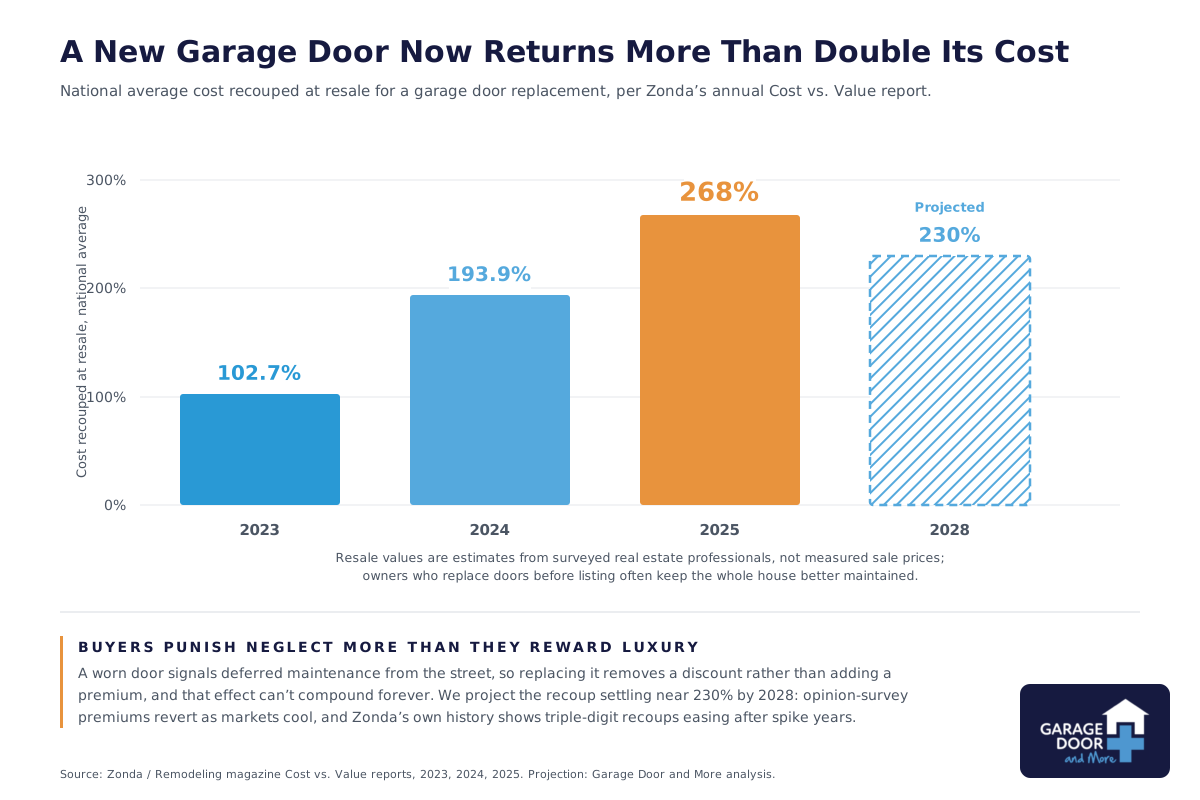
Projection: Garage Door and More analysis based on loss aversion, meaning buyers discount visible deferred maintenance more than they reward upgrades, assuming a ceiling because a roughly $4,700 door cannot keep adding $12,500 in estimated value indefinitely and survey premiums revert as markets cool, cross-checked against Zonda’s own two-decade series, where exterior replacements lead but recoup levels ease after spike years.
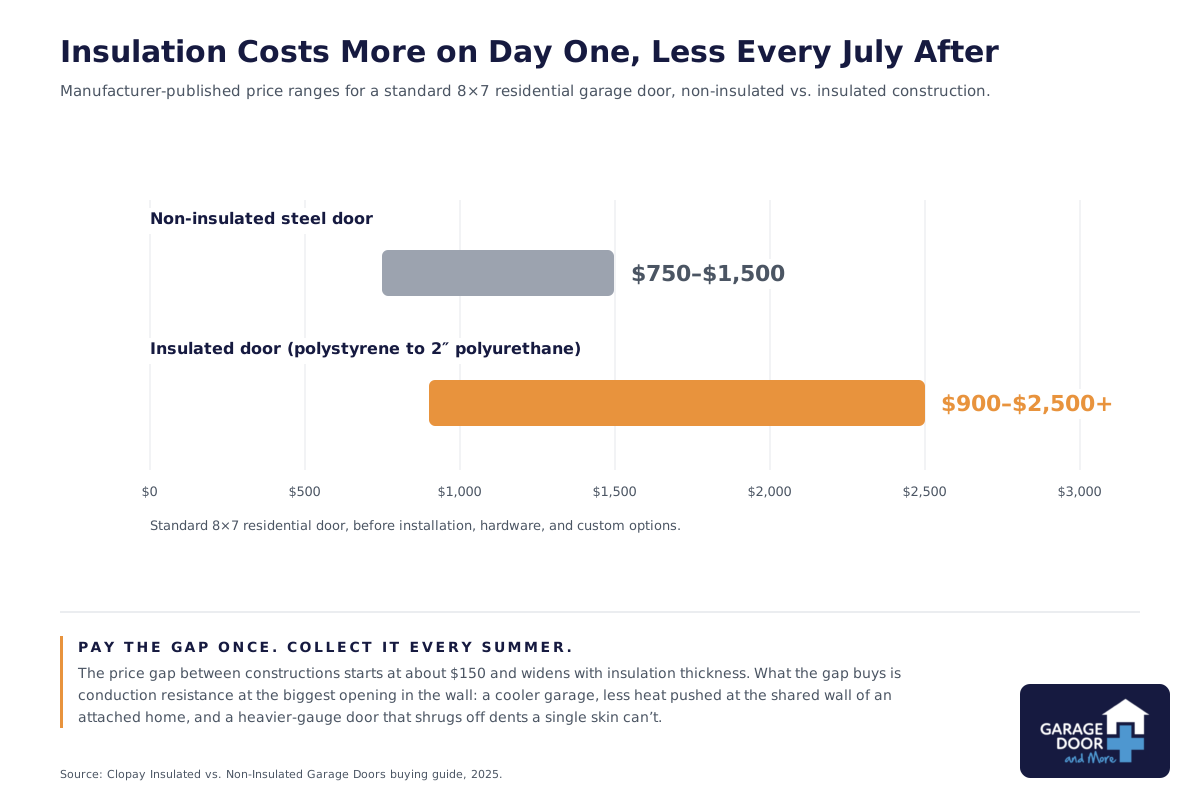
Budget the construction choice with real numbers. Clopay’s 2025 buying guide prices a standard 8×7 non-insulated steel door at $750 to $1,500 and insulated doors from $900 to $2,500 and up before installation and options. For a Charlotte attached garage, we spend the gap on insulation every time: the premium starts around $150, and it buys conduction resistance at the biggest opening in the wall for every summer the door hangs there. If the numbers point to a new door, our garage door replacement team quotes repair against replacement side by side, and we will tell you when the repair wins.
The summer checklist that prevents the January bill
Run these five checks on a hot weekend afternoon, when the failures actually show themselves:
- Listen at the hottest hour. Cycle the door around 4 or 5 pm. New squeals, grinding, or hesitation that morning cycles don’t show mean expansion or dry lubricant is at work.
- Check the sensor lights. Both should be steady. A blinking or dark lens during the afternoon points to sun glare or a bumped bracket, not a dead opener.
- Thumbnail the rubber. Press the bottom seal and side stops. Anything that cracks, crumbles, or holds the dent is done insulating and should be replaced.
- Lubricate the moving metal. Rollers, hinges, and a light coat across the outside of the spring coil, with a garage-rated synthetic lubricant. Skip the tracks; they should stay clean and dry.
- Note anything afternoon-only. A symptom that follows the heat is a symptom that will follow the cold too, in worse form. Write it down and deal with it before December does.
Leave four things off your list no matter how confident the video tutorial sounds: springs, lift cables, cable drums, and opener force settings. All four hold or manage the stored energy of a two-hundred-pound door, and all four injure homeowners every year.
“Nobody calls us in October to say the door feels a little heavy. They call in January at 6:45 in the morning with a snapped spring and a car trapped behind it. The heavy feeling was the door telling you in advance.”
The Technicians at Garage Door and More
If the checklist turns anything up, or you’d rather have trained eyes run it, our garage door maintenance service covers the balance test, spring inspection, sensor alignment, and full lubrication in one visit, and an annual garage door tune-up timed to early summer catches heat damage while it’s still a $30 seal instead of a January emergency. A stuck door is a real problem, a car trapped or a house standing open, so we run same-day service as a standard, not as a scare. Prep the garage now, while the fix is cheap and the weather is merely hot.