Most homeowners don’t think about their garage door until it stops working. That approach tends to be expensive. Emergency repairs almost always cost more than the maintenance that would have prevented them, and the timing is never convenient. At Garage Door and More, we see the same preventable failures repeat across the Charlotte area every year, and virtually all of them show early warning signs that a routine tune-up would catch. Here’s what an annual maintenance visit actually covers and why skipping it is a false economy.
What Is a Garage Door Tune-Up?
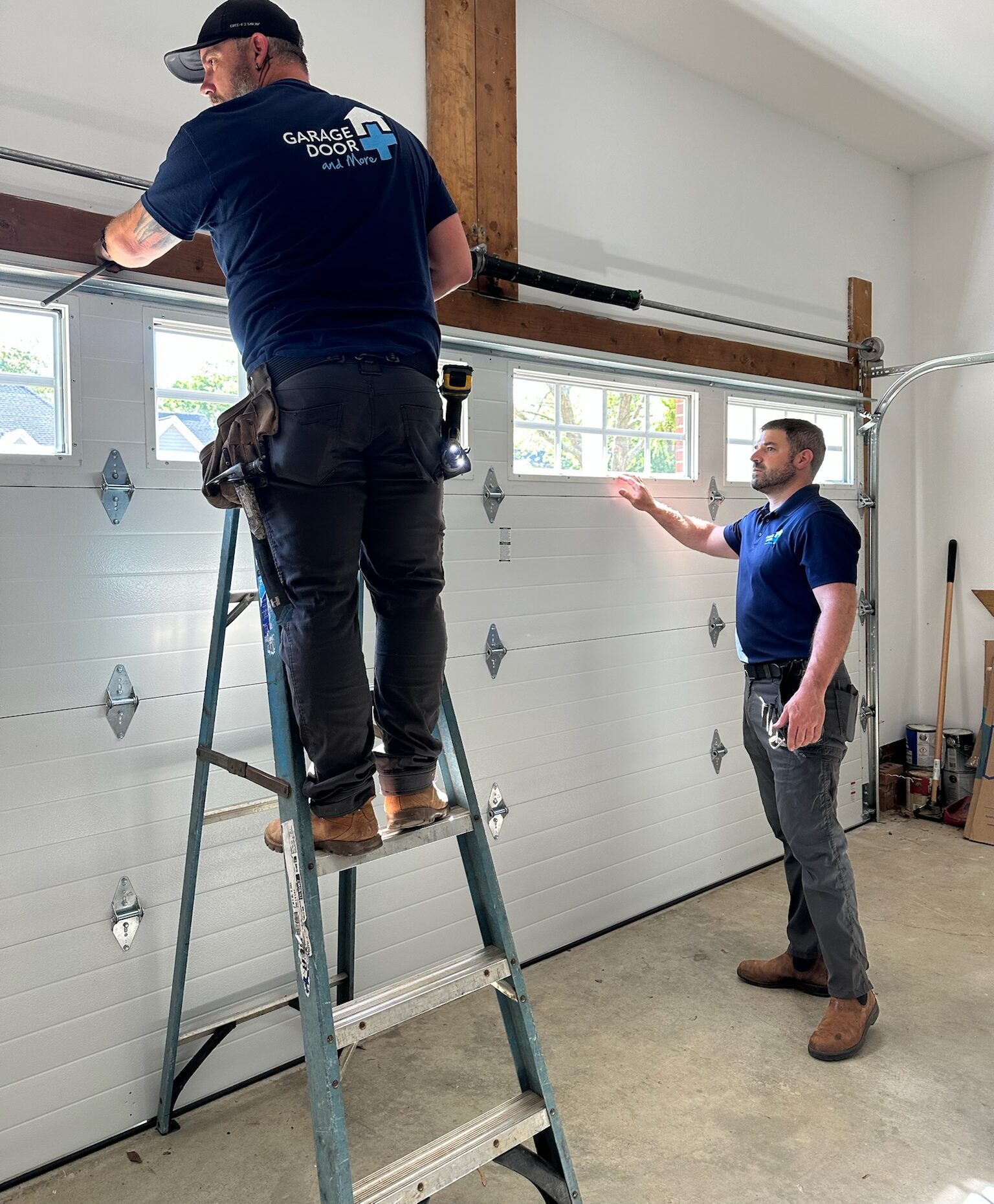
A garage door tune-up is a professional maintenance visit where a technician inspects, adjusts, lubricates, and tests every moving component in the door system. This includes the springs, cables, rollers, hinges, tracks, hardware, opener, and safety systems. The goal is to catch wear and misalignment before they develop into failures, and to keep the system operating at the specifications it was designed for.
The term “tune-up” sometimes creates the impression of a quick check-and-go service, but a thorough maintenance visit involves real diagnostic work. Components are tested under load, hardware is torqued to correct specifications, and anything showing abnormal wear gets flagged before it becomes a repair call at midnight. Our detailed breakdown of what’s included in a professional garage door maintenance visit covers the full scope of what we check.
What Does a Technician Actually Inspect and Adjust?
A professional tune-up goes well beyond wiping down tracks and spraying lubricant. Here’s what a complete service visit covers:
Components inspected and serviced during a professional tune-up:
- Springs: Both torsion and extension springs are checked for rust, fatigue, and remaining cycle life. A technician can estimate how many cycles remain based on visible wear patterns and adjust spring tension to keep the door properly balanced.
- Cables: Lift cables are inspected for fraying, kinking, and wear at the drum attachment points. Frayed cables are a safety risk and failing them before they snap prevents a more complex repair. See our service page on garage door cable replacement for what this involves when cables do need attention.
- Rollers: Each roller is checked for bearing play, cracking, and wear on the wheel surface. Rollers are the most commonly overlooked wear component and a primary source of noise on older doors.
- Hinges and brackets: Hinge points are checked for cracks or elongated bolt holes that indicate metal fatigue. Loose or cracked hinges affect door alignment and can cause sections to bind or shift.
- Tracks: Vertical and horizontal tracks are checked for alignment, dents, and debris. Track bolts are tightened to specification. Misaligned tracks are a leading cause of off-track incidents.
- Opener force and limits: The opener’s closing force and travel limits are tested and adjusted to match current door weight and travel distance. These settings drift over time and affect both performance and the auto-reverse safety function.
- Safety sensors: Photo-eye sensors are tested for alignment, proper beam interruption response, and wiring condition. A sensor that fails to reverse the door when obstructed is a genuine safety hazard.
- Lubrication: Springs, hinges, rollers, and bearing plates are lubricated with appropriate products. Lubricant selection matters; silicone spray or white lithium grease is correct for most components, while WD-40 is not a substitute.
- Balance test: The door is manually lifted to mid-travel and released. A properly balanced door stays in place. One that drops or shoots up indicates a spring tension issue that needs correction.
“The balance test tells us a lot in about 10 seconds. A door that drops when released has a spring that’s under-wound or losing tension. One that jumps up is over-tensioned. Either condition puts stress on the opener and the drive mechanism every time the door operates. Correcting the tension during a routine visit costs a fraction of what a spring replacement costs, especially if we’re doing it as a preventive adjustment rather than an emergency call.” — The Team at Garage Door and More
What Failures Does Maintenance Actually Prevent?
The connection between skipped maintenance and emergency repairs isn’t theoretical. Specific failures follow predictable paths from early warning signs to full breakdown, and most of those paths run through components a tune-up examines.
Common emergency repairs and their preventable warning signs:
| Emergency Repair | Warning Signs Caught During Tune-Up | Average Emergency Repair Cost |
|---|---|---|
| Broken torsion spring | Surface rust, visible coil fatigue, tension imbalance | $175 – $325 |
| Snapped lift cable | Fraying strands, kinking near drums, uneven tension | $125 – $225 |
| Door off track | Misaligned tracks, worn rollers, loose hardware | $125 – $250 |
| Opener motor burnout | Door imbalance causing excessive motor load | $200 – $500+ |
| Seized roller causing panel damage | Bearing wear, wobbling roller, uneven travel | $150 – $400+ |
| Safety sensor failure | Dirty lens, marginal alignment, worn wiring | $75 – $150 |
A professional tune-up in the Charlotte area typically runs $89 to $150. Comparing that to the emergency repair costs in the table above illustrates the math clearly. One prevented spring or cable failure covers the cost of several years of annual maintenance visits.
How Does Charlotte’s Climate Make Maintenance More Important?
Charlotte’s humidity is the most relevant climate factor for garage door longevity. Moisture accelerates corrosion on springs, cables, and hardware throughout the year, and the combination of hot summers with mild but variable winters creates thermal expansion cycles that stress metal components repeatedly. Springs in humid climates develop surface rust that increases friction, accelerates fatigue, and shortens cycle life. Cables can develop corrosion inside the cable bundle where it’s not visible from the outside until strands start to fail.
Homes near water, including those near Lake Norman or the many ponds and creeks throughout the Charlotte metro, see this faster than properties in drier microclimates. Proper lubrication applied annually creates a protective barrier against moisture penetration and slows corrosion significantly. Our post on why garage door springs break in Charlotte’s humid climate covers this in more detail with specific prevention strategies.
“We see it most clearly on doors that have never been lubricated. The springs have a thin layer of rust, the rollers are dry and starting to groove the track, the cables have discoloration at the drum contact points. None of that is irreversible at that stage, but give it another 12 to 18 months and it starts becoming a repair rather than a maintenance item.” — The Team at Garage Door and More
How Often Should Charlotte Homeowners Schedule Maintenance?
For most households, annual service is the right interval. Homes with higher-than-average door usage, four or more cycles per day, or households using the garage as a primary entrance, may benefit from a check every six months. Homes with older spring systems, wood doors with moisture sensitivity, or garages close to water should lean toward the shorter interval as well.
Beyond professional service, there are maintenance tasks homeowners can and should handle between visits. A full guide to what you can do yourself is in our post on how to maintain your garage door, which covers lubrication schedules, visual inspection points, and what to look for in the rollers and hardware during your own checks.
What About Seasonal Maintenance: Is One Season Better Than Another?
Spring and fall are the most practical times for a maintenance visit in Charlotte. Scheduling in spring catches any wear that developed over winter, when metal contraction and temperature swings stress components, and prepares the door for the high-use summer months. A fall visit does the opposite, confirming the system is in good condition before colder weather and the holiday season when you really don’t want an unexpected failure.
For homeowners who want to tie garage maintenance into a broader seasonal home checklist, our post on giving your house and garage a seasonal once-over covers what to look at across the home in fall and spring.
“Fall is our busiest time for maintenance calls, and for good reason. Homeowners are closing up the house, preparing for winter, and they want to know the garage door is in good shape before cold weather. We always recommend not waiting until November. If something needs a part, the lead time before the holidays can be tight.” — The Team at Garage Door and More
Can You Do a Tune-Up Yourself?
Partially. Homeowners can handle lubrication, basic visual inspection, and clearing debris from the tracks. These are meaningful tasks that contribute to the door’s longevity. What a DIY check can’t replicate is the spring tension measurement, proper opener force calibration, cable integrity assessment, and track alignment work that requires tools and training to do correctly.
Spring components in particular should not be adjusted by anyone without proper training. The tension stored in a torsion or extension spring is substantial, and incorrect adjustment creates a safety risk. For everything related to spring tension, cable work, and opener calibration, professional service is the right call. Our guide on garage door preventative maintenance draws a clear line between what homeowners can manage and what to leave to a technician.
Let Our Team Keep Your Door Running Reliably All Year
A well-maintained garage door doesn’t give you problems. It opens when you need it, closes quietly, and stays out of your awareness the way a reliable appliance should. Our technicians provide thorough maintenance visits across Charlotte and the surrounding communities, and we’re direct with homeowners about what needs attention now versus what to watch for.
To schedule an annual tune-up or get your door assessed before a problem develops, book a service appointment with Garage Door and More. Reach out to us for all your garage door maintenance needs across the Charlotte area.