The barn outlives the farm, and in the counties around Charlotte that fact should pick your door. When a tract in Waxhaw or Midland gets split into five-acre home sites, the outbuildings convey with the deed, and the sliding door that made sense for a tractor that left twice a season makes no sense for a truck, a mower, and a workshop that open it every day. We install and repair doors on these buildings across the outer service areas, and the pattern repeats: the building changed jobs years ago, and the door never got the memo. This article covers who owns these barns now, what each door type is built to do, what the swap actually costs in 2026, and which parts you should and should not touch yourself.
Who Owns the Barns Now
Union County counted 882 farms in the 2022 Census of Agriculture, and 418 of them, 47 percent, sit on 10 to 49 acres. Another 111 sit on fewer than 10. That is not combine country; that is horse-and-hobby country, 1,116 horses and ponies worth of it, plus a workshop, a boat, and a zero-turn mower behind most of those doors. Cabarrus County runs the same direction: 630 farms averaging 102 acres each, small parcels on the edge of Concord and Harrisburg where the subdivision meets the pasture fence.
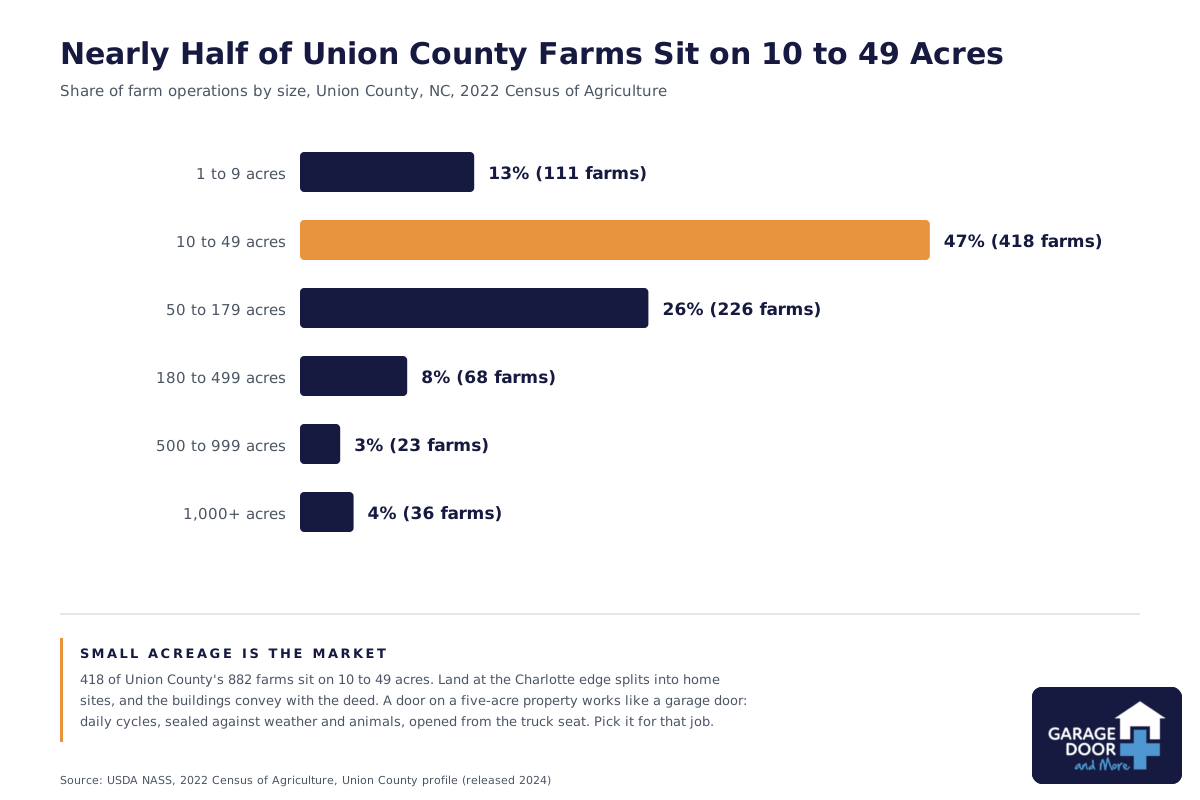
The size distribution matters because it tells you what the doors do all day. A 30-acre property in the outer counties is a residence with land, and its barn works like an oversized detached garage: multiple cycles a day, vehicles and tools inside, and an owner who wants to open it from the truck seat in the rain. That owner needs a sealed, openable, insulated door, and most calls we run for garage door repair in Waxhaw and the surrounding horse country start with a building that still has the door its first owner chose for a different life.
“Half the sliders we see out past Monroe haven’t moved in a year. The owner parks the mower behind one and fights it every Saturday. That’s not a door you repair. That’s a door doing a job nobody asked it to do anymore.”
— The Technicians at Garage Door and More
The Land Is Changing Hands on a Schedule
Union County lost 77 farm operations between 2017 and 2022, from 959 to 882, roughly one every three weeks. The land did not go idle; land in farms actually grew 14 percent over the same span as remaining operations consolidated, while the average farm jumped from 195 to 240 acres. The state’s Farmland Preservation Division reports that Union County ranks 23rd in the entire nation for projected farmland conversion through 2040. Small operations exit, the acreage either folds into a bigger farm or splits into home sites, and either way the buildings stay standing and change hands.
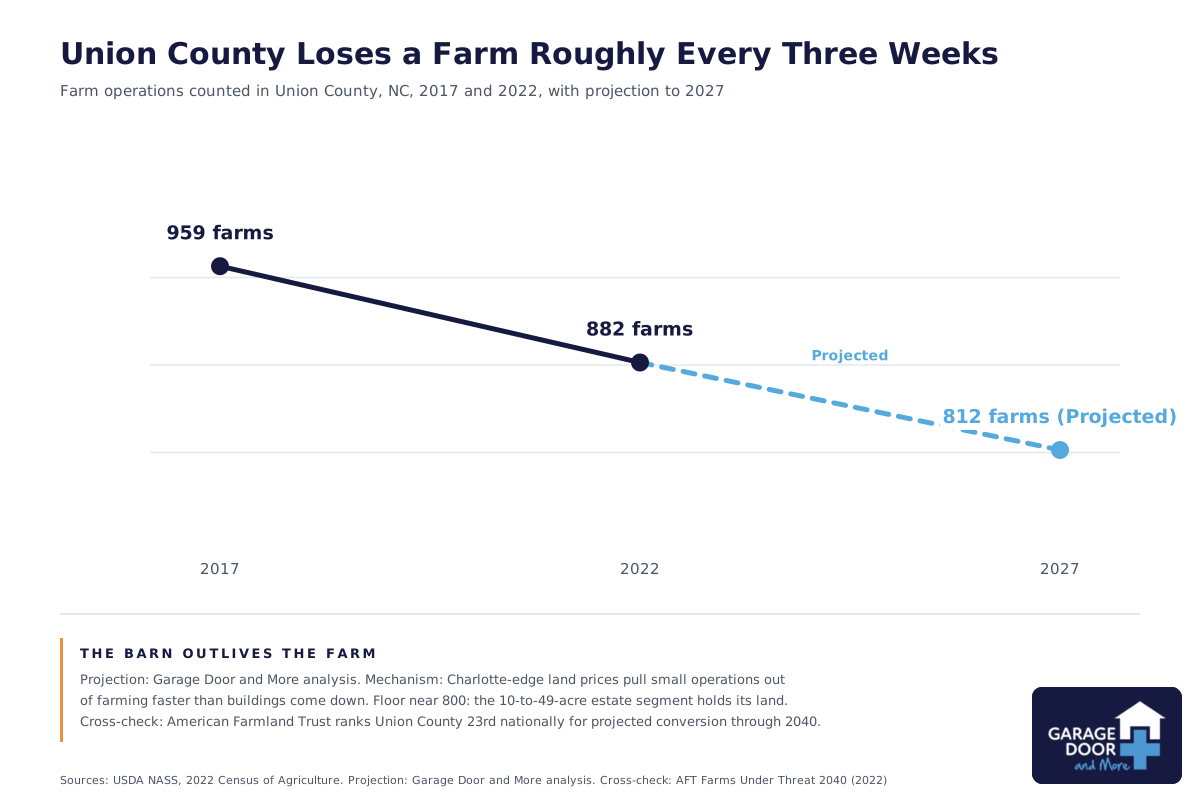
Projection: Garage Door and More analysis based on metro-edge land conversion and consolidation carrying the census pace forward, assuming a floor near 800 operations because the 10-to-49-acre estate segment holds its land, cross-checked against American Farmland Trust’s Farms Under Threat 2040 county rankings (2022).
Every one of those transitions is a door decision somebody inherits. The buyer of a split parcel in Marshville or Midland gets a pole barn with a 12-foot slider and has to decide whether to live with it, fix it, or convert the opening. Our position: convert it if the building sees daily use, keep the slider if it genuinely does not, and decide on purpose instead of by default. The default is what put a farm door on a garage job in the first place.
Four Door Types, One Question
The question is cycles: how many times a week does this opening actually move? Answer that honestly and the door type picks itself.
Sliding doors hang from a track above the opening and roll sideways along the wall. No springs, no cables, almost nothing to break, and they can be built to enormous widths because the wall carries the weight. They are the right door for a hay barn opened a dozen times a year and for horse barns, where their quiet travel does not spook animals. Their weakness is physics, not quality: a panel that hangs proud of the wall on rollers cannot compress a seal, so it leaks air, red-clay dust, mice, and wasps at every edge, and it never gets an opener.
Sectional doors, the hinged-panel garage doors on nearly every home, travel up on tracks and store under the roof. They seal on all four sides, insulate, take an opener, and come in commercial widths well past the 16-foot residential standard, which covers a tractor bay. They need roughly a foot and a half of headroom above the opening and a spring system to counterbalance the weight. For a building used daily, this is the door, and a garage door installation into an existing barn opening is a one-day job when the framing is sound.
Roll-up doors coil steel slats into a drum above the opening. They shine where headroom is tight or where the interior ceiling must stay clear, which is why self-storage and loading docks run them. On working farm and business buildings around the outer counties, they pair naturally with the rest of our commercial garage doors line: high cycle counts, minimal intrusion into the building, plainer looks.
Hydraulic and bi-fold doors swing or fold an entire wall section open for openings wider than sectional and roll-up lines go. They belong on airplane hangars and equipment sheds housing 40-foot implements. If you are reading a homeowner-focused article to decide on one, you do not need one.
The Sliding Door Is Not the Cheap Option Anymore
The price gap most buyers assume points the wrong way. Angi’s 2026 cost data puts a professionally installed exterior barn door at $1,000 to $5,000 for the door itself and $1,350 to $5,000 per door installed, with a typical exterior project near $2,700. The same year’s data puts an insulated sectional garage door at a $1,500 average installed, with a common range of $1,100 to $4,200, and adding an automatic opener at about $379. Those are contractor-estimate ranges rather than measured invoices, and Charlotte-area labor tends to land at or under the national figures, but the shape of the comparison holds: the door that seals, insulates, and opens itself costs about the same or less than the door that does none of that.
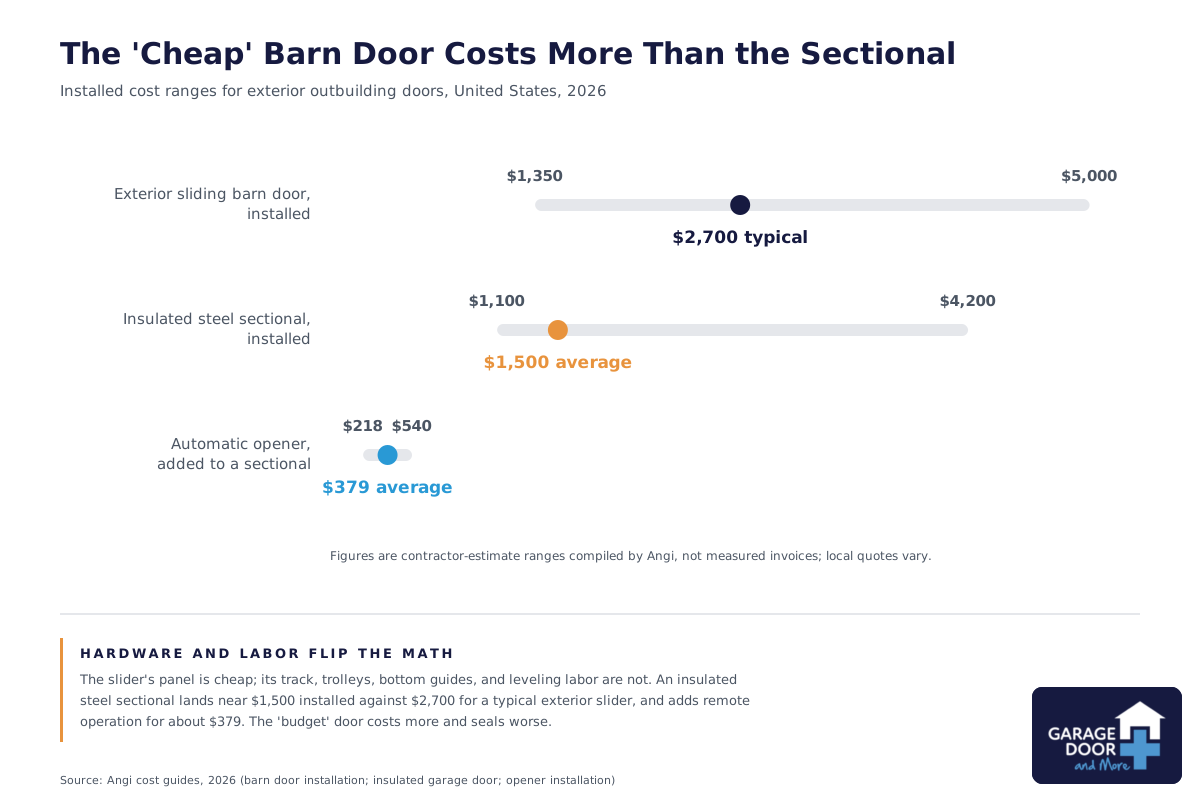
The reason is hardware and labor. A slider’s panel is a frame with siding on it, cheap to build; the box track, trolleys, bottom guides, and the leveling work that keeps a 400-pound panel from drifting are where the money goes. A sectional’s cost sits mostly in the manufactured door itself, and the installation is a known, repeatable process. So the “budget” choice is only a budget choice on a building you rarely open. On a daily-use building it is the more expensive way to get the worse door.
Sealing an Outbuilding Against Carolina Weather
Piedmont summers put 90-degree humid air on one side of your door and your tools, feed, and vehicles on the other, and the door decides how much of that humidity, dust, and wildlife comes inside. A sectional closes against compressible seals on the jambs, header, and floor; a slider parks a rigid panel an inch off the wall and hopes. That inch is why the equipment in slider-fed buildings rusts faster, why feed rooms get mice, and why winter workshops behind sliders never hold heat. If you condition the space at all, the garage door R-value math that applies to attached garages applies double to a freestanding building with no house to borrow warmth from.
Two honest caveats, because they save our readers money. First, a sound slider on a low-use building does not need replacing; new weather stripping for garage doors and sliders alike, plus a fitted bottom guide, closes most of the gap for a few hundred dollars, not a few thousand. Second, an uninsulated sectional on an unconditioned hay barn buys you sealing but wastes the insulation premium. Match the spend to the building’s job, not to the best door in the catalog.
Springs and Openers on a Low-Cycle Door
Here is where outbuilding math gets friendly. A standard torsion spring is rated near 10,000 open-close cycles, a figure set by the DASMA industry standard, and springs fail by metal fatigue at the coil’s weakest point, on a cycle clock rather than a calendar. A busy household door running six cycles a day eats that rating in under five years. A barn door opened once a day takes about 27 years to get there. That is longer than how long garage doors last in most settings, so the spring will rarely be the part that retires the door.
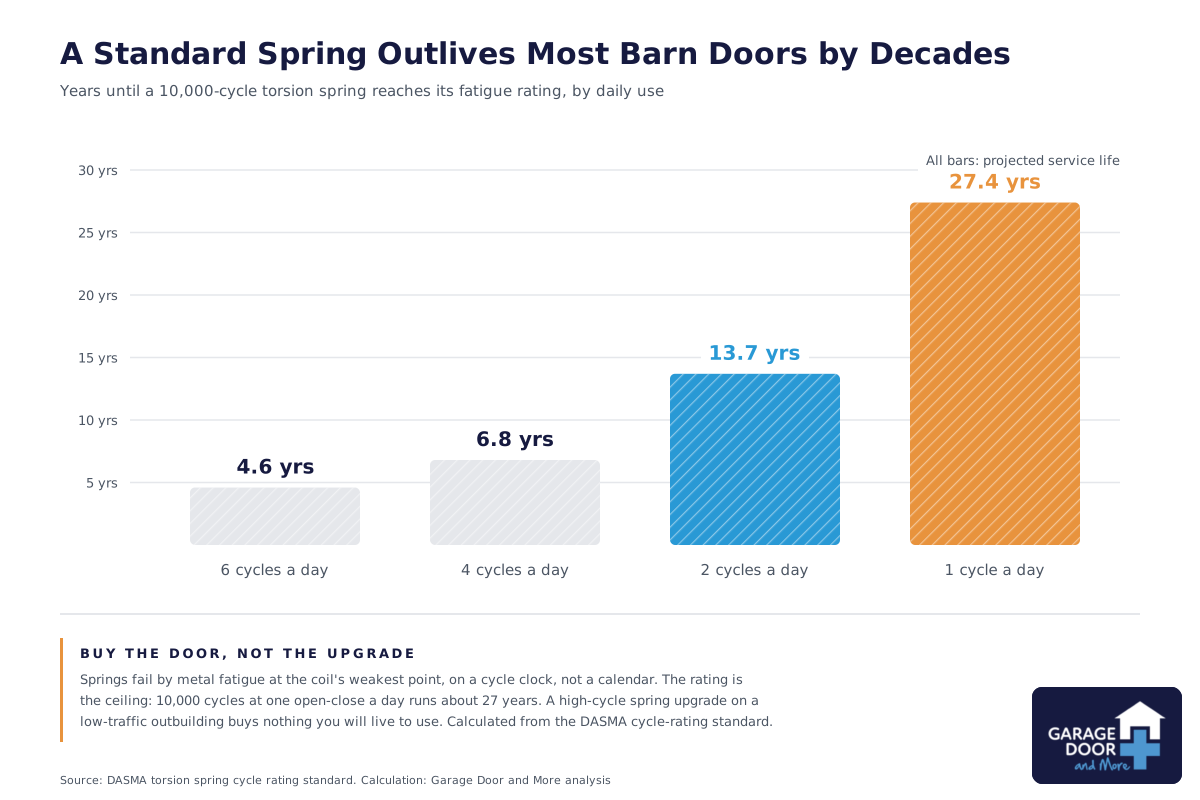
The position that follows costs us money, and we hold it anyway: do not buy a high-cycle spring upgrade for a low-traffic outbuilding. A 25,000-cycle spring is a smart spend on a door that moves eight times a day and a wasted one on a door that moves eight times a week. Spend that money on the insulated panel or the opener instead. On opener sizing, weight decides: a 12-foot insulated door is a different lift than an 8-foot pan door, and the garage door opener horsepower needs to match the door’s weight and size, not the building’s square footage.
“A high-cycle spring on a barn door is an upsell. I’ll say it plain: if your door moves once a day, the standard spring outlasts your truck, your roof, and probably your dog. Put the money in the door.”
— The Technicians at Garage Door and More
One bright line. Torsion springs and lift cables store the entire weight of the door as wound tension, and that tension releases in a fraction of a second when a winding cone slips. We will gladly explain how the counterbalance works, and we will not walk anyone through replacing one, because homeowners get hurt doing exactly that every year. Understand the system, then call for garage door spring repair when a spring lets go, and read why we say to never DIY a garage door spring repair before a video convinces you otherwise. Hinges, rollers, weather seal, and track bolts are fair homeowner territory. Anything under tension is ours.
Plan the Retrofit Before the Failure
Statewide, the clock that moved your parcel out of farming keeps running. North Carolina held 8.1 million acres of farmland in 2022, down almost 4 percent from 2017, and the American Farmland Trust projects that as many as 1,197,273 more acres may be paved over, fragmented, or compromised by 2040 if current trends continue, a pace second only to Texas. More of those acres sit around Charlotte than anywhere else in the state. Every year that pace hands more agricultural buildings to owners who use them as garages, shops, and storage.
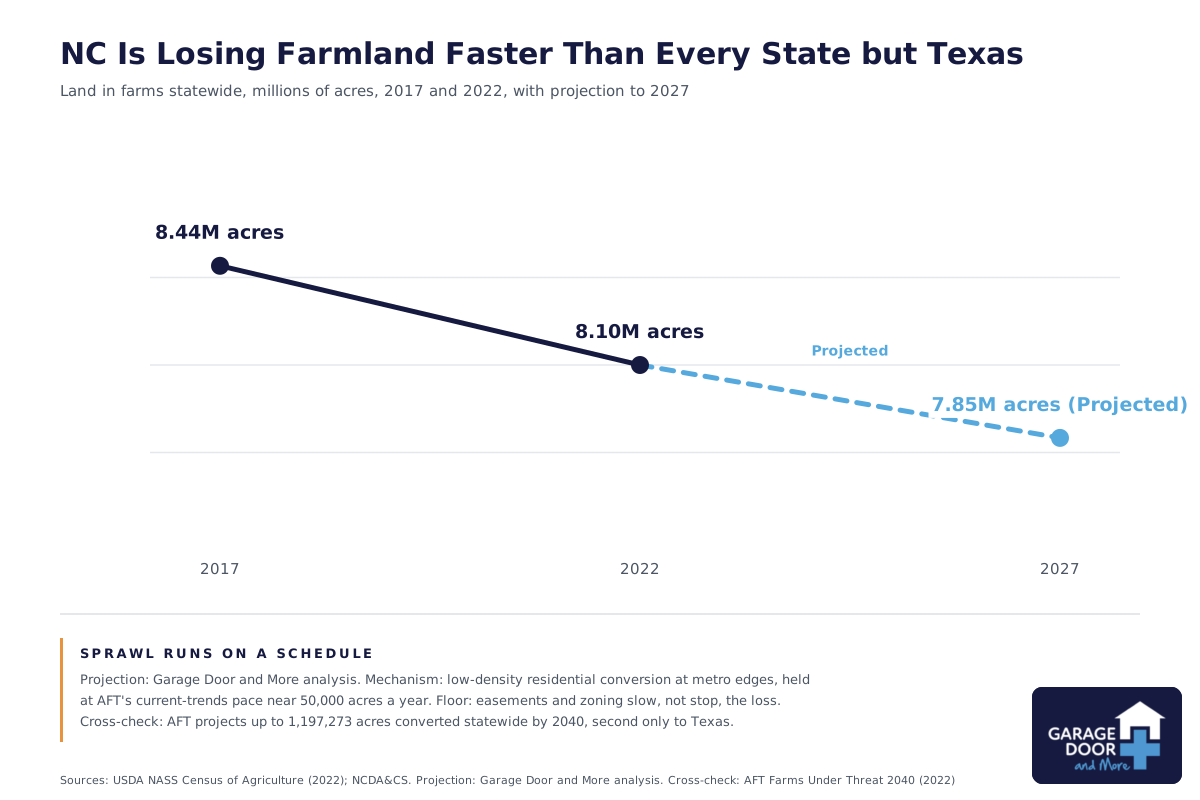
Projection: Garage Door and More analysis based on low-density residential conversion at metro edges, held at AFT’s current-trends pace near 50,000 acres a year with easements and zoning slowing rather than stopping the loss, cross-checked against American Farmland Trust’s Farms Under Threat 2040 report (2022).
Most owners run the old door until it strands a vehicle, because deferral feels free right up until the morning it is not. It is not free. A planned conversion happens on your calendar at quoted prices; a failed slider with a truck behind it happens on the door’s calendar. If the building’s job has already changed, price the garage door replacement now, while it is a choice. We quote repair first when repair honestly serves the building, a $200 fix on a sound slider included, and we will tell you when it does not.
We run these calls across the outer service areas every week, from garage door repair in Monroe and the Union County horse properties to garage door repair in Harrisburg and the Cabarrus side, where the same barns sit behind newer rooflines. Same-day service exists because a dead door on your only equipment building is a real problem, not a sales angle. Tell us what the building does now, and we will match the door to that job, not to the job it had in 1995.