YouTube tutorials and home improvement blogs make garage spring repair look straightforward, but the reality involves extreme forces and serious injury risks. A garage door spring under tension stores enough energy to lift a 200-pound door dozens of times daily. When that energy releases unexpectedly during DIY repair, the consequences range from severe lacerations to permanent disability. Understanding what makes spring repair so dangerous helps Charlotte homeowners make informed decisions about when professional help becomes necessary rather than optional.
What Forces Are Actually Involved in Garage Door Spring Systems?
The tension in garage door springs exceeds what most people expect. A standard residential spring stores 200-400 pounds of force when properly wound. This force stays constant whether the door is open or closed, ready to release if the spring breaks or slips during installation.
Torsion springs operate through rotational energy that multiplies the danger. When you wind a torsion spring during installation, each quarter-turn adds tremendous force. A typical installation requires 25-35 quarter-turns, building force gradually until the spring reaches operating tension. If a winding bar slips at turn 30, the spring unwinds instantly with all 30 turns worth of energy releasing in a fraction of a second. The winding bar becomes a projectile capable of breaking bones or causing fatal head injuries.
Force Measurements in Common Spring Configurations:
| Door Weight | Spring Type | Stored Force (lbs) | Winding Turns Required | Energy Release Speed |
|---|---|---|---|---|
| 130-150 lbs | Single torsion | 200-250 lbs | 25-30 turns | Under 0.5 seconds |
| 150-180 lbs | Dual torsion | 300-350 lbs | 28-32 turns | Under 0.5 seconds |
| 200-250 lbs | Dual heavy-duty | 400-500 lbs | 30-35 turns | Under 0.3 seconds |
| 150-180 lbs | Extension (per side) | 150-200 lbs | N/A (stretched) | Under 0.2 seconds |
Extension springs create different but equally serious hazards. These springs stretch to 8-10 feet when your door closes, storing energy through elongation. When an extension spring breaks, it contracts violently back to its resting length in milliseconds. Without safety cables, the spring whips through the garage at speeds exceeding 100 mph. We’ve seen broken extension springs embed themselves in drywall, shatter car windows, and cause injuries requiring emergency room treatment.
The door’s weight adds another layer of danger. If your spring system fails during installation or removal, nothing counterbalances the door’s 150-250 pounds. The door drops at roughly the speed of freefall, taking about half a second to slam shut from the open position. Anyone underneath or with hands near the closing path faces crushing injuries. Professional technicians use locking pliers and C-clamps to secure the door during spring work, preventing this uncontrolled drop.
“We’ve responded to dozens of DIY spring repair accidents over the years. The injuries tend to be severe because people underestimate the forces involved. A 200-pound spring under full tension contains the same energy as a compound bow at full draw, except the spring has no safety mechanism to prevent accidental release.” – The Team at Garage Door and More
What Specialized Tools Do Professional Technicians Use?
Professional garage spring repair service in Charlotte relies on specialized equipment designed specifically for safe spring installation and removal. The tools themselves cost hundreds of dollars and require training to use correctly.
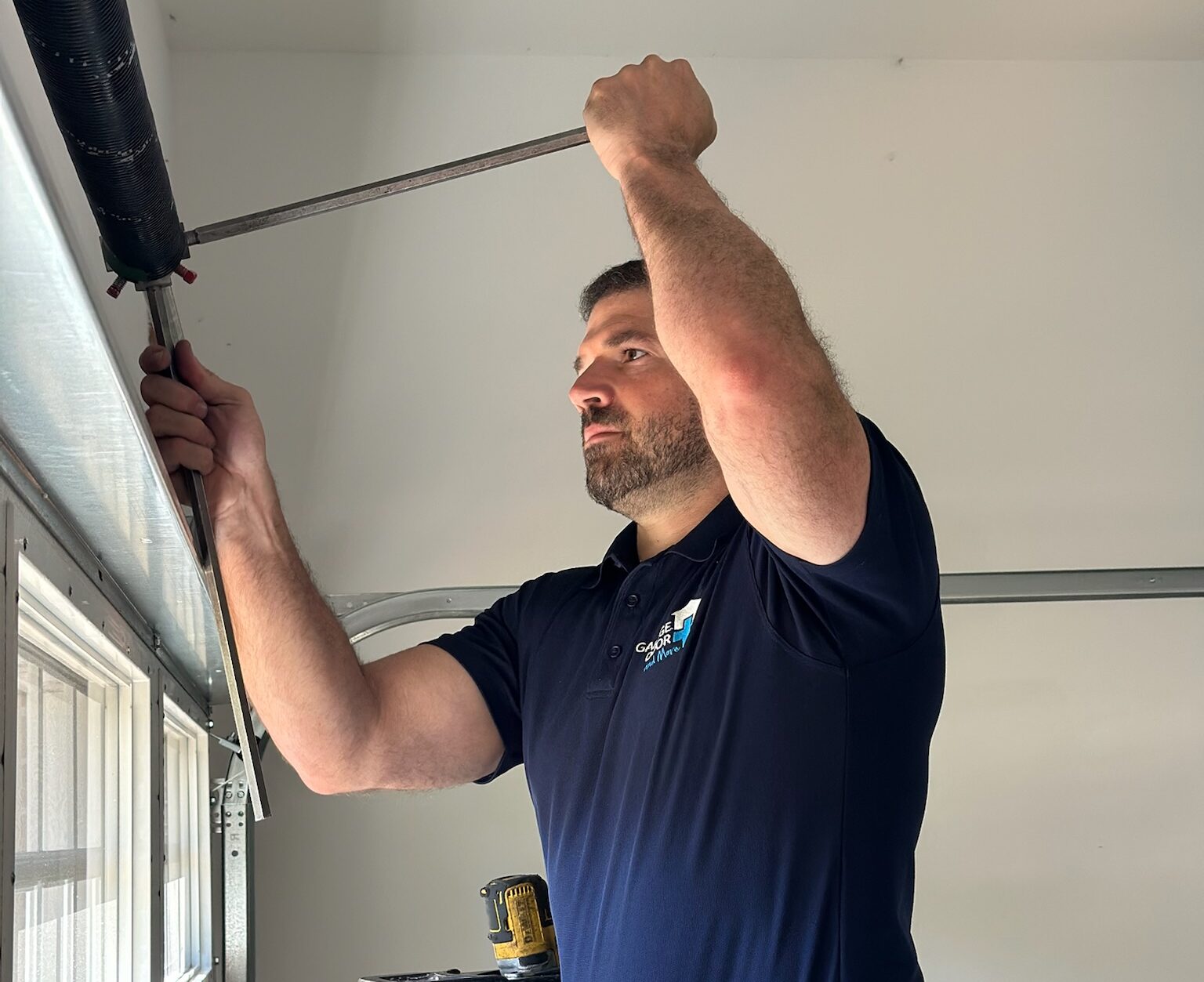
Winding bars represent the most critical tool for torsion spring work. These solid steel rods measure precisely to fit the winding cone holes, typically 18-24 inches long with diameters matching industry-standard cone sizes. Professionals use two winding bars, alternating them to wind or unwind springs safely. Hardware store substitutes like screwdrivers, pry bars, or drill bits lack the strength and fit needed for safe operation. When improper tools slip or break under tension, the spring releases violently.
Proper securing equipment prevents the door from becoming a hazard during spring replacement. Locking pliers clamp onto the track just below one of the door’s rollers, preventing the door from dropping if tension releases. Professional-grade C-clamps secure the door to the tracks at multiple points. Vise grips hold the torsion shaft stationary while technicians work on spring removal or installation. Each of these securing points must handle the door’s full weight, requiring commercial-grade tools rather than consumer hardware.
Professional Tool Kit Components and Their Safety Functions:
- Matched Winding Bar Set: Two solid steel bars precisely sized to fit winding cones without slipping, preventing the most common cause of DIY torsion spring injuries.
- Torque Wrenches: Calibrated tools that apply exact force when tightening set screws, preventing over-tightening that damages components or under-tightening that allows slippage.
- Commercial Locking Pliers: Heavy-duty clamps rated for 300+ pounds that secure the door reliably during spring changes, far stronger than consumer-grade versions.
- Safety Glasses and Face Shields: Impact-rated eye protection that guards against metal fragments, lubricant spray, and debris during spring removal and installation.
- Leather Work Gloves: Cut-resistant gloves that protect hands from sharp spring ends and coil edges while maintaining the grip needed for precise tool manipulation.
- Tension Testing Equipment: Calibrated gauges that measure spring force accurately, verifying proper installation and balanced tension between dual spring systems.
Ladder safety becomes crucial for overhead work. Spring replacement requires working 6-8 feet above ground level while applying significant force to winding bars. Professional technicians use commercial step ladders with wide platforms, anti-slip feet, and weight ratings exceeding 300 pounds. The platform provides stable footing when turning winding bars, where balance matters tremendously. Consumer ladders lack adequate platform size and stability for safe spring work.
Diagnostic tools identify problems before they become emergencies. Professional services carry spring measuring tools that determine correct replacement specifications. Cable tension meters verify lift cable integrity. Door balance scales confirm even weight distribution across the door width. These diagnostic capabilities prevent installing wrong-sized springs or missing related component failures that could cause the new spring to fail prematurely.
Which Specific Injuries Occur Most Frequently in DIY Spring Repairs?
Emergency rooms across Charlotte treat DIY garage door injuries regularly, with spring-related accidents producing predictable injury patterns based on what went wrong during the repair attempt.
Hand and finger injuries top the list because hands stay near the danger zone throughout spring work. Winding bar slips crush fingers between the bar and the door or wall. Spring coils catch skin and clothing, causing deep lacerations as the spring rotates. Pinch points between springs and mounting hardware sever fingertips or break bones. These injuries often require surgical repair, with recovery times extending to months. Several Charlotte-area hand surgeons report treating 15-20 garage door injuries annually, mostly from DIY spring work.
Head and face trauma occurs when winding bars slip and strike the person working on the spring. The bar rotates with the spring’s full force behind it, typically hitting the worker’s face or head. Common results include broken facial bones, concussions, dental damage, and eye injuries. We know of two fatalities in North Carolina over the past decade from winding bar strikes to the head. Even non-fatal head injuries often require extensive medical treatment and cause permanent damage.
Common DIY Spring Repair Injuries and Their Severity:
| Injury Type | Typical Cause | Recovery Time | Permanent Impact Risk |
|---|---|---|---|
| Finger lacerations/fractures | Winding bar slips or spring pinch | 6-12 weeks | Reduced dexterity, nerve damage |
| Facial fractures | Winding bar strikes face | 8-16 weeks | Scarring, vision problems |
| Shoulder/arm injuries | Sudden force pulling on tools | 12-24 weeks | Reduced range of motion |
| Foot/toe crush injuries | Door drops during spring change | 8-20 weeks | Mobility limitations |
| Back/spine injuries | Lifting door without springs | Varies widely | Chronic pain, disability |
Back and shoulder injuries develop when people attempt to manually lift or hold doors during spring replacement. A garage door without functioning springs weighs its full 150-250 pounds with no counterbalance. Trying to support this weight while working overhead creates extreme strain on back muscles and shoulder joints. Sudden movements when the door shifts unexpectedly tear rotator cuffs or herniate spinal discs. These injuries may not seem severe initially but often develop into chronic conditions requiring long-term treatment.
Foot injuries happen when doors drop during spring work. Without proper securing, a door can fall if spring tension releases unexpectedly. The falling door crushes toes and feet with its full weight concentrated on a small area. Broken bones, torn ligaments, and crushed tissue result from these impacts. People working alone face additional risk because no one can help lift the door off them quickly after an accident.
“The injuries we see from DIY spring work tend to be severe because the accidents happen suddenly. There’s no warning when a winding bar slips or a spring breaks. One second you’re making progress, the next second you’re dealing with a medical emergency. Professional technicians train for years to recognize and avoid these situations.” – The Team at Garage Door and More
Why Do Online Tutorials Understate the Difficulty and Risk?
YouTube videos and blog posts about garage door spring replacement often minimize the genuine dangers involved. Understanding why these resources mislead helps homeowners recognize when they’re getting incomplete or dangerous information.
Video editing removes the most difficult and dangerous moments from DIY tutorials. A 10-minute video condenses hours of actual work into a brief overview. The creator cuts out mistakes, false starts, and moments when things nearly went wrong. Viewers see smooth, efficient work that doesn’t reflect reality. The video doesn’t show how tired your arms get holding winding bars, how hard it is to maintain precise tension while climbing a ladder, or how quickly things can go wrong when you’re working alone.
Tutorial creators often have professional experience they don’t disclose. Many “DIY” spring replacement videos come from people who previously worked in the garage door industry or have replaced dozens of springs over the years. They make the process look easy because they’ve developed skills and confidence through extensive practice. Their muscle memory and experience with the forces involved doesn’t transfer through a video. A first-time DIYer lacks this foundation, making the job significantly more difficult and dangerous than the tutorial suggests.
Reality Gaps Between Tutorials and Actual DIY Spring Replacement:
- Tool Improvisation Consequences: Videos may show using “common household tools,” but they don’t fully explain that improper tools dramatically increase accident risk and often fail under load.
- Physical Strength Requirements: Tutorials rarely mention that maintaining control of a winding bar under tension requires significant grip strength sustained for extended periods, often exceeding average capabilities.
- Problem-Solving Complications: Videos show ideal scenarios where everything fits perfectly, but real-world situations involve rusted hardware, non-standard configurations, and unexpected complications requiring expertise.
- Isolation Dangers: Most DIY attempts happen alone, while tutorial creators often have camera operators or assistants who can help or call emergency services if something goes wrong.
Comment sections reveal the hidden failures. Read beyond the video itself and you’ll find comments from people who tried the same repair and got injured, broke equipment, or damaged their doors. These cautionary tales get lost in the shuffle of positive comments and don’t appear in the video content itself. The tutorial’s like-to-dislike ratio doesn’t reflect how many people failed or got hurt attempting the repair.
Legal disclaimers protect content creators without protecting viewers. Most tutorials include brief warnings about seeking professional help, often in the description rather than the video itself. These disclaimers limit the creator’s liability while doing nothing to prevent viewer injuries. The warning gets ignored because the entire video demonstrates that spring replacement is doable at home. The mixed message leaves viewers with false confidence about their ability to complete the work safely.
What Hidden Costs Make DIY Spring Repair Uneconomical?
The apparent savings from DIY spring replacement often disappear when you account for all the actual costs involved. Professional professional spring replacement in Charlotte frequently costs less than the true expense of doing it yourself.
Tool purchases quickly exceed professional service costs. Quality winding bars cost $40-80 for a matched pair. Proper locking pliers run $25-40 each, and you need at least two. A commercial-grade step ladder suitable for the work costs $150-300. Safety equipment including impact-rated glasses, cut-resistant gloves, and protective clothing adds another $50-100. The total tool investment reaches $300-500 before you buy the springs themselves. Professional spring replacement typically costs $200-350, less than the tools alone.
Spring identification mistakes waste money on incorrect parts. Without proper measuring tools and knowledge, DIYers often buy wrong-sized springs. Garage door springs come in dozens of configurations based on wire gauge, inside diameter, length, and wind direction. Ordering the wrong spring means paying shipping and restocking fees to return it, then waiting for the correct replacement. Some suppliers don’t accept spring returns at all because they consider them installed once removed from packaging. These errors can cost $100-200 in wasted parts.
Complete DIY Spring Replacement Cost Analysis:
| Expense Category | DIY Cost Range | Professional Service Cost | Hidden DIY Costs |
|---|---|---|---|
| Springs (parts only) | $80-150 | Included in service | Wrong size returns, shipping |
| Special tools | $300-500 | $0 | One-time use for most people |
| Safety equipment | $50-100 | $0 | Still needed for future projects |
| Labor time value | $100-200 | Included in service | 4-8 hours at opportunity cost |
| Mistake/damage repair | $0-500+ | Warranty covered | Damaged door, opener, or car |
| Total First Attempt | $530-1,450+ | $200-350 | Plus injury risk |
Time investment converts to significant opportunity cost. A first-time spring replacement takes 4-8 hours including research, tool gathering, parts acquisition, and the actual repair. Professional technicians complete the same job in 1-2 hours. Those 6+ hours you spend on spring work could go toward earning income, family time, or other projects. At even modest income levels, your time costs more than the professional service charge.
Collateral damage from mistakes adds unpredictable expenses. A spring installed at wrong tension damages the garage door opener motor within weeks. Improper cable installation bends the door or damages tracks. Dropped tools or springs dent vehicles parked in the garage. These secondary damages can exceed the cost of professional service many times over. Professional installations include liability insurance and warranties covering such damage.
“We’ve had customers call us to fix DIY spring installation attempts that damaged their openers, bent their doors, or destroyed tracks. The repair costs for these mistakes often reach $500-1,000, much more than the original spring replacement would have cost. Then we still charge them to install the springs correctly on top of fixing the other damage.” – The Team at Garage Door and More
How Do Insurance and Liability Issues Affect DIY Spring Work?
The legal and financial consequences of DIY spring repair extend beyond immediate injury costs. Insurance coverage and liability concerns create risks many homeowners don’t recognize until after an accident.
Homeowner’s insurance may not cover DIY repair injuries. Many policies exclude coverage for injuries resulting from home improvement projects undertaken without proper licensing or permits. If you injure yourself replacing garage door springs, your health insurance handles medical bills, but disability claims or long-term care costs may face denials. Check your policy’s specific language about DIY home repairs before starting spring work. Some insurers consider spring replacement sufficiently dangerous to require professional service.
Injury to others creates serious liability exposure. If a friend or family member helps with your spring replacement and gets injured, they can sue you for medical costs, lost wages, and pain and suffering. Your homeowner’s liability coverage might apply, but insurers often deny claims when the injury resulted from work that should have been professionally performed. These lawsuits can reach six figures for serious injuries, potentially costing you your home and savings.
Insurance and Liability Considerations for DIY Spring Work:
- Medical Coverage Gaps: Health insurance covers emergency treatment, but long-term disability or rehabilitation costs from DIY repair injuries may not qualify for full coverage under some policies.
- Property Damage Exclusions: If a failed DIY spring installation damages your car, the garage structure, or a neighbor’s property, your homeowner’s policy may deny the claim as resulting from improper repair work.
- Worker’s Compensation Absence: Unlike professionals covered by worker’s comp for on-job injuries, DIYers have no such protection, leaving them personally responsible for all injury-related costs and lost income.
- Resale Disclosure Requirements: Some states require disclosing unpermitted work during home sales; DIY spring installation could become a negotiation point or inspection red flag affecting property value.
Professional services carry comprehensive insurance protecting both technicians and homeowners. Licensed garage door repair companies maintain general liability insurance covering property damage during service calls. Their worker’s compensation policies protect technicians injured on the job, removing any homeowner liability for workplace accidents. Many services also offer warranties guaranteeing their work, so spring failures within the warranty period get fixed at no additional cost.
Permit requirements vary by jurisdiction but often apply to major garage door work. Some Charlotte-area municipalities require permits for spring replacement, particularly in commercial settings or when combined with other garage door installation work. DIY repairs typically skip permitting, creating code compliance issues that surface during home sales or after insurance claims. Professional services handle permitting requirements automatically, keeping the work legal and documented.
What Warning Signs Indicate You Should Stop DIY Attempts Immediately?
Certain situations during DIY spring work signal immediate danger requiring you to stop and call professionals rather than pushing forward. Recognizing these red flags prevents the most serious injuries.
Tool slippage or instability means you’re using inadequate equipment. If your winding bar doesn’t fit snugly in the cone holes, stop immediately. A loose-fitting bar will slip under tension, potentially with catastrophic results. Makeshift tools like screwdrivers, pry bars, or drill bits have wrong dimensions and insufficient strength. Once you’re committed to winding a spring with improper tools, you face the choice of continuing dangerously or unwinding the spring, which is equally dangerous with poor tools.
Unexpected resistance or strange sounds indicate something is wrong. Springs should wind smoothly with consistent resistance. If resistance suddenly increases or you hear grinding, cracking, or popping sounds, the spring or mounting hardware is failing. Continuing to work on a spring showing these signs risks catastrophic failure while you’re in the danger zone. Binding or catching during winding suggests misaligned components that will fail under full tension.
Critical Stop-Work Conditions:
- Visible Spring Damage: Any cracks, separations, or deformations in the spring coils mean the spring could fail violently during installation; never attempt to install damaged springs regardless of their age or appearance otherwise.
- Door Won’t Stay Secured: If you can’t reliably lock the door in place with clamps and locking pliers, the door could drop during spring work, causing crush injuries or making spring installation impossible to complete safely.
- Incorrect Spring Specifications: If the new spring doesn’t match the old one’s dimensions, wire gauge, or configuration, don’t try to make it work; wrong springs create dangerous imbalances and will fail prematurely.
- Physical Fatigue Setting In: When your arms start shaking from effort or you’re losing grip strength, stop immediately; most DIY spring accidents happen when tired workers lose control of tools or springs.
Inability to control the spring’s movement signals you lack the necessary strength or technique. If the spring starts unwinding on its own when you remove a winding bar, you don’t have adequate control. The spring should stay stationary between bar movements while you reposition for the next turn. Uncontrolled movement means the spring is controlling you rather than vice versa, creating extreme danger.
Working alone becomes a critical warning sign when complications arise. If you need a second person to hold something, steady a ladder, or help control the door, but you’re working solo, stop and get assistance or call professionals. Most serious DIY injuries happen to people working alone who had no one to help when things went wrong or call emergency services immediately after an accident.
Which Related Components Often Need Replacement During Spring Service?
Professional spring replacement typically includes inspecting and often replacing related components that DIY repairs overlook. These additional items affect spring performance and lifespan significantly.
Garage door cables wear at the same rate as springs and typically need replacement simultaneously. The cables lift the door’s weight using the force from the springs. Frayed, kinked, or rusted cables can snap shortly after new spring installation, requiring a second service call. Professional technicians automatically inspect cables during spring replacement and recommend changing them when they show wear. DIYers often miss cable damage or don’t know replacement is advisable.
Bearing plates and end plates experience wear from the rotating torsion shaft. The center bearing plate supports the shaft’s middle section, while end plates anchor the shaft to the wall. Years of rotation wear grooves in these components, creating friction and misalignment. New springs on worn bearings fail faster because the friction and wobble stress the spring coils. Professionals replace worn bearings during spring service, extending the new springs’ life substantially.
Components Commonly Replaced During Professional Spring Service:
- Lift Cables: Steel cables showing fraying, rust, or uneven wear should be replaced with new springs since they’ve experienced identical duty cycles and stress levels as the failed springs.
- Cable Drums: Grooved wheels where cables wind sometimes develop worn grooves or damaged bearings, causing cables to slip or bind during door operation, reducing spring life.
- Rollers and Hinges: Worn garage door rollers create extra friction that makes springs work harder; replacing them during spring service improves efficiency and extends spring lifespan.
- Mounting Brackets: Brackets securing springs and cables to the door frame may show stress cracks, corrosion, or loosened fasteners requiring replacement for safe spring operation.
- Winding Cones: The cones where springs attach to the shaft can strip or crack, particularly if the previous spring was over-tensioned or if DIY repair attempts damaged them.
Track alignment and roller condition affect how hard springs must work. Misaligned tracks create friction that forces springs to pull harder when lifting the door. This extra work shortens spring life by 20-30%. Professionals check track alignment during spring replacement and make necessary adjustments. Worn rollers have similar effects, plus they create noise and jerky door movement. Replacing rollers during spring service costs little extra since the door is already disconnected from the opener.
Weather stripping and garage door panels affect door weight. Deteriorated weather stripping sometimes gets replaced during maintenance to improve insulation, but it adds weight to the door. Damaged panels may need replacement if they’re bent or broken. Any weight change requires adjusting spring tension, something professionals handle during installation. DIY spring installers often don’t account for recent door modifications that changed the weight requiring spring adjustment.
How Does Climate Control in Your Garage Affect Spring Longevity?
Environmental conditions inside your garage significantly impact spring lifespan, making climate management part of a complete spring care strategy that DIY repairs typically ignore.
Charlotte’s humidity accelerates spring corrosion more than temperature alone. Relative humidity above 60% promotes rust formation on metal springs, weakening them from the inside out. The coiled nature of garage door springs traps moisture between wraps where it can’t easily evaporate. This persistent moisture exposure creates corrosion that develops invisibly until the spring fails. Professional services often recommend dehumidification for garages that stay closed most of the time, particularly in summer months when humidity peaks.
Temperature fluctuations stress metal through repeated expansion and contraction. Spring and fall in Charlotte bring daily temperature swings of 30-40 degrees. Metal expands when heated and contracts when cooled. Over thousands of cycles, this creates microscopic cracks in the spring wire that grow into failure points. Insulating your garage moderates these temperature swings, reducing thermal stress on springs and all other metal components.
Environmental Factors Affecting Spring Performance:
| Environmental Factor | Impact on Springs | Mitigation Strategy | Lifespan Improvement |
|---|---|---|---|
| High humidity (>70%) | Accelerated corrosion | Dehumidifier, ventilation | 30-40% longer life |
| Temperature swings (>30°) | Thermal stress, cracking | Insulation, climate control | 20-30% longer life |
| Direct sun exposure | Uneven heating, coating breakdown | Shade, reflective door | 15-20% longer life |
| Salt air (coastal areas) | Extreme corrosion rates | Coated springs, frequent lubrication | 40-50% longer life |
| Poor ventilation | Moisture accumulation | Vents, air circulation | 25-35% longer life |
Direct sunlight through garage windows creates uneven heating that stresses springs. When one side of a spring heats significantly more than the other, the metal expands unevenly. This differential expansion causes warping and uneven tension across the spring coils. Installing window shades or choosing doors with reflective surfaces helps prevent this localized heating. Professionals often notice sun-related damage during inspections and can recommend positioning or shading solutions.
Proper lubrication creates a protective barrier against moisture while reducing friction. Silicone or lithium-based lubricants designed for garage door springs should be applied every 3-4 months. The lubricant penetrates between coil wraps, displacing moisture and preventing rust formation. Regular lubrication reduces friction, making the spring work less hard and extending its cycle life. DIY repairs often skip the post-installation lubrication step, leaving new springs vulnerable to accelerated wear.
FAQs About DIY Garage Spring Repair Safety
Can I safely replace extension springs without professional help?
Extension springs present serious risks even with proper tools and technique. The stretched spring stores significant energy that releases violently if hooks slip or the spring breaks during installation. Safety cables must be threaded correctly, and both springs need identical tension for balanced door operation. Professional replacement costs $150-200, typically less than buying tools and risking injury.
What happens if I install springs with the wrong tension?
Incorrect spring tension causes several problems beyond immediate safety concerns. Over-tensioned springs strain the garage opener motor and can bend the door. Under-tensioned springs make the door too heavy for the opener and may not hold the door open. Wrong tension also causes premature spring failure and damages related components like cables and rollers.
How long does professional spring replacement actually take?
Experienced technicians complete standard residential spring replacement in 1-2 hours, including inspection of related components. Complex doors with dual springs, damaged cables, or alignment issues may take 2-3 hours. The service includes proper tensioning, balance testing, and safety verification that DIY attempts often skip, making the final result more reliable.
Are garage door spring injuries covered by health insurance?
Health insurance typically covers emergency treatment for DIY repair injuries, but coverage for long-term care, rehabilitation, or disability varies by policy. Some insurers reduce coverage for injuries resulting from work that should have been professionally performed. Review your policy’s specific language about home improvement injuries before attempting spring replacement yourself.
Can I use regular tools instead of specialized winding bars?
Regular tools lack the precise fit and strength needed for safe spring work. Screwdrivers, pry bars, and other substitutes slip under the high tension, causing the spring to unwind violently. The resulting accidents cause severe injuries including broken bones, lacerations, and head trauma. Proper winding bars cost $40-80, less than emergency room co-pays for injury treatment.
What qualifications should I look for in a garage door technician?
Look for technicians with manufacturer certifications, liability insurance, and several years of field experience. Many professionals complete training programs through industry organizations or major manufacturers. Ask about their experience with your specific door type and spring system. Licensed companies carry insurance protecting you from liability if accidents occur during service.
How much does professional spring replacement cost in Charlotte?
Professional spring replacement in Charlotte typically costs $200-350 for standard residential doors, including parts and labor. This price covers both springs if you have a dual system, proper tensioning, safety inspection, and often a warranty on parts and labor. Emergency service or complex doors may cost more, but remain economical compared to DIY tool purchases and injury risk.
Why do some online sources say DIY spring replacement is easy?
Online tutorials often come from experienced professionals or people who’ve done multiple replacements, making the process look easier than it actually is for first-timers. Video editing removes mistakes and difficult moments. These sources also carry liability disclaimers protecting creators but not protecting viewers. The reality involves significant force, specialized skills, and genuine injury risk that tutorials minimize.
The technicians at Garage Door and More provide safe, efficient spring replacement that eliminates the risks and hidden costs of DIY attempts. Our team carries the specialized tools, training, and experience needed to handle extreme spring tension safely while protecting you, your property, and your family from injury. We complete spring replacement in a fraction of the time DIY attempts require, with warranties backing our work and insurance protecting against any unlikely complications. If you’re dealing with broken springs, contact our professionals for reliable garage door spring repair that prioritizes your safety and delivers long-lasting results.
