At Garage Door and More, we understand that choosing the right garage door for your Charlotte home involves navigating numerous options, each with distinct advantages and considerations. The decision extends far beyond simple aesthetics, encompassing factors like material durability, energy efficiency, maintenance requirements, climate suitability, and long-term value. After helping countless Charlotte families select the perfect garage door, we’ve developed deep expertise in matching door characteristics to specific homeowner needs and local environmental conditions.
The garage door selection process can feel overwhelming when you consider the variety of materials, insulation options, styles, and operational mechanisms available today. However, understanding key decision factors helps narrow your choices to options that truly fit your situation. We approach every consultation by first understanding your priorities, whether they focus on energy savings, low maintenance, maximum durability, or enhancing your home’s curb appeal, then guide you toward solutions that deliver the benefits most important to your family.
Comparing Essential Garage Door Materials for Durability and Performance
Material selection forms the foundation of your garage door’s performance, longevity, and maintenance requirements. Each material offers unique characteristics that perform differently in Charlotte’s humid subtropical climate, where doors must withstand temperature fluctuations, high humidity, occasional severe weather, and year-round usage cycles. Understanding how materials respond to local conditions helps ensure your investment provides optimal performance and longevity.
Steel remains the most popular choice among Charlotte homeowners due to its excellent balance of durability, affordability, and low maintenance requirements. Modern steel doors resist warping, cracking, and structural failure while offering extensive design options from traditional raised panels to contemporary flush designs. However, steel’s susceptibility to denting and potential rust formation in coastal or high-humidity areas requires consideration, particularly for doors facing direct weather exposure.
Wood garage doors provide unmatched natural beauty and customization possibilities, making them ideal for homeowners prioritizing aesthetic appeal and architectural harmony. Cedar, redwood, and mahogany offer natural resistance to decay and insects while accepting stains and finishes beautifully. However, wood doors require significant maintenance commitments in Charlotte’s climate, where humidity and temperature swings can cause warping, cracking, and finish deterioration without proper care.
Key Material Performance Factors:
- Climate Resistance: How well materials withstand humidity, temperature extremes, and weather exposure
- Impact Resistance: Ability to resist denting from hail, sports equipment, or accidental contact
- Maintenance Requirements: Frequency and complexity of upkeep needed to maintain appearance and function
- Insulation Compatibility: How well materials work with insulation systems for energy efficiency
- Customization Options: Available colors, textures, and design possibilities
- Longevity Expectations: Realistic lifespan under normal use and maintenance conditions
Aluminum doors offer excellent corrosion resistance and lightweight operation, making them particularly suitable for Charlotte’s humidity while reducing strain on opener systems. Modern aluminum doors feature powder-coated finishes in numerous colors and can incorporate large glass sections for contemporary aesthetics. However, aluminum’s softer nature makes it more prone to denting than steel, and its lower insulation value may require additional considerations for energy efficiency.
Composite materials combine the appearance of wood with reduced maintenance requirements and improved weather resistance. These engineered materials resist moisture, insects, and temperature-related movement while accepting stains and paints like natural wood. Composite doors typically cost more initially than steel or aluminum but often provide better long-term value through reduced maintenance needs and extended service life.
| Material | Durability Rating | Maintenance Level | Climate Suitability | Price Range |
|---|---|---|---|---|
| Steel | Excellent | Low | Very Good | $800-2,500 |
| Wood | Good | High | Moderate | $1,500-4,000 |
| Aluminum | Good | Low | Excellent | $1,200-3,000 |
| Composite | Very Good | Low-Moderate | Excellent | $1,800-3,500 |
“We always tell Charlotte homeowners that there’s no single ‘best’ material for everyone. Your ideal choice depends on how you prioritize factors like maintenance time, initial cost, energy efficiency, and appearance. A busy family might love low-maintenance steel, while someone who enjoys DIY projects might prefer the customization possibilities of wood. Our job is helping you find the material that matches your lifestyle.” – Garage Door and More Material Selection Specialist
How Garage Door and More Helps You Choose the Right Material
At Garage Door and More, we provide comprehensive material consultations that consider your specific situation, including your home’s architectural style, local environmental factors, maintenance preferences, and budget constraints. Our showroom displays actual material samples so you can see and feel the differences between options, while our experienced team explains how each material performs in Charlotte’s unique climate conditions.
Understanding Insulation Benefits and R-Value Requirements for Charlotte’s Climate
Insulation selection significantly impacts your garage door’s energy efficiency, noise reduction capabilities, and overall performance, particularly important for Charlotte homes where temperature control affects both comfort and utility costs. The R-value rating system measures thermal resistance, with higher numbers indicating better insulating properties. For Charlotte’s climate, R-values between 12 and 20 typically provide optimal balance between performance and cost-effectiveness.
Polyurethane foam insulation offers the highest R-values (typically 16-20) by completely filling door sections and bonding to door panels for enhanced structural strength. This insulation type provides superior energy efficiency while reducing door flex and improving impact resistance. However, polyurethane insulation increases door weight and cost, requiring consideration of opener capacity and budget constraints.
Polystyrene insulation, available in rigid board form, provides good thermal performance (R-values 8-12) at lower cost than polyurethane options. While not offering the structural benefits of foam-in-place polyurethane, polystyrene insulation significantly improves energy efficiency compared to non-insulated doors while maintaining reasonable pricing for budget-conscious homeowners.
Insulation Performance Benefits:
- Energy Cost Reduction: Lower heating and cooling bills through improved thermal barrier
- Temperature Stabilization: More consistent garage temperatures protecting stored items
- Noise Reduction: Significant sound dampening from both interior and exterior sources
- Structural Enhancement: Increased door strength and dent resistance
- Comfort Improvement: Better working conditions in garage workshops or hobby areas
- HVAC System Protection: Reduced load on home heating and cooling systems
Non-insulated doors remain appropriate for certain situations, particularly detached garages where energy efficiency concerns are minimal and cost considerations take priority. These doors offer reliable operation at lower initial cost while providing adequate performance for basic storage applications. However, Charlotte’s climate often makes the modest additional investment in insulated doors worthwhile for the comfort and efficiency benefits they provide.
The interaction between insulation and door material affects overall performance significantly. Steel doors with polyurethane insulation achieve excellent thermal performance while maintaining structural integrity, while wood doors naturally provide some insulation value that insulation systems can enhance further. Understanding these material-insulation interactions helps optimize your door’s performance for specific applications.
| Insulation Type | R-Value Range | Energy Savings | Noise Reduction | Cost Premium |
|---|---|---|---|---|
| None | 0-2 | Baseline | Minimal | None |
| Polystyrene | 8-12 | 20-30% | Good | $200-400 |
| Polyurethane | 16-20 | 35-50% | Excellent | $400-800 |
| Reflective Barrier | 4-6 | 15-25% | Fair | $100-250 |
“Charlotte homeowners often underestimate how much difference insulation makes in their overall satisfaction with their garage door. Beyond the energy savings, which typically pay for the insulation premium within 5-7 years, the noise reduction and temperature stability transform how people use their garage spaces. Many customers tell us their insulated door was one of their best home improvement investments.” – Garage Door and More Energy Efficiency Consultant
How Garage Door and More Optimizes Insulation Selection
At Garage Door and More, we analyze your specific situation to recommend optimal insulation levels that balance performance benefits with cost considerations. Our energy efficiency consultations consider factors like your garage’s location, usage patterns, and connection to your home’s living spaces, ensuring your insulation investment delivers maximum value for your particular circumstances.
Evaluating Door Construction Types and Their Operational Characteristics
Garage door construction type fundamentally determines how your door operates, how much ceiling space it requires, and what maintenance considerations you’ll face over its lifetime. Sectional doors, the most common residential choice, consist of horizontal panels connected by hinges that roll along tracks as they open and close. This construction offers excellent space efficiency, weather sealing, and design flexibility while accommodating various opener systems and insulation options.
Roll-up doors, more commonly used in commercial applications, consist of interlocked slats that coil around a drum above the opening. While offering maximum ceiling space efficiency, roll-up doors typically provide less insulation options and may generate more operational noise than sectional alternatives. However, their compact storage requirements make them attractive for garages with limited overhead space or complex ceiling configurations.
One-piece doors, while less common in modern installations, lift as single units and require significant ceiling space when open. These doors typically cost less initially but offer limited insulation options and may be more difficult to balance and maintain over time. Additionally, one-piece doors require more robust opener systems due to their size and weight distribution characteristics.
Construction Type Considerations:
- Space Requirements: Ceiling height and depth needed for door operation and storage
- Track Configuration: Standard, low headroom, or vertical lift track systems
- Weather Sealing: How effectively different constructions prevent air and moisture infiltration
- Maintenance Access: Ease of servicing springs, cables, and other components
- Insulation Integration: How well construction types accommodate thermal efficiency systems
- Wind Load Resistance: Structural ability to withstand severe weather conditions
Track systems vary significantly based on ceiling height, garage depth, and operational requirements. Standard lift tracks work well for typical residential applications with adequate overhead space, while low headroom tracks accommodate installations with limited ceiling clearance. High lift and vertical lift systems enable doors to open fully while requiring minimal horizontal space, ideal for garages used for tall vehicle storage or equipped with overhead storage systems.
Hardware quality significantly impacts door operation, longevity, and maintenance requirements regardless of construction type. Heavy-duty hinges, rollers, and tracks provide smoother operation and extended service life, while standard hardware may require more frequent adjustment and replacement. Investing in quality hardware components often proves cost-effective over the door’s lifetime through improved performance and reduced maintenance needs.
| Construction Type | Space Efficiency | Insulation Options | Maintenance Level | Typical Cost |
|---|---|---|---|---|
| Sectional | Good | Excellent | Low-Moderate | $800-3,000 |
| Roll-up | Excellent | Limited | Moderate | $1,200-2,500 |
| One-piece | Fair | Limited | Moderate-High | $600-1,500 |
| Side-hinged | Poor | Good | Low | $1,000-2,500 |
Window options vary considerably across construction types, with sectional doors offering the greatest flexibility for window placement, size, and style. Decorative windows enhance curb appeal while providing natural light, though they may impact insulation performance and security considerations. Modern window designs incorporate insulated glass, decorative grids, and various frame materials to complement door aesthetics while maintaining performance characteristics.
“Construction type choice often comes down to practical considerations like ceiling space and usage patterns, but it also affects long-term satisfaction significantly. Sectional doors offer the best combination of flexibility, performance, and maintenance convenience for most Charlotte homeowners, while roll-up doors excel in specialized applications where space is at a premium. We help customers understand these trade-offs so they choose the construction that truly fits their needs.” – Garage Door and More Construction Specialist
How Garage Door and More Matches Construction to Your Needs
At Garage Door and More, we perform detailed garage measurements and usage assessments to recommend construction types that optimize your available space while meeting your operational requirements. Our installation team has extensive experience with various track configurations and hardware options, ensuring your chosen construction type performs optimally in your specific installation situation.
Selecting Appropriate Styles and Colors to Enhance Your Home’s Architecture
Style selection significantly impacts your home’s curb appeal and overall aesthetic harmony, making it crucial to choose designs that complement your architectural features while reflecting your personal preferences. Traditional raised panel doors work well with colonial, craftsman, and classic architectural styles, offering timeless appeal and broad market acceptance. These doors feature rectangular panels with raised centers that create visual depth and shadow lines, available in various panel configurations to match different door sizes and proportions.
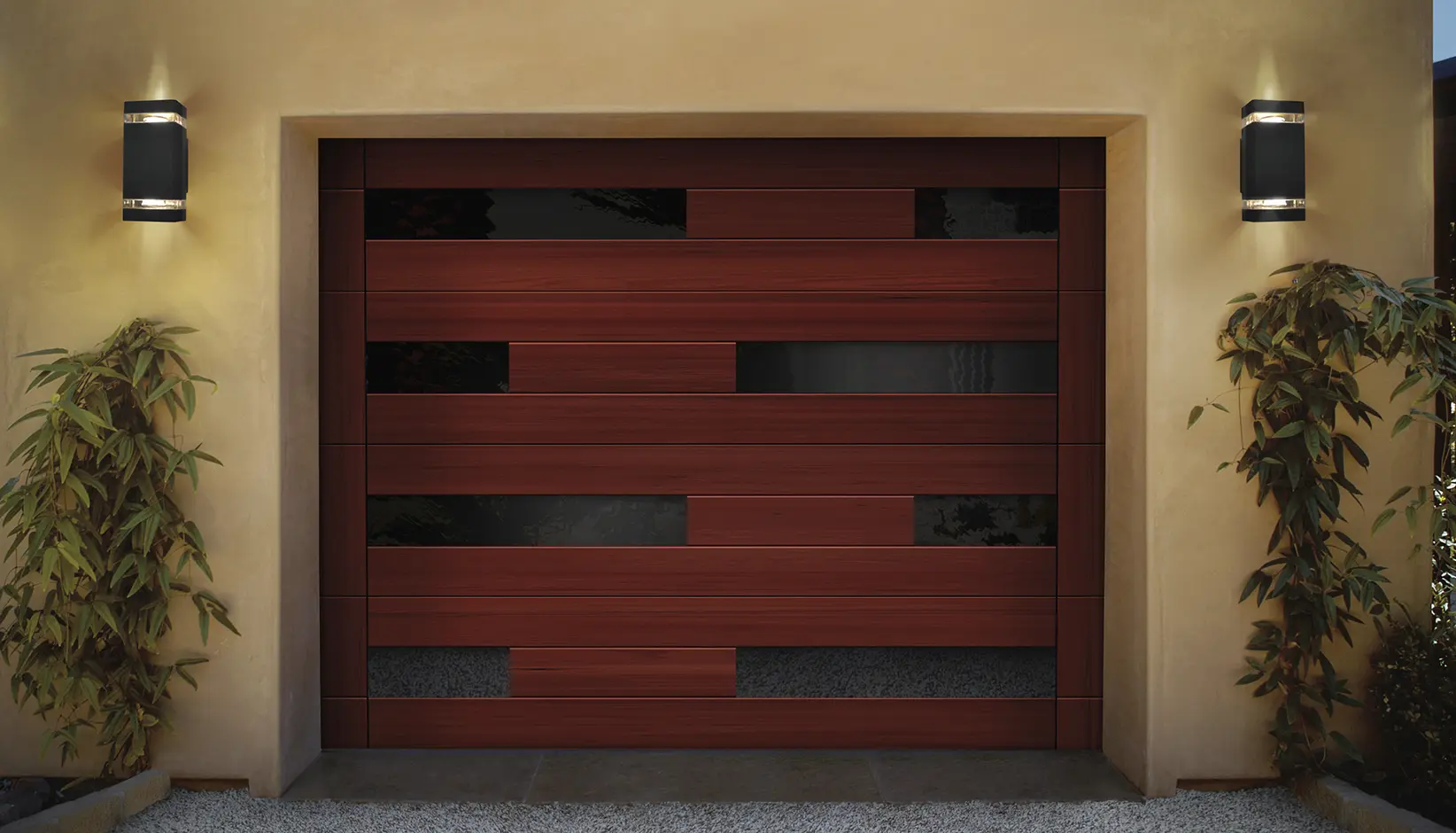
Contemporary flush designs appeal to homeowners with modern or transitional architectural styles, featuring clean lines and minimal decorative elements that emphasize material quality and color selection over ornate details. These doors often incorporate large glass sections, horizontal design elements, or unique material combinations that create striking visual statements while maintaining sophisticated simplicity.
Carriage house or coach house styles replicate the appearance of traditional swing-out barn doors while operating with modern convenience and reliability. These designs feature decorative hardware, crossbuck patterns, or board-and-batten appearances that enhance rustic, farmhouse, or estate-style homes. Many carriage house doors incorporate faux wood finishes or composite materials that provide authentic wood appearance without extensive maintenance requirements.
Style Selection Considerations:
- Architectural Compatibility: How well door styles complement your home’s existing design elements
- Proportional Balance: Door size and panel configuration relative to garage opening and home scale
- Hardware Integration: Decorative elements that enhance style themes without compromising function
- Color Coordination: Harmony with existing exterior colors and trim elements
- Neighborhood Context: Appropriateness for local architectural standards and property values
- Personal Preference: Styles that reflect your aesthetic preferences and lifestyle
Color selection involves balancing personal preferences with practical considerations like fade resistance, heat absorption, and maintenance requirements. Lighter colors reflect more heat and may require less frequent cleaning, while darker colors can make architectural details more dramatic but may fade more quickly under intense sunlight. Modern paint technologies offer excellent fade resistance and color retention, enabling homeowners to choose colors based on aesthetic preferences rather than purely practical concerns.
Window placement and style significantly influence overall door appearance and functionality. Symmetrical window arrangements create balanced, traditional appearances, while asymmetrical or full-width glass sections produce more contemporary effects. Window styles range from simple rectangular designs to arched, decorative, or custom configurations that can dramatically alter door character and coordinate with existing home windows.
| Style Category | Best Architecture Match | Maintenance Level | Market Appeal | Cost Range |
|---|---|---|---|---|
| Traditional Raised Panel | Colonial, Craftsman, Classic | Low | Broad | $800-2,200 |
| Contemporary Flush | Modern, Transitional | Low | Targeted | $1,200-3,500 |
| Carriage House | Rustic, Farmhouse, Estate | Moderate | High | $1,500-4,000 |
| Custom Designs | Any | Varies | Unique | $2,500-8,000+ |
The relationship between style and functionality requires careful consideration, particularly regarding insulation integration, window placement, and hardware accommodation. Some decorative styles may limit insulation options or require special considerations for optimal energy efficiency. Understanding these interactions helps ensure your chosen style delivers both aesthetic and performance benefits.
How Garage Door and More Enhances Your Home’s Appeal
At Garage Door and More, we provide comprehensive style consultations that consider your home’s architecture, neighborhood character, and personal preferences to recommend designs that enhance your property’s value and appeal. Our design specialists stay current with style trends while understanding timeless design principles, helping you choose options that provide lasting satisfaction and broad market appeal.
Understanding Opener Compatibility and Integration Requirements
Opener selection must coordinate with your door choice to ensure optimal performance, safety, and longevity from your complete garage door system. Door weight, size, and construction type all influence opener requirements, with heavier insulated doors requiring more powerful motors while lighter doors can operate effectively with standard equipment. Understanding these relationships helps avoid operational problems and premature component failure.
Horsepower requirements depend primarily on door size and weight, with standard residential doors typically requiring 1/2 to 3/4 horsepower motors. However, larger or heavily insulated doors may need 1 or 1-1/4 horsepower units for reliable operation. Over-sizing opener motors provides operational reserve and typically extends equipment life, while under-sizing creates strain that leads to premature failure and poor performance.
Drive system selection affects noise levels, maintenance requirements, and operational characteristics significantly. Chain drive systems offer proven reliability and affordability while generating more operational noise than belt-drive alternatives. Belt-drive openers provide whisper-quiet operation ideal for attached garages with living spaces above, while direct-drive systems minimize maintenance requirements through reduced moving parts.
Opener Integration Factors:
- Weight Capacity: Opener’s ability to handle your door’s total weight safely and reliably
- Duty Cycle: How frequently the opener can operate without overheating or excessive wear
- Safety Features: Integration with door sensors, reversal systems, and emergency controls
- Smart Connectivity: Wi-Fi capabilities, smartphone control, and home automation integration
- Battery Backup: Emergency operation capability during power outages
- Installation Requirements: Ceiling height, mounting considerations, and electrical needs
Smart technology integration has become increasingly important for Charlotte homeowners seeking convenience, security, and monitoring capabilities. Modern openers offer smartphone control, real-time status monitoring, and integration with home security systems. These features require compatible door systems and proper installation to function reliably, making opener selection a critical component of your overall door system planning.
Safety feature integration varies significantly between opener models and manufacturers, with modern units offering multiple protection systems including photo sensors, pressure sensors, and automatic reversal mechanisms. These safety systems must coordinate properly with your door’s size, weight, and operational characteristics to provide effective protection, requiring careful matching during system design.
| Door Type | Recommended HP | Best Drive System | Key Features | Typical Cost |
|---|---|---|---|---|
| Single, Non-insulated | 1/2 HP | Chain or Belt | Basic safety, Wi-Fi | $200-400 |
| Double, Insulated | 3/4 HP | Belt or Direct Drive | Battery backup, Smart features | $300-600 |
| Heavy/Commercial | 1+ HP | Chain or Jackshaft | Heavy duty, Commercial features | $500-1,200 |
| Specialty Configurations | Varies | Depends on application | Custom integration | $400-2,000+ |
“The biggest mistake we see is homeowners choosing doors and openers separately without considering how they work together as a system. A beautiful, well-insulated door paired with an under-powered opener will disappoint you daily, while the right combination provides decades of reliable, quiet operation. We always design complete systems that optimize performance, safety, and longevity for each customer’s specific situation.” – Garage Door and More System Integration Specialist
How Garage Door and More Ensures Perfect System Integration
At Garage Door and More, we design complete door and opener systems that work together optimally rather than selling individual components separately. Our system approach ensures proper weight calculations, safety feature integration, and performance optimization while providing comprehensive warranties that cover your entire installation rather than individual components.
Conclusion: Creating the Perfect Garage Door Solution for Your Charlotte Home
Selecting the right garage door involves balancing multiple factors including material performance, insulation benefits, construction characteristics, aesthetic appeal, and opener integration to create a solution that serves your family’s needs effectively for many years. At Garage Door and More, we understand that every Charlotte home and family has unique requirements that demand personalized solutions rather than one-size-fits-all recommendations.
The complexity of modern garage door options can seem overwhelming, but understanding key decision factors helps you focus on choices that truly matter for your situation. Whether you prioritize energy efficiency, low maintenance, maximum durability, or enhanced curb appeal, we guide you through the selection process to identify options that deliver the benefits most important to your lifestyle and budget.
Don’t navigate garage door selection alone when expert guidance can help you avoid costly mistakes and ensure optimal satisfaction with your investment. Contact Garage Door and More today for a comprehensive consultation that considers all aspects of your garage door needs. Our experienced team will help you create the perfect combination of materials, features, and systems that enhance your home’s value, efficiency, and daily convenience for decades to come.