
A bay door in an auto shop is production equipment on a duty cycle, and it should be specified the way you spec a lift, not the way a builder specs a wall. Most of the doors we replace at Charlotte repair shops failed early for one reason: someone installed hardware rated for a home on a door that cycles 40 times a day. The industry-standard torsion spring is rated for 10,000 open-close cycles. A homeowner takes 10 to 15 years to use that up. A busy service bay burns through it in about ten months.
This guide covers what shop owners and dealership fixed-ops managers in the Charlotte area actually need to know before buying, replacing, or maintaining bay doors: how to spec cycle life to your traffic, why the volume coming through your bays will keep growing, where door speed pays for itself and where it doesn’t, and what a blocked bay costs you per day while you wait.
Your Cycle Count Is the Spec That Matters
Count how many times your busiest door opens in a week before you sign anything. That single number decides more about your door’s service life than the brand, the panel gauge, or the price. Commercial torsion springs are built to a cycle rating, and Clopay’s commercial spring specifications put the industry standard at a minimum of 10,000 cycles, with 25,000, 50,000, and 100,000-cycle upgrades available on the same door.
Run the math on a four-bay shop. Each bay door cycles when a car comes in, when it goes out, at opening, at closing, and every time a tech pulls a vehicle around back. Forty cycles a day is normal, not heavy. At 40 cycles a day across 300 operating days, you consume 12,000 cycles a year. The standard spring is gone in ten months. The 25,000-cycle upgrade buys you about two years. The 100,000-cycle spring runs past eight.
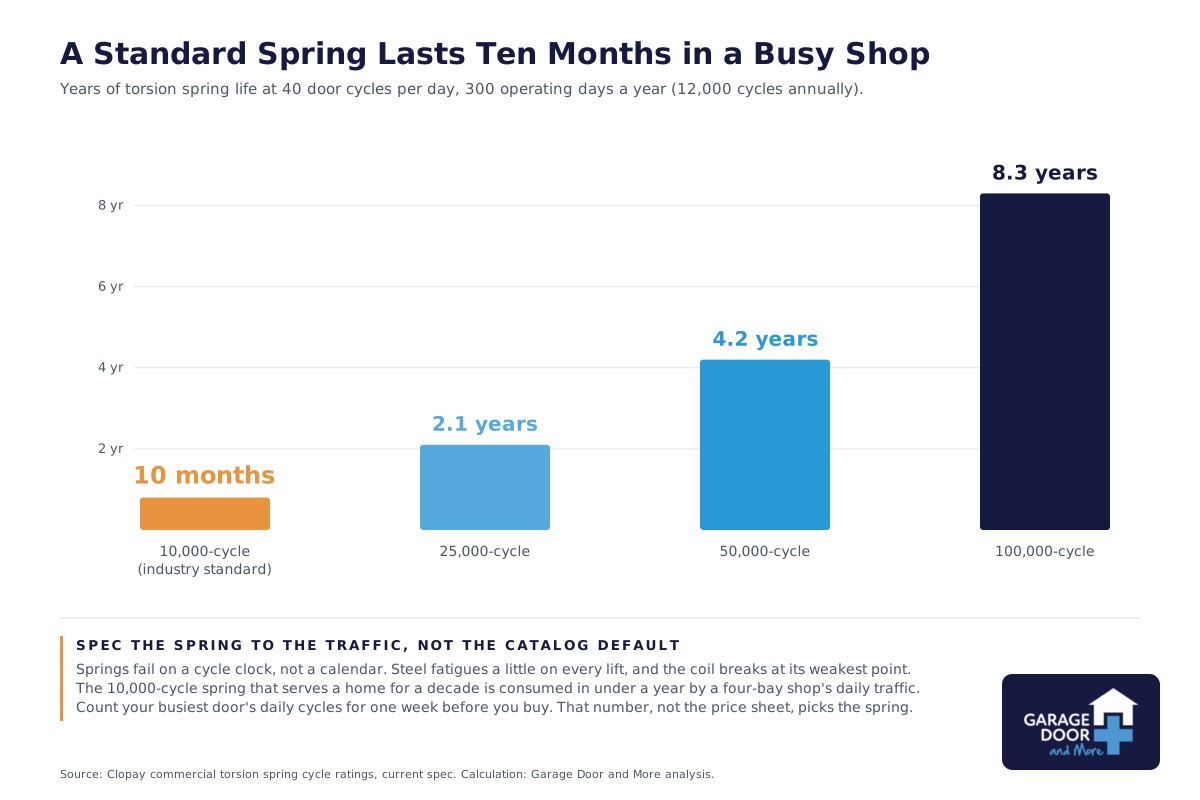
The price gap between the standard spring and a high-cycle assembly is small next to what one failure costs you, and we cover that cost in dollars further down. This is also the clearest difference between commercial vs residential garage doors: residential hardware is built around 3 to 4 cycles a day, and no amount of careful use changes the fatigue math when you multiply that traffic by ten. When a spring does let go, torsion spring replacement on a commercial door is a same-day job for us, but the better move is to never buy the ten-month spring in the first place.
“We get called to shops that opened eighteen months ago with a snapped spring on the busiest bay. Nobody counted cycles during the build-out. The door was fine. The spec was wrong.” The Technicians at Garage Door and More
The Work Keeps Coming: The Cars in Your Bays Are Older Than Ever
Spec your doors for more traffic than you have today, because the repair demand curve is moving in your favor. The average U.S. light vehicle hit 12.8 years old in S&P Global Mobility’s 2025 analysis, a record, with passenger cars alone averaging 14.5 years. The fleet grew to 289 million vehicles while the scrappage rate held at 4.5%. New and used prices stay high, so owners repair the car they have instead of replacing it, and every year of added age means more brake jobs, more suspension work, more hours through your bays.
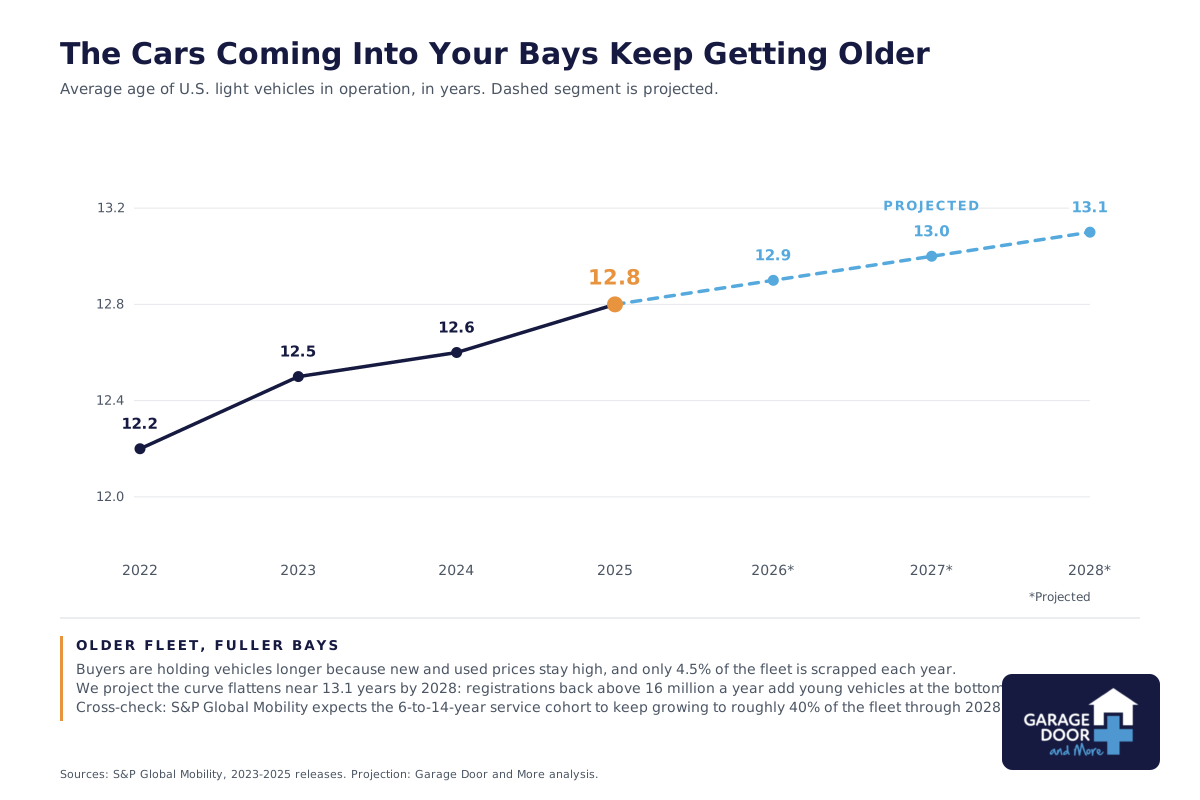
Projection: Garage Door and More analysis based on sustained high vehicle prices and a steady 4.5% scrappage rate, assuming the curve flattens near 13.1 years by 2028 as annual registrations above 16 million rebuild the young end of the fleet, cross-checked against S&P Global Mobility’s expectation that the 6-to-14-year service cohort grows to roughly 40% of the fleet through 2028.
The cohort detail matters more than the headline. In S&P Global Mobility’s fleet analysis, vehicles aged 6 to 14 years, the prime range for paid repair work, are expected to represent 70% or more of vehicles in operation for the next five years. The heavy registration years of 2015 through 2019 are rolling off warranty right now. If your shop is choosing between a door that matches today’s volume and hardware rated a class above it, buy the class above. The traffic is coming either way.
For Dealerships, the Service Drive Is the Business
Franchised dealership service and parts sales reached $164.6 billion in NADA Data 2025, up from $111.22 billion in 2020. That is $53 billion of growth in five years, and it now represents 13.2% of total dealership sales dollars while carrying a far larger share of profit than its share of revenue. The doors on your service drive and your bays are the physical throat of that revenue: every repair order enters and exits through them.
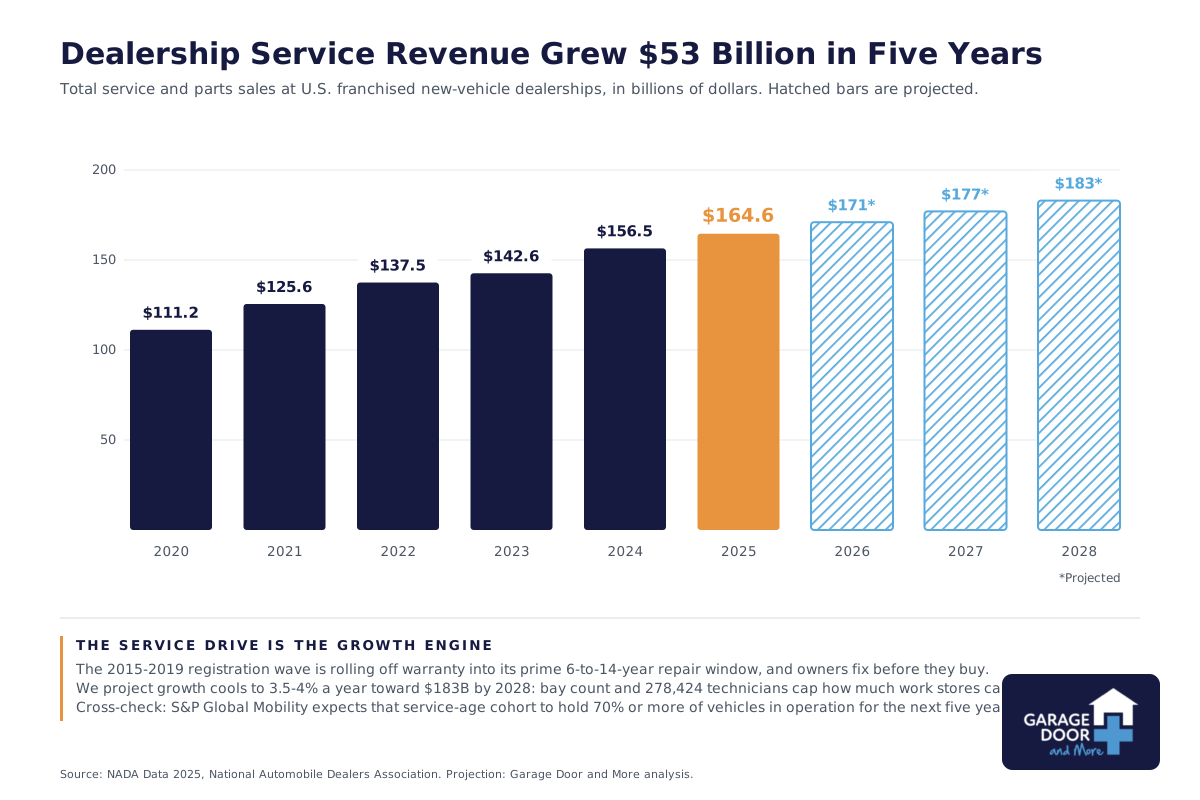
Projection: Garage Door and More analysis based on the 2015-2019 registration wave aging into its prime 6-to-14-year repair window and off-warranty work shifting to paying customers, assuming growth cools to 3.5 to 4% a year toward roughly $183 billion by 2028 because bay count and a technician workforce of 278,424 cap how much added work stores can absorb, cross-checked against S&P Global Mobility’s forecast that the 6-to-14-year cohort holds 70% or more of vehicles in operation over the same period.
For the dealership itself, the door decision splits in two. Customer-facing openings, the showroom and the service drive entrance, belong to full-view aluminum and glass doors that put inventory and a clean, bright reception lane in front of the customer. Working bays belong to insulated steel sectionals with high-cycle hardware. Dealers who order full-view glass for every opening pay a premium on the back bays for a view nobody uses, and dealers who put solid steel on the service drive make the first thirty seconds of a customer’s visit feel like a warehouse. Match the door to who stands in front of it.
Door Speed Is a Throughput Spec, Not a Luxury
Most Charlotte shops do not need a high-speed door, and we say that knowing the high-speed door is the more expensive sale. What most shops need is to stop running standard-speed operators on doors that cycle all day. A standard sectional door on a trolley operator travels around 8 inches per second, so a 12-foot opening takes about 18 seconds to clear. A high-performance sectional like the Clopay Extreme Series opens at 24 inches per second, three times standard, and ships with a 50,000-cycle spring as its baseline. True high-speed doors, the class Rytec builds for dealership service drives, run up to 100 inches per second and clear the same opening in under a second and a half.
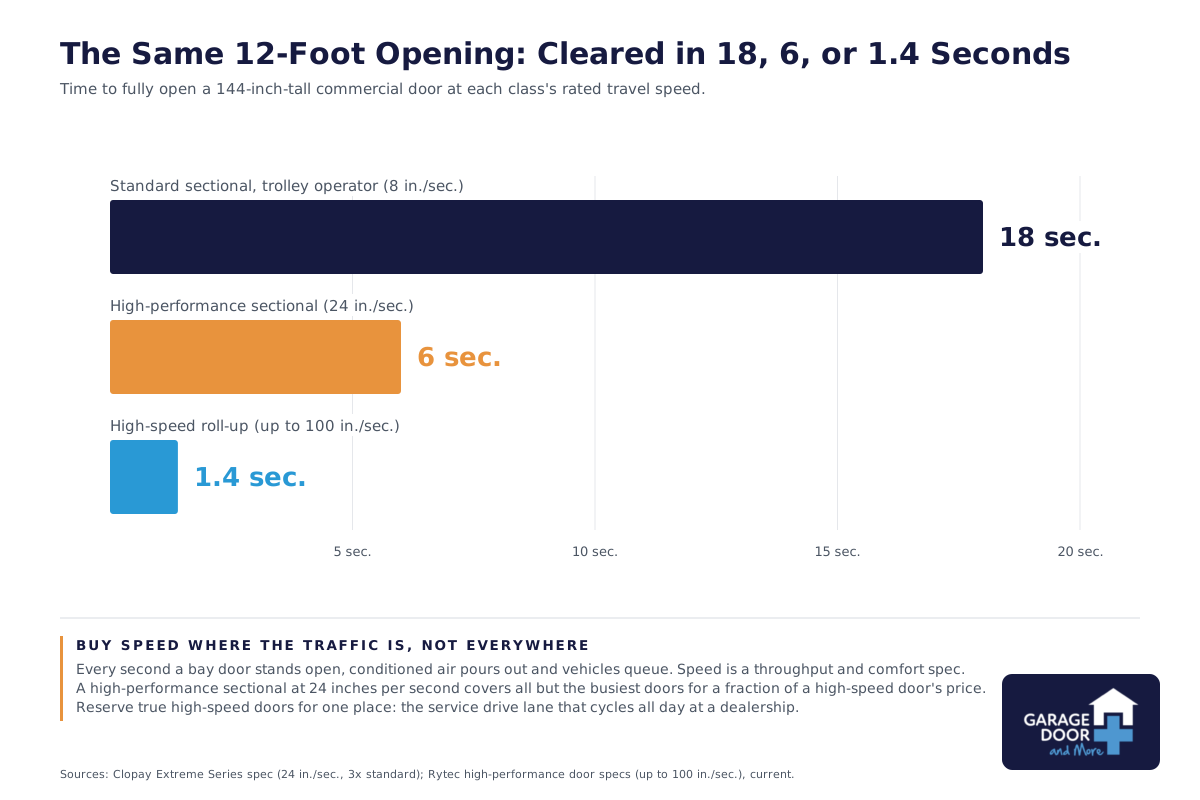
Here is where each class belongs. The busiest bays at a multi-bay shop earn the high-performance sectional: the 12-second saving per cycle, times 40 cycles a day, keeps roughly eight minutes of open-door time out of your conditioned air every day, per door, and the upgraded spring package solves the cycle problem at the same time. The dealership service drive lane that stacks cars at 7:30 every morning is the one opening where a true high-speed door earns its price. And the back bay that opens six times a day is fine with a standard sectional and standard operator; putting premium speed there is money spent on a problem you do not have.
The operator deserves the same scrutiny as the door. Trolley units built for homes fail fast under commercial duty, which is why commercial garage door openers are rated by duty cycle just like springs. Where headroom above the door is tight, which is common in older Charlotte shop buildings, a commercial jackshaft operator mounts on the torsion shaft beside the opening instead of on the ceiling and frees the overhead space for lifts.
What a Dead Bay Costs, and How to Never Pay It
NADA Data 2025 puts the average customer mechanical labor rate at $186 an hour. A bay blocked by a failed door forfeits eight billable hours a day, which is $1,488 in labor billing alone, before parts margin, before the customers you reschedule, before the tech standing around. Stretch that outage across a three-day quote-and-approval cycle and you are past $4,400. Wait five days on a specialty part and you are past $7,400, on one bay.
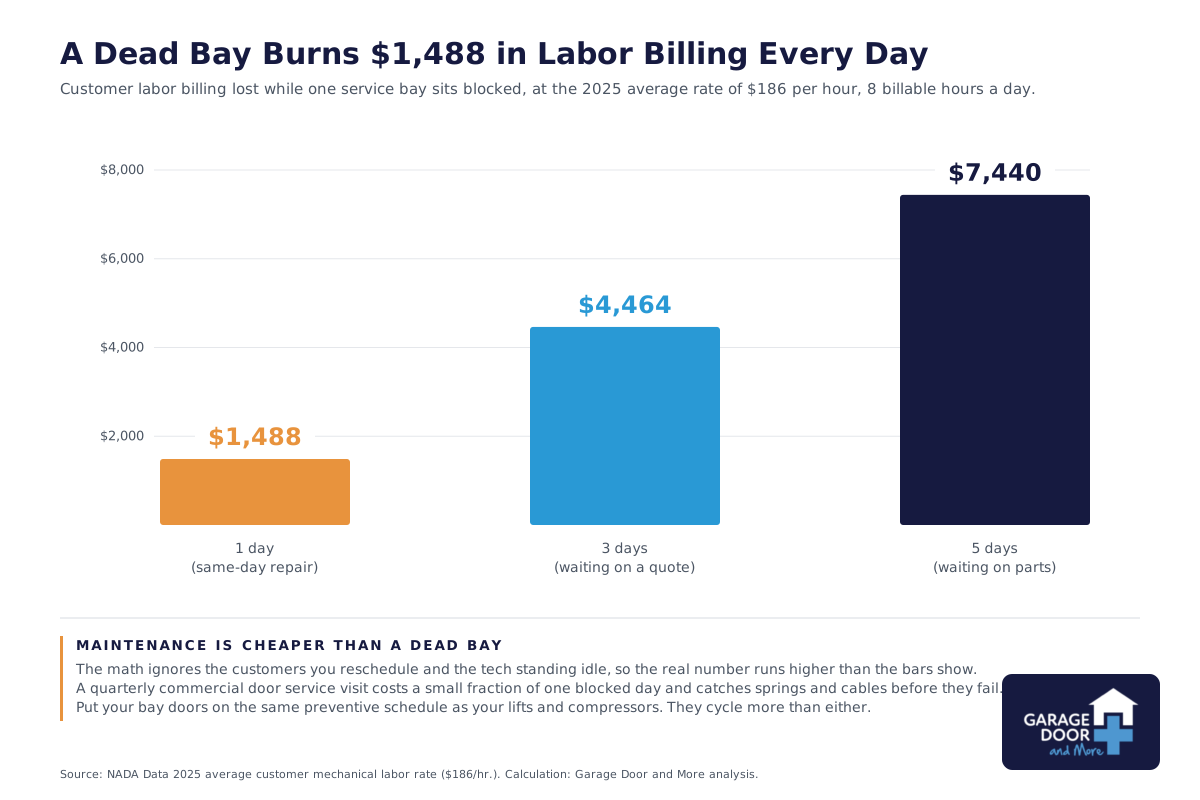
Two habits keep you out of those bars. First, put your bay doors on a quarterly preventative garage door maintenance schedule, the same way your lifts and compressors are on one. A technician who tensions cables, checks spring wear against the cycle count, and adjusts the operator catches almost every failure while it is still a cheap adjustment. Your doors cycle more than your compressor does; they have earned a slot on the same calendar. Second, when you do call for a repair, call a company that treats a dead commercial bay as a same-day problem. We built our service model around that standard because the arithmetic above is not ours, it is yours.
Glass Where Customers Look, Steel Where They Don’t
Full-view aluminum doors are a marketing asset with a thermal cost, and pretending otherwise sells you the wrong door. Even with insulated glazing, a wall of glass moves far more heat than a polyurethane-insulated steel sectional, and in a Charlotte July your service bays are fighting the sun through every panel. The honest layout for most facilities is mixed: glass on the one or two openings that face your customers and your street, insulated steel commercial garage doors on the working bays where techs need stable temperatures and nobody is looking at the building. Shops that showcase the work itself, a performance shop with a lobby view into the bays, are the exception that justifies glass in a working wall, and an interior full-view section row can give the lobby its view while the exterior stays insulated.
The Line We Draw on DIY
Your techs work on brake calipers and suspension springs all day, and that competence is exactly why we say this plainly: commercial door torsion springs are not a job for the shop’s own crew. A spring sized to balance a 400-plus-pound insulated commercial door stores far more energy than a residential unit, the winding bars load in the same way, and the failure mode when a bar slips is immediate and aimed at whoever is holding it. We will gladly show your crew how the counterbalance works, where to look for frayed cable strands, and how to test door balance with the operator disconnected. Adjusting or replacing springs and cables under tension stays with door technicians who do it every day with the right bars, the right winding cones, and the scars that taught them respect for the hardware.
“A mechanic is the worst spring customer in the best way. He’s confident, he owns tools, and he’s never had a winding bar kick back on him. We’d rather teach him what to watch for than meet him after.” The Technicians at Garage Door and More
Planning an Installation in Charlotte
Start the door conversation while your build-out or renovation is still on paper, because opening sizes, headroom, and operator placement are cheap to change in a drawing and expensive to change in steel. Commercial sectionals run far larger than residential stock, and our commercial overhead door sizes comparison chart shows what each series supports before you commit framing dimensions. Charlotte-area installations also need to meet ASTM and ANSI construction standards and local code, including wind-load requirements that apply to large openings.
We handle commercial garage door installation for auto repair shops, dealerships, and service centers across Charlotte and the surrounding towns, from single-door replacements to multi-bay build-outs, and we service every door we install on the maintenance schedule your traffic actually calls for. We are family owned, we have been doing this in this market for decades, and more than a thousand reviews exist because we quote the repair when the repair is right and the upgrade only when the math says so. Send us your bay count and your daily cycle estimate through a garage door quote request and we will spec the door, the spring, and the operator to the traffic you actually run.