
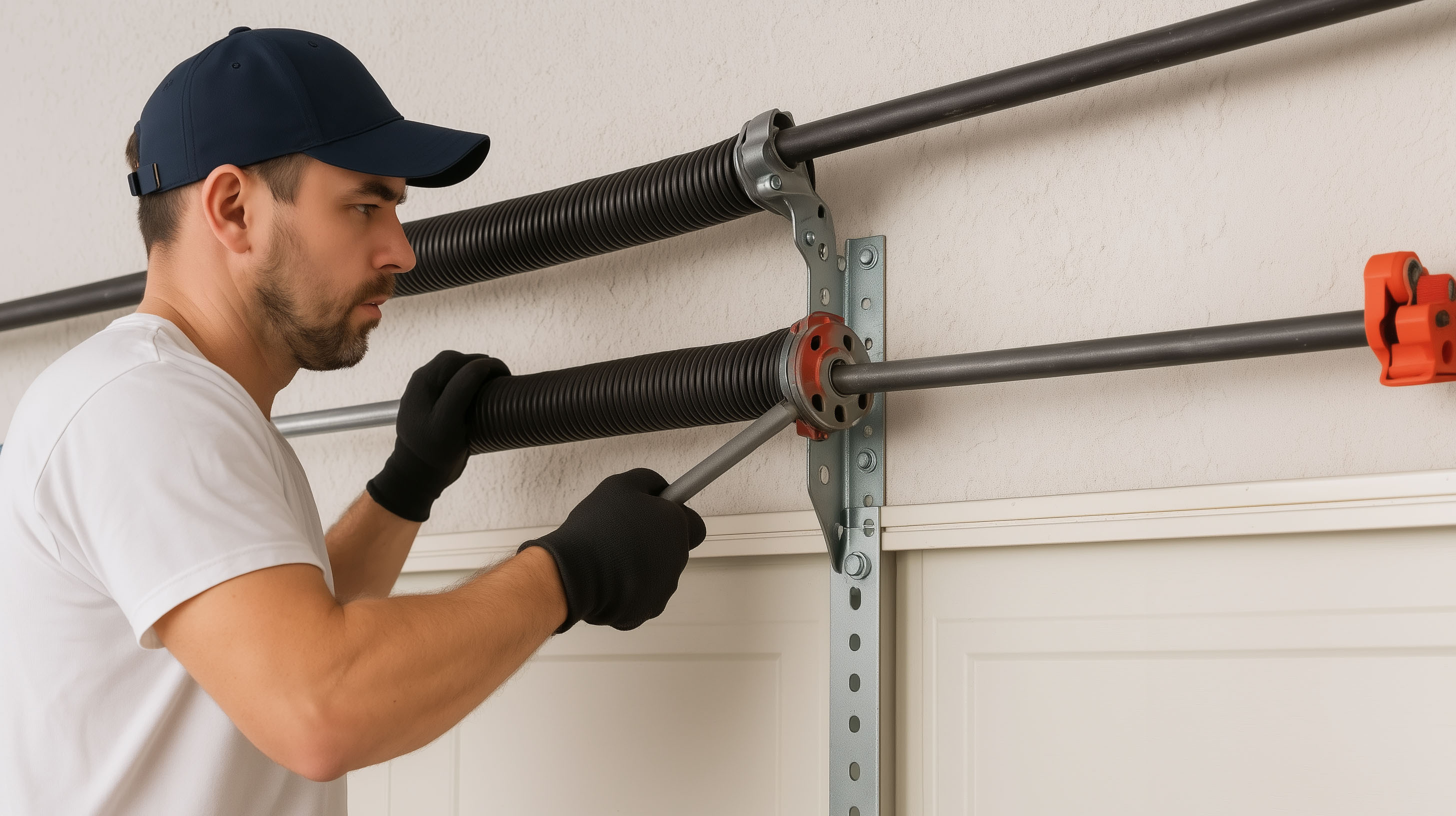
Your garage door springs do the heavy lifting every time you open or close your door, bearing hundreds of pounds of tension day after day. When these springs wear out or break, selecting and installing the right replacement springs becomes the difference between years of trouble-free operation and premature failure. This guide walks you through everything you need to know about garage door spring installation, from understanding spring types to recognizing when professional installation makes the most sense for your situation.
What Are Garage Door Springs and Why Do They Matter?
Garage door springs are tightly wound metal coils that counterbalance the weight of your garage door, making it possible to lift a door that weighs 150 to 400 pounds with minimal effort. Without functioning springs, your garage door opener would strain under the full weight of the door, and manual operation would require significant strength.
Key components of a garage door spring system:
- Torsion Springs: Mounted horizontally above the door opening, these springs twist and store mechanical energy when the door closes. They provide controlled, balanced lifting power through a central shaft connected to cable drums on each side.
- Extension Springs: Positioned along the horizontal tracks on both sides of the door, these springs stretch and contract to lift the door. They work in pairs and require safety cables to prevent injury if a spring breaks.
- Spring Hardware: This includes bearing plates, center brackets, cable drums, and safety containment systems that work together to translate spring tension into lifting force.
- Cycle Life Rating: Springs are rated by the number of cycles (one open and one close equals one cycle) they can perform before expected failure. Standard springs offer 10,000 cycles, while high-cycle springs provide 25,000 to 100,000 cycles.
Garage Door Spring Type Comparison
| Feature | Torsion Springs | Extension Springs |
|---|---|---|
| Mounting Location | Above door opening on header | Along horizontal tracks, both sides |
| Typical Lifespan | 15,000-20,000 cycles | 10,000-15,000 cycles |
| Safety Profile | Controlled failure, stays on shaft | Can fly off if safety cables absent |
| Balance Quality | Superior, smooth operation | Good, may have slight jerking |
| Installation Cost | Higher initial investment | Lower upfront cost |
| Best For | Heavy doors, frequent use | Lighter doors, budget installations |
“We tell every homeowner that springs are the heartbeat of your garage door system. Choosing the right type and having them installed correctly determines whether you’ll get five years or fifteen years of reliable service.” — The Team at Garage Door and More
How Do You Know When to Install New Garage Door Springs?
Recognizing the warning signs of failing springs allows you to plan for replacement before a complete break leaves your car trapped in the garage. Springs degrade gradually over thousands of cycles, and several indicators signal that installation of new springs should move to the top of your home maintenance list.
Warning signs that indicate spring replacement:
- Visible Gaps in Spring Coils: A healthy torsion spring has tightly wound coils with consistent spacing. When you notice gaps of more than a quarter inch between coils, the spring has stretched beyond its working parameters and lost tension capacity.
- Door Closes Too Fast: Springs counterbalance your door’s weight. If the door drops quickly when you release it at the halfway point during a balance test, your springs no longer provide adequate lifting force and need replacement.
- Loud Bang from the Garage: A sudden, gunshot-like sound from your garage typically means a spring has broken. The stored energy releases instantly when the metal fails, creating a startling noise that homeowners often hear from inside their homes.
- Door Feels Heavy to Lift Manually: Your garage door should lift easily with one hand when properly balanced. If the door feels significantly heavier than it used to, or if you struggle to hold it open, spring tension has diminished past acceptable levels.
- Crooked Door Movement: When one spring weakens faster than its partner, the door may rise unevenly or appear tilted. This puts extra strain on garage door cables, rollers, and track hardware.
- Opener Struggles or Reverses: Modern openers have safety features that reverse the door when they detect excessive resistance. If your opener frequently reverses or strains during operation, failing springs may be forcing it to work beyond its capacity.
Spring Condition Assessment Guide
| Observation | Condition Level | Recommended Action |
|---|---|---|
| Tight coils, no rust, smooth operation | Good | Continue regular inspection |
| Minor surface rust, slightly slower closing | Fair | Schedule inspection, plan for replacement within 1-2 years |
| Visible gaps in coils, door heavy to lift | Poor | Replace soon, within 1-3 months |
| Broken spring, door won’t open | Failed | Do not operate, call for same-day service |
What Factors Determine the Right Springs for Your Garage Door?
Selecting the correct springs requires precise measurements and calculations based on your specific door’s characteristics. Installing springs with incorrect specifications leads to poor door balance, shortened component life, and potential safety hazards. Professional technicians use several measurements to determine exact spring requirements.
Measurements and specifications that affect spring selection:
- Door Weight: The total weight of your garage door, including any windows, insulation, and decorative hardware, determines the load your springs must counterbalance. A standard single-car steel door typically weighs 130 to 150 pounds, while insulated double-car doors can exceed 350 pounds.
- Door Height: Taller doors travel a greater vertical distance, requiring springs with more lifting capacity and different winding specifications. A seven-foot door needs different springs than an eight-foot or ten-foot door of the same weight.
- Track Radius: The curve radius of your track system affects how spring tension translates into lifting force. Standard residential tracks have 12-inch or 15-inch radius curves, and each requires specific spring calculations.
- Wire Diameter: The thickness of the spring wire directly affects strength and cycle life. Heavier gauge wire provides more lifting power and longer lifespan but costs more. Wire diameter typically ranges from .192 to .312 inches for residential doors.
- Inside Diameter: Torsion springs must fit precisely on the torsion bar above your door. Standard inside diameters include 1.75 inches, 2 inches, and 2.5 inches, depending on your hardware configuration.
- Spring Length: The physical length of the spring body affects how many coils are available to store energy. Longer springs generally provide smoother operation and longer life than shorter springs of the same wire diameter.
“We’ve seen plenty of DIY installations fail because the homeowner ordered springs based only on length and didn’t account for wire diameter or the door’s actual weight. Getting the specifications right from the start saves money and prevents premature failure.” — The Team at Garage Door and More
Professional spring installation always begins with weighing the actual door rather than relying on manufacturer estimates. We use specialized scales to determine precise weight, then calculate the correct spring specifications using industry-standard formulas that account for all variables in your system.
Should You Choose Single or Dual Spring Installation?
When replacing garage door springs, you have the option of installing a single spring centered above the door or a dual spring system with one spring on each side of the center plate. This decision affects safety, longevity, and long-term maintenance costs.
Benefits and considerations for each configuration:
- Single Spring Setup: One larger spring handles the full counterbalance load. This configuration costs less upfront and works adequately for lighter doors. If the single spring breaks, your door becomes completely inoperable until repair.
- Dual Spring Setup: Two smaller springs share the load equally, each providing 50% of the lifting force. If one spring breaks, the remaining spring often allows limited door operation while you arrange for repair, providing partial functionality in emergencies.
- Safety Advantage of Dual Springs: When one spring in a dual system fails, the remaining spring absorbs some of the released energy, resulting in less violent failure. Single spring breaks release all stored energy at once, creating more forceful reactions.
- Extended Lifespan: Two springs sharing the workload experience less stress per cycle than a single spring carrying the full weight. Dual spring systems typically last 20-30% longer than comparable single spring installations.
- Heavy Door Requirements: Doors exceeding 250 pounds generally require dual spring installation because a single spring capable of lifting that weight would have extreme tension levels that increase danger during installation and increase wear on hardware.
Single vs. Dual Spring System Comparison
| Factor | Single Spring | Dual Spring |
|---|---|---|
| Initial Cost | Lower (one spring) | Higher (two springs) |
| If One Spring Breaks | Door completely inoperable | Limited operation possible |
| Average Lifespan | 10,000-15,000 cycles | 12,000-20,000 cycles |
| Stress Per Spring | 100% of door weight | 50% of door weight each |
| Best Application | Light doors, budget projects | Heavy doors, high-use situations |
| Replacement Practice | Replace single spring | Replace both springs together |
When upgrading from a single spring to a dual spring system, the center bracket and torsion shaft may need modification or replacement. Our technicians evaluate your existing hardware to determine what changes your conversion requires and whether the investment makes sense for your situation.
What Does Professional Garage Door Springs Installation Include?
Hiring a professional for garage door installation and spring replacement provides more than just new parts. A complete professional installation includes assessment, precise installation, system calibration, and safety verification that protects your investment and your family.
Components of a professional spring installation service:
- Full System Inspection: Before replacing springs, technicians examine all related components including cables, drums, bearings, and tracks. Identifying worn parts during spring installation prevents callbacks and catches problems before they cause additional damage.
- Precise Door Weighing: Professional-grade scales measure your door’s actual weight rather than relying on estimates. This measurement drives all subsequent calculations and helps achieve ideal spring specifications for your exact door.
- Correct Winding and Tensioning: Torsion springs require precise winding to store the correct amount of energy. Each quarter-turn of the winding cone adds tension, and professional technicians count turns carefully to achieve proper balance without over-tensioning.
- Hardware Evaluation: Worn bearing plates, damaged drums, or corroded brackets compromise new spring performance. Professionals identify hardware that should be replaced alongside springs to maintain proper system function.
- Balance Testing: After installation, technicians test door balance by disconnecting the opener and manually operating the door. A properly balanced door stays in place when stopped at any point along its travel.
- Safety System Verification: Professionals confirm that safety cables are properly installed on extension spring systems and that all containment brackets are secure on torsion systems.
- Opener Force Adjustment: Spring changes affect how much resistance your opener encounters. Technicians adjust opener force settings to match the new spring tension, preventing motor strain and premature opener failure.
“The installation itself is just one part of what we do. We spend time testing and adjusting every component so that when we leave, you have a complete system that works together perfectly, not just new springs hanging above your door.” — The Team at Garage Door and More
How Much Does Garage Door Springs Installation Cost with Labor?
Garage door springs installation price with labor varies based on spring type, door characteristics, and whether additional repairs are needed. Understanding the cost structure helps you budget appropriately and recognize fair pricing when comparing quotes from service providers.
Factors that influence total installation cost:
- Spring Type and Quality: Standard-cycle springs cost less than high-cycle options. Galvanized springs resist rust and last longer than oil-tempered springs but carry a price premium. Your choice balances upfront cost against expected lifespan.
- Single vs. Dual Installation: Dual spring installation requires more springs and additional labor time, increasing the total bill. The improved safety and longevity often justify the extra expense for frequently used doors.
- Door Size and Weight: Heavier doors require larger, more expensive springs. Commercial-grade springs for oversized or heavy-duty doors cost more than standard residential springs.
- Required Hardware Replacement: Worn drums, damaged bearing plates, or frayed cables add to the total cost when they need replacement. Quality technicians include these items only when genuinely needed.
- Service Call and Labor: Labor typically accounts for 40-60% of the total bill. Same-day service or after-hours appointments may include additional charges.
- Geographic Location: Service rates vary by region based on local cost of living and market competition. Charlotte NC area pricing reflects regional labor costs and availability of qualified technicians.
Typical Garage Door Spring Installation Pricing
| Service | Average Cost Range | What’s Included |
|---|---|---|
| Single Torsion Spring | $180 – $350 | One spring, labor, basic inspection |
| Dual Torsion Springs | $250 – $450 | Two springs, labor, balance testing |
| Extension Springs (pair) | $150 – $280 | Two springs, safety cables, labor |
| High-Cycle Torsion Springs | $300 – $550 | 25,000+ cycle springs, premium hardware |
| Heavy Duty Spring Installation | $350 – $600 | Commercial-grade springs for heavy doors |
| Same-Day Emergency Service | Additional $50 – $100 | Priority scheduling, rapid response |
We provide written estimates before beginning any work, detailing exactly what parts and services are included. This transparency helps you make informed decisions without surprise charges when the job is complete.
Why Do Heavy Doors Require Special Spring Considerations?
Garage door springs installation for heavy doors presents unique challenges that require specialized knowledge and equipment. Doors with substantial insulation, solid wood construction, or commercial specifications demand careful spring selection and installation techniques to achieve safe, reliable operation.
Special requirements for heavy door spring installation:
- Higher Tension Ratings: Heavy doors require springs wound to higher tension levels. This increased stored energy amplifies the dangers of improper installation, making professional service particularly important for these applications.
- Larger Wire Diameter: Springs for heavy doors use thicker wire to handle the increased load. Wire diameter may exceed .300 inches for doors weighing more than 300 pounds, requiring specialized tools for installation.
- Reinforced Hardware: Standard residential brackets and bearings may not withstand the forces generated by heavy-duty springs. Industrial-grade bearing plates, upgraded center brackets, and heavy-duty cable drums often accompany heavy door installations.
- Dual Spring Requirement: Most heavy doors require dual spring systems to distribute the load safely. Attempting to counterbalance a heavy door with a single spring creates dangerous tension levels and accelerates wear on all components.
- Stronger Torsion Shafts: Standard hollow torsion tubes may flex under heavy loads. Solid steel shafts or larger diameter tubes provide the rigidity needed for consistent operation with heavy doors.
- Commercial-Grade Openers: Heavy doors often require upgrading the opener alongside spring installation. Standard residential openers may lack the horsepower to lift heavy doors reliably, even with properly balanced springs.
Heavy Door Classification and Spring Requirements
| Door Weight | Classification | Spring Requirements |
|---|---|---|
| Under 150 lbs | Light Residential | Standard springs, single or dual |
| 150 – 250 lbs | Standard Residential | Standard to mid-grade springs |
| 250 – 350 lbs | Heavy Residential | Dual springs recommended |
| 350 – 500 lbs | Light Commercial | Dual heavy-duty springs required |
| Over 500 lbs | Commercial/Industrial | Multiple spring systems, reinforced hardware |
“Heavy doors are where we see the most DIY failures. The forces involved with a 400-pound door are significant, and mistakes can cause serious injury. These installations truly require professional training and the right tools for the job.” — The Team at Garage Door and More
What Safety Precautions Apply to Garage Door Spring Work?
Garage door springs store tremendous amounts of potential energy. A standard residential torsion spring under normal tension contains enough force to cause serious injury or death if it releases unexpectedly. Understanding these dangers helps homeowners appreciate why professional installation provides value beyond convenience.
Critical safety factors in spring installation:
- Stored Energy Hazard: A fully wound torsion spring stores approximately 100 to 200 foot-pounds of rotational energy. When this energy releases suddenly during a break or improper handling, components can become dangerous projectiles.
- Winding Bar Requirements: Proper spring installation requires solid steel winding bars of the correct diameter. Substituting screwdrivers, socket extensions, or other improvised tools creates extreme danger when the spring slips or the tool breaks under tension.
- Set Screw Torque: The set screws that secure winding cones to the torsion shaft must be tightened to specific torque values. Under-tightened screws can allow the spring to spin free, while over-tightened screws may strip or break.
- Cable Drum Alignment: Cables must wind evenly on drums without overlapping or jumping grooves. Misaligned cables can release suddenly, causing the door to drop or shift dangerously.
- Controlled Release Procedures: Removing tension from old springs requires careful, controlled unwinding. Attempting to remove springs while under tension can cause violent rotation that catches hands or tools.
- Secondary Failures: Spring breaks can damage other components. A technician must inspect all related hardware for damage that could cause secondary failures during or after repair.
Professional technicians carry liability insurance, use proper safety equipment, and follow established procedures that minimize risk. These protections benefit both the technician and the homeowner when working with high-tension components.
How Long Does Quality Spring Installation Take?
Understanding the timeline for garage door springs installation helps you plan your day and recognize when a job is being done thoroughly versus rushed. The time required depends on the system type, any additional repairs needed, and whether complications arise during the work.
Time requirements for different installation scenarios:
- Standard Torsion Spring Replacement: Replacing one or two torsion springs on a typical residential door takes 45 minutes to 90 minutes when no complications exist. This includes inspection, installation, tensioning, and balance testing.
- Extension Spring Replacement: Extension springs typically install faster than torsion springs, taking 30 to 60 minutes for a pair. Safety cable installation adds time but provides protection against future spring breaks.
- Converting Single to Dual Springs: Upgrading from a single spring to a dual spring system requires additional time for hardware modifications, often extending the job to 90 minutes to two hours.
- Heavy Door Installation: Springs for heavy doors require more careful handling and precise adjustment. Expect two to three hours for complete installation and calibration on doors exceeding 300 pounds.
- Additional Repairs: When inspection reveals worn cables, damaged drums, or failing bearings, addressing these issues adds time to the appointment. A thorough technician explains findings before proceeding with additional work.
- Same-Day Service Availability: Many garage door repair companies offer same-day appointments for broken spring emergencies. Response times vary based on schedule availability and geographic coverage area.
Typical Installation Time by Service Type
| Service | Typical Duration | Factors That Add Time |
|---|---|---|
| Single Torsion Spring | 45-75 minutes | Rust, hardware damage, access issues |
| Dual Torsion Springs | 60-90 minutes | Shaft replacement, drum issues |
| Extension Spring Pair | 30-60 minutes | Safety cable routing, pulley replacement |
| Single to Dual Conversion | 90-120 minutes | Center bracket modification, shaft upgrade |
| Heavy Door Springs | 120-180 minutes | Reinforcement work, opener adjustment |
What Maintenance Extends the Life of Newly Installed Springs?
After investing in new spring installation, proper maintenance protects that investment and extends spring life significantly. Simple quarterly tasks reduce wear and help you identify developing problems before they become emergencies.
Recommended maintenance practices:
- Lubrication Schedule: Apply a garage door-specific lubricant to springs every three to four months. White lithium grease or silicone-based spray reduces friction between coils, prevents rust, and keeps springs operating quietly.
- Visual Inspection: Look at your springs monthly for signs of rust, gaps between coils, or shiny spots that indicate metal fatigue. Catching problems early allows planned replacement rather than emergency service.
- Balance Testing: Disconnect your opener and manually lift the door to waist height every few months. A properly balanced door stays in place; if it rises or falls, springs may need adjustment.
- Keep Springs Dry: Moisture accelerates rust and reduces spring life. Ensure your garage has adequate ventilation and address any water intrusion issues that expose springs to humidity.
- Listen During Operation: Unusual squeaking, grinding, or popping sounds during door operation can indicate spring issues. Note when new sounds develop and mention them during professional service visits.
- Professional Annual Service: A yearly inspection by a qualified technician catches issues that visual inspection misses. Professional service includes tension adjustment, hardware tightening, and lubrication of all moving parts.
Following these maintenance practices can extend spring life by 30-50% compared to neglected systems. The small time investment pays dividends through fewer repairs and longer intervals between spring replacements.
Frequently Asked Questions About Garage Door Springs Installation
Can I install garage door springs myself to save money?
We strongly advise against DIY spring installation because of the serious injury risks involved. Torsion springs hold tremendous stored energy that can cause severe harm if released unexpectedly. Professional installation includes proper tools, training, and insurance protection that make the service worthwhile for safety alone.
How do I know if I need torsion springs or extension springs?
Your existing system type usually determines replacement springs. Torsion springs mount horizontally above the door opening on a metal shaft, while extension springs run along the horizontal tracks on each side of the door. We can evaluate your setup and recommend upgrades if your current system underperforms.
Should I replace both springs if only one is broken?
Yes, replacing both springs together makes sense because they have experienced identical wear. When one spring breaks, the other has typically reached the same fatigue level and will likely fail soon. Replacing both prevents a second service call and keeps your door properly balanced.
What is the typical lifespan of garage door springs?
Standard springs last approximately 10,000 cycles, which translates to seven to ten years for average residential use. High-cycle springs rated for 25,000 or more cycles can last 15-20 years. Usage frequency, maintenance quality, and environmental conditions all affect actual longevity.
Why does my new garage door already have worn springs?
Some builders and door manufacturers install lower-quality springs to reduce costs. If your door is relatively new but springs show wear, upgrading to higher-grade springs provides better long-term value than replacing with equivalent cheap springs.
How quickly can I get same-day spring installation service?
Most professional garage door companies offer same-day service for broken springs because this repair prevents normal garage access. Response times typically range from two to six hours depending on technician availability and your location within the service area.
Will new springs make my garage door quieter?
Worn springs often cause squeaking, grinding, and vibration noise. New springs with proper lubrication operate more quietly. If noise persists after spring replacement, worn rollers, loose hardware, or opener issues may be the source.
Conclusion
Proper garage door springs installation combines the right spring selection with professional installation techniques that maximize safety and longevity. Whether you need standard replacement springs, a dual spring upgrade for better reliability, or heavy-duty springs for an oversized door, working with experienced technicians protects your investment and keeps your family safe.
The team at Garage Door and More brings years of hands-on experience to every spring installation in the Charlotte NC area. We stock a wide selection of spring types and sizes on our service vehicles, allowing us to complete most installations in a single visit. Contact us today if you need help with garage door spring repair or installation, and let our skilled technicians restore your door to smooth, reliable operation.