Your garage door moves up and down more than a thousand times each year, making it one of the most frequently used components of your home. Regular garage door maintenance protects your investment, prevents unexpected breakdowns, and keeps your family safe. This guide covers everything Charlotte homeowners need to know about proper garage door care, from DIY inspections to understanding when professional service makes sense.
What Does Garage Door Maintenance Actually Include?
Garage door maintenance refers to the routine inspection, cleaning, lubrication, and adjustment of all components that make your door function properly. A complete garage door tune-up addresses mechanical parts, electrical systems, and safety features to catch small problems before they become expensive repairs.
A complete garage door service typically covers these components:
- Springs and Cables: Technicians check garage door springs for wear, rust, and tension while inspecting cables for fraying or damage that could lead to sudden failure.
- Rollers and Tracks: Garage door rollers need inspection for cracks or chips, and tracks require cleaning and alignment verification to prevent binding or derailment.
- Hardware and Fasteners: All bolts, brackets, and hinges get tightened since vibration from daily use loosens connections over time.
- Weather Seals: Bottom seals and side weatherstripping get examined for cracks, gaps, or deterioration that lets in moisture, pests, and debris.
- Opener Systems: Garage door opener components including the motor, chain or belt, and electrical connections receive testing and adjustment.
- Safety Features: Photo-eye sensors and auto-reverse mechanisms undergo testing to confirm they respond correctly and protect against accidents.
Common Garage Door Maintenance Tasks and Frequency
| Maintenance Task | Recommended Frequency | DIY or Professional |
|---|---|---|
| Visual Inspection | Monthly | DIY |
| Lubrication of Moving Parts | Every 3-6 Months | DIY |
| Safety Sensor Testing | Monthly | DIY |
| Spring Tension Adjustment | Annually | Professional Only |
| Track Alignment Check | Every 6 Months | Professional Recommended |
| Complete Professional Tune-Up | Annually | Professional Only |
| Weather Seal Replacement | Every 2-3 Years | DIY or Professional |
| Balance Testing | Every 6 Months | DIY Test, Professional Adjustment |
How Often Should Garage Door Maintenance Be Done?
Most garage door manufacturers and industry experts recommend scheduling professional garage door maintenance at least once per year. Homeowners who use their garage door more frequently, such as those who park multiple vehicles or use the garage as a primary entrance, benefit from twice-yearly service appointments.
Climate plays a significant role in determining your maintenance schedule. Here in Charlotte, we experience hot, humid summers and occasional freezing temperatures in winter. These temperature swings cause metal components to expand and contract, which accelerates wear on springs, hinges, and other hardware. The humidity also promotes rust formation on unprotected metal parts, making regular lubrication and inspection particularly valuable for North Carolina homeowners.
“We tell our Charlotte customers that an annual tune-up costs a fraction of what emergency repairs run. A $100-150 maintenance visit today can prevent a $400-800 spring replacement tomorrow. The math always favors prevention.” — The Team at Garage Door and More
Between professional visits, you should perform basic checks monthly. Listen for unusual sounds during operation, watch for jerky or uneven movement, and test your safety features regularly. These simple observations help you catch developing problems early and communicate specific concerns to your technician during scheduled service appointments.
Seasonal maintenance considerations for Charlotte include:
- Spring Check (March-April): Inspect for winter damage, clear debris from tracks, and apply fresh lubricant after cold weather has passed.
- Summer Preparation (May-June): Test weather seals for gaps, check that photo-eye sensors stay clean despite pollen season, and confirm your opener handles the increased use that comes with summer activities.
- Fall Tune-Up (September-October): Schedule your annual professional service before winter arrives, replace worn weather seals, and verify all safety systems function correctly.
- Winter Monitoring (December-February): Watch for ice buildup around seals, listen for strain sounds from cold-stiffened springs, and keep tracks clear of road salt tracked in by vehicles.
What Happens During a Professional Garage Door Inspection?
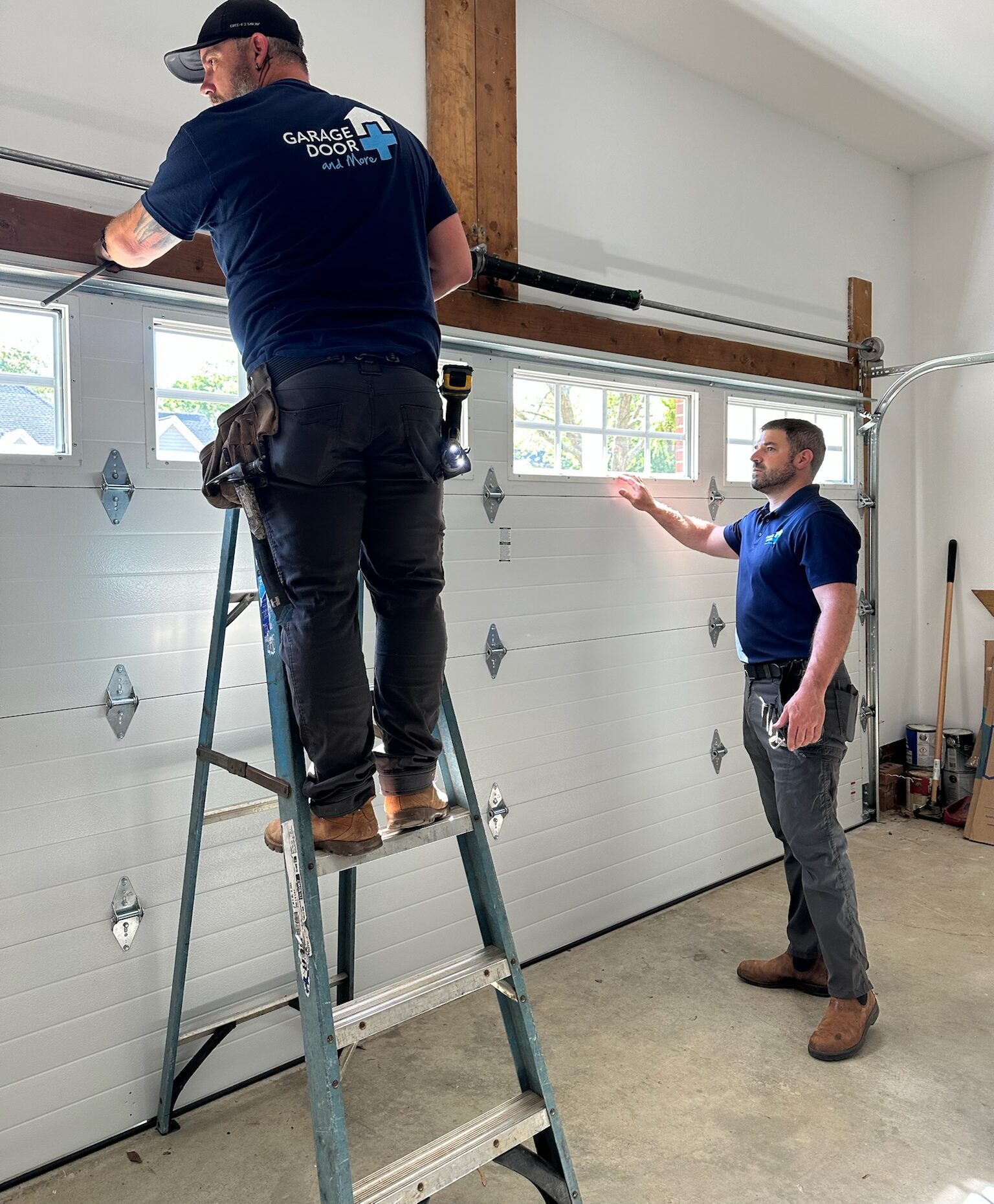
A professional garage door inspection goes far beyond what most homeowners can accomplish on their own. Trained technicians bring specialized tools, safety equipment, and the experience to identify subtle warning signs that indicate developing problems.
The inspection process typically begins with the technician observing your door through several complete open and close cycles. They watch for hesitation, listen for grinding or squeaking, and note any vibration or shaking that suggests component wear. This operational assessment reveals issues that might not appear during a static visual examination.
After the initial observation, technicians disconnect the opener and manually operate the door to test its balance. A properly balanced door stays in place when lifted halfway and released. If your door drifts up or crashes down, the springs need adjustment to distribute the door’s weight correctly. This balance test reveals spring wear before complete failure occurs.
Professional Inspection vs. DIY Inspection Comparison
| Inspection Element | DIY Capability | Professional Capability |
|---|---|---|
| Visual Damage Assessment | Can identify obvious damage | Detects hairline cracks and early wear |
| Spring Evaluation | Limited to visual rust check | Measures tension and cycle life remaining |
| Track Alignment | Can spot major misalignment | Uses precision tools for exact alignment |
| Cable Condition | Can see fraying on exposed sections | Inspects entire cable length and drum wrap |
| Opener Diagnosis | Basic function testing | Motor amp draw, gear wear, circuit testing |
| Safety System Testing | Basic obstruction test | Sensor alignment, force settings, code compliance |
Key areas professionals examine closely include:
- Torsion Spring Condition: Professionals measure spring gaps, check for rust pitting, and calculate remaining cycle life based on the spring’s specifications and current condition.
- Cable Drum Alignment: Cables must wrap evenly around drums to prevent binding and uneven door movement, something only visible with the door fully open.
- Bearing and Bushing Wear: Internal components wear gradually, and professionals can identify bearings approaching failure before they seize completely.
- Electrical System Integrity: Technicians test wire connections, inspect for heat damage at terminals, and verify proper grounding to prevent fire hazards and operational failures.
- Structural Panel Condition: Garage door panels develop stress cracks and joint failures that compromise insulation and structural integrity over time.
Why Does Garage Door Lubrication Matter So Much?
Proper lubrication reduces friction between moving parts, minimizes wear, prevents rust formation, and keeps your garage door operating quietly. Without regular lubrication, metal-on-metal contact generates heat, accelerates component degradation, and creates the grinding and squeaking sounds that indicate a neglected door.
The type of lubricant you use matters significantly. Avoid using WD-40 or similar penetrating oils on your garage door components. These products work well for loosening stuck parts, but they dry out quickly and actually attract dust and debris that creates abrasive buildup. Instead, use a silicone-based spray or white lithium grease specifically designed for garage door applications.
“Lubrication takes five minutes and costs under ten dollars, yet it extends the life of your springs, rollers, and hinges by years. When customers ask us what single maintenance task gives the best return, we always point to proper lubrication.” — The Team at Garage Door and More
Components that require regular lubrication include:
- Torsion Springs: Apply lubricant along the entire length of the spring to prevent rust and allow smooth coil movement during operation.
- Hinges: Focus on the pivot points where panels connect, applying enough lubricant to penetrate the joint without excessive dripping.
- Rollers: Metal rollers with exposed bearings need lubrication at the bearing race, while nylon rollers with sealed bearings only need attention at the shaft.
- Lock Mechanism: Spray lubricant into the keyhole and work the lock several times to distribute the product throughout the internal mechanism.
- Opener Rail: Chain-drive openers need the chain lubricated, while belt-drive systems benefit from lubricant on the trolley assembly.
Tracks represent the exception to the lubrication rule. Your garage door tracks should remain clean and dry. Lubricant on tracks attracts dirt and creates a sticky buildup that actually impedes smooth roller movement. If your rollers slip or hesitate in the track, clean the track thoroughly rather than adding lubricant.
Lubricant Types and Their Applications
| Lubricant Type | Best Used For | Advantages | Disadvantages |
|---|---|---|---|
| Silicone Spray | Hinges, Rollers, Tracks | Doesn’t attract dust, works in temperature extremes | Requires more frequent reapplication |
| White Lithium Grease | Springs, Bearings, Chains | Long-lasting, excellent for heavy loads | Can drip in hot weather, attracts some dust |
| Garage Door Specific Spray | All metal components | Formulated for garage door conditions | Higher cost than generic lubricants |
| Penetrating Oil (WD-40) | Freeing stuck parts only | Excellent for loosening rust and debris | Not a lubricant, dries out quickly |
What Does Your Annual Garage Door Maintenance Checklist Look Like?
Creating a systematic approach to garage door care helps you track completed tasks and identify when professional service becomes necessary. This annual checklist breaks down maintenance into manageable monthly, quarterly, and yearly tasks that protect your investment and prevent unexpected failures.
Monthly tasks you can complete yourself:
- Visual Inspection: Walk around your closed door looking for gaps, damage, rust spots, or weatherstrip deterioration that allows air and water infiltration.
- Listen Test: Operate your door through a complete cycle while listening for grinding, scraping, popping, or straining sounds that indicate developing problems.
- Safety Reversal Test: Place a 2×4 flat on the ground in the door’s path and close the door. It should reverse immediately upon contact. If it doesn’t, your opener needs adjustment.
- Photo-Eye Test: Wave an object through the sensor beam while the door closes. The door should stop and reverse direction immediately when the beam breaks.
- Balance Check: Disconnect the opener and lift the door manually to the halfway point. A balanced door stays in place; an unbalanced door drifts up or falls down.
Quarterly tasks for your maintenance schedule:
- Lubrication Round: Apply appropriate lubricant to springs, hinges, rollers, and the opener mechanism following the guidelines discussed earlier.
- Hardware Tightening: Use a socket wrench to check all visible bolts and brackets. Vibration loosens hardware gradually, and loose components accelerate wear.
- Track Cleaning: Wipe down the inside of both tracks with a damp cloth to remove dirt, cobwebs, and debris that can impede roller movement.
- Weatherstrip Inspection: Check the bottom seal for cracks, gaps, or sections that have pulled away from the door. Test side seals by looking for daylight around the door edges.
“The checklist approach transforms maintenance from something you forget about into a habit that protects your home. We’ve watched customers who follow a consistent routine go 15-20 years between major repairs while their neighbors replace springs every five years.” — The Team at Garage Door and More
Annual professional service should address:
- Complete Spring Assessment: Professionals measure spring tension, check for metal fatigue, and calculate remaining service life based on manufacturer specifications.
- Cable and Drum Inspection: Technicians examine cables for internal fraying, check drum condition, and verify proper cable wrap patterns.
- Track Alignment Verification: Using precision tools, professionals confirm tracks are plumb, level, and properly spaced to prevent binding and premature wear.
- Opener Calibration: Force settings, travel limits, and safety features receive testing and adjustment to match current door conditions.
- Panel and Section Evaluation: Technicians check for structural issues, insulation damage, and joint failures that compromise door performance.
How Does Garage Door Maintenance Prevent Expensive Repairs?
The connection between regular maintenance and repair prevention follows a straightforward principle: small problems caught early cost far less to fix than major failures addressed in emergency situations. Understanding this relationship helps you appreciate why annual garage door service represents smart financial planning rather than unnecessary expense.
Consider garage door springs as a prime example. Torsion springs typically last 10,000-15,000 cycles under normal conditions. Each time your door opens and closes counts as one cycle. For a household that uses the garage door four times daily, springs reach their cycle limit in approximately seven to ten years. Regular lubrication and professional inspection can extend this lifespan considerably, but neglected springs fail sooner and often at the worst possible moment.
Cost Comparison: Maintenance vs. Emergency Repairs
| Component | Annual Maintenance Cost | Emergency Repair Cost | Potential Savings |
|---|---|---|---|
| Springs | $15-25 (included in tune-up) | $200-400 per spring | Extended life by 2-4 years |
| Rollers | $10-15 (lubrication) | $150-250 full replacement | Double or triple roller lifespan |
| Cables | $15-20 (included in tune-up) | $150-200 per cable | Catch fraying before snap |
| Opener Motor | $20-30 (lubrication and testing) | $350-600 replacement | 5-8 additional years of service |
| Track Alignment | $25-40 (adjustment) | $200-350 (repair damage) | Prevent roller and panel damage |
Maintenance directly prevents these common failure scenarios:
- Spring Snap: Lubricated springs with proper tension distribution last significantly longer than dry, overtightened springs. Regular inspection catches metal fatigue before catastrophic failure.
- Cable Failure: Cables fray gradually from the inside out. Professional inspection reveals internal damage that visual checks miss, allowing replacement before the cable snaps and potentially damages your vehicle.
- Opener Burnout: Motors that strain against unbalanced doors, misaligned tracks, or worn rollers burn out years before their time. Proper door condition reduces motor workload dramatically.
- Panel Damage: Loose hardware and misaligned components cause panels to flex and stress in ways they weren’t designed to handle, leading to cracks and joint failures.
- Safety System Failure: Photo-eye sensors and auto-reverse mechanisms can fail gradually. Regular testing identifies weakening systems before they fail to protect against accidents.
The return on investment for garage door maintenance becomes clear when you calculate the alternative costs. A professional garage door tune-up typically costs $100-175 in the Charlotte area. Compare this to the average garage door repair bill of $200-400, or garage door replacement costs ranging from $800-2,500 depending on style and features. Maintenance expenses average less than 10% of what neglected doors eventually require in repairs.
What Should Professional Garage Door Maintenance Cost?
Understanding pricing helps you budget appropriately and recognize when quotes seem unreasonable. Professional garage door maintenance costs vary based on your door’s size, type, condition, and the specific services included in the tune-up package.
Basic garage door tune-up services in the Charlotte area typically range from $75-150 for a standard residential door. This service usually includes visual inspection, lubrication of all moving parts, hardware tightening, balance testing, safety system verification, and minor adjustments. More comprehensive packages that include detailed diagnostics and parts replacement can range from $150-250.
Factors that influence professional garage door maintenance cost:
- Door Size and Weight: Larger doors with heavier panels require more time to service and may have additional components that need attention.
- Door Type: Sectional doors, roll-up doors, and carriage-style doors each have unique maintenance requirements that affect service time.
- Opener Complexity: Basic chain-drive openers require different service than smart openers with WiFi connectivity and battery backup systems.
- Current Condition: Neglected doors need more extensive work to bring them back to optimal condition, increasing labor time and potentially requiring parts.
- Service Package Tier: Companies offer different levels of service, from basic lubrication packages to comprehensive inspection and adjustment services.
Typical Professional Maintenance Service Pricing
| Service Level | Price Range | Typically Includes |
|---|---|---|
| Basic Tune-Up | $75-100 | Lubrication, visual inspection, basic safety test |
| Standard Maintenance | $100-150 | Complete inspection, lubrication, hardware tightening, balance test, safety calibration |
| Comprehensive Service | $150-200 | All standard services plus opener diagnostics, track alignment, detailed report |
| Premium Package | $200-250 | All services plus minor parts replacement, extended warranty on work performed |
| Annual Service Plan | $150-250/year | Two visits per year, priority scheduling, discounts on repairs |
“We believe fair pricing means no surprises. When a technician arrives, they should explain exactly what they’ll do and what it costs before starting work. The best garage door companies build trust through transparency, not pressure tactics.” — The Team at Garage Door and More
Watch for warning signs that suggest a company may not provide value. Extremely low prices often indicate inexperienced technicians or bait-and-switch tactics where the advertised service omits critical steps. Conversely, prices significantly above market rates should come with clear explanations of what additional services justify the premium.
Frequently Asked Questions About Garage Door Maintenance
Can I perform garage door maintenance myself, or do I need a professional?
Many maintenance tasks work well as DIY projects, including lubrication, visual inspections, safety testing, and hardware tightening. Yet spring adjustment, cable repair, and track realignment require professional tools and training. Attempting spring work yourself risks serious injury since torsion springs store tremendous force that can cause harm if released improperly.
How do I know when my garage door springs need replacement?
Signs include visible gaps in the spring coils, rust and corrosion on the spring surface, the door feeling heavier than normal when operated manually, and squeaking or grinding sounds during operation. If your door suddenly stops working and you hear a loud bang from the garage, a spring has likely broken and needs immediate professional replacement.
What causes garage doors to become noisy over time?
Noise typically results from metal-on-metal friction caused by inadequate lubrication, worn rollers that no longer turn smoothly, loose hardware that vibrates during operation, or misaligned tracks that cause binding. Regular lubrication solves most noise issues, while persistent sounds after lubrication indicate component wear requiring professional attention.
Should I disconnect my garage door opener during extended vacations?
Disconnecting your opener isn’t necessary for typical vacations. Instead, use the vacation lock feature if your opener has one, or manually lock the door using the interior slide lock. For extended absences of several months, disconnecting the opener prevents potential damage from power surges and reduces fire risk from electrical issues.
How does weather affect garage door maintenance needs?
Temperature extremes cause metal components to expand and contract, which loosens hardware and changes spring tension. Humidity promotes rust formation on unprotected surfaces. Rain and snow can damage weatherstripping and allow moisture infiltration. Charlotte’s variable climate makes seasonal maintenance checks particularly valuable for local homeowners.
What’s the difference between residential and commercial garage door maintenance?
Commercial doors typically see heavier use, feature larger motors and springs, and include industrial-grade components designed for frequent operation. Commercial maintenance requires specialized knowledge of these systems and often involves compliance with building codes and safety regulations that don’t apply to residential installations.
How long does a professional garage door tune-up take?
A standard maintenance visit typically takes 30-60 minutes for a single residential door in good condition. Doors requiring significant adjustment, multiple doors, or extensive cleaning may require 60-90 minutes. Technicians who rush through service in less than 20 minutes likely skip important inspection steps.
Conclusion
Garage door maintenance protects your investment, keeps your family safe, and prevents the inconvenience and expense of unexpected breakdowns. The small amount of time and money you invest in regular care pays dividends through years of reliable operation and significantly reduced repair costs.
The technicians at Garage Door and More bring years of experience serving Charlotte homeowners with thorough, transparent garage door maintenance services. Our team takes the time to explain what your door needs and why, helping you understand your system and make informed decisions about its care. Contact us today to schedule your garage door maintenance appointment and keep your door running smoothly for years to come.