Charlotte’s brewing industry has grown into one of the more active craft beer markets in the Southeast, with taprooms and production facilities spread across neighborhoods from NoDa and South End to Plaza Midwood and beyond. Brewery garage doors serve a dual purpose that few other commercial applications share: they’re working production and delivery access points on one side of the building, and they’re a key part of the taproom’s indoor-outdoor experience on the other. Getting the specification right for both functions requires a clear understanding of what each side of that operation actually needs. At Garage Door and More, we work with Charlotte-area breweries on both new installations and replacements, and the requirements here are genuinely distinct from a standard commercial job.
The Two-Door Reality of a Brewery Facility
Most Charlotte brewery facilities have at least two distinct types of door applications, and conflating them in the specification process leads to compromises that serve neither use well.
The two primary brewery door applications:
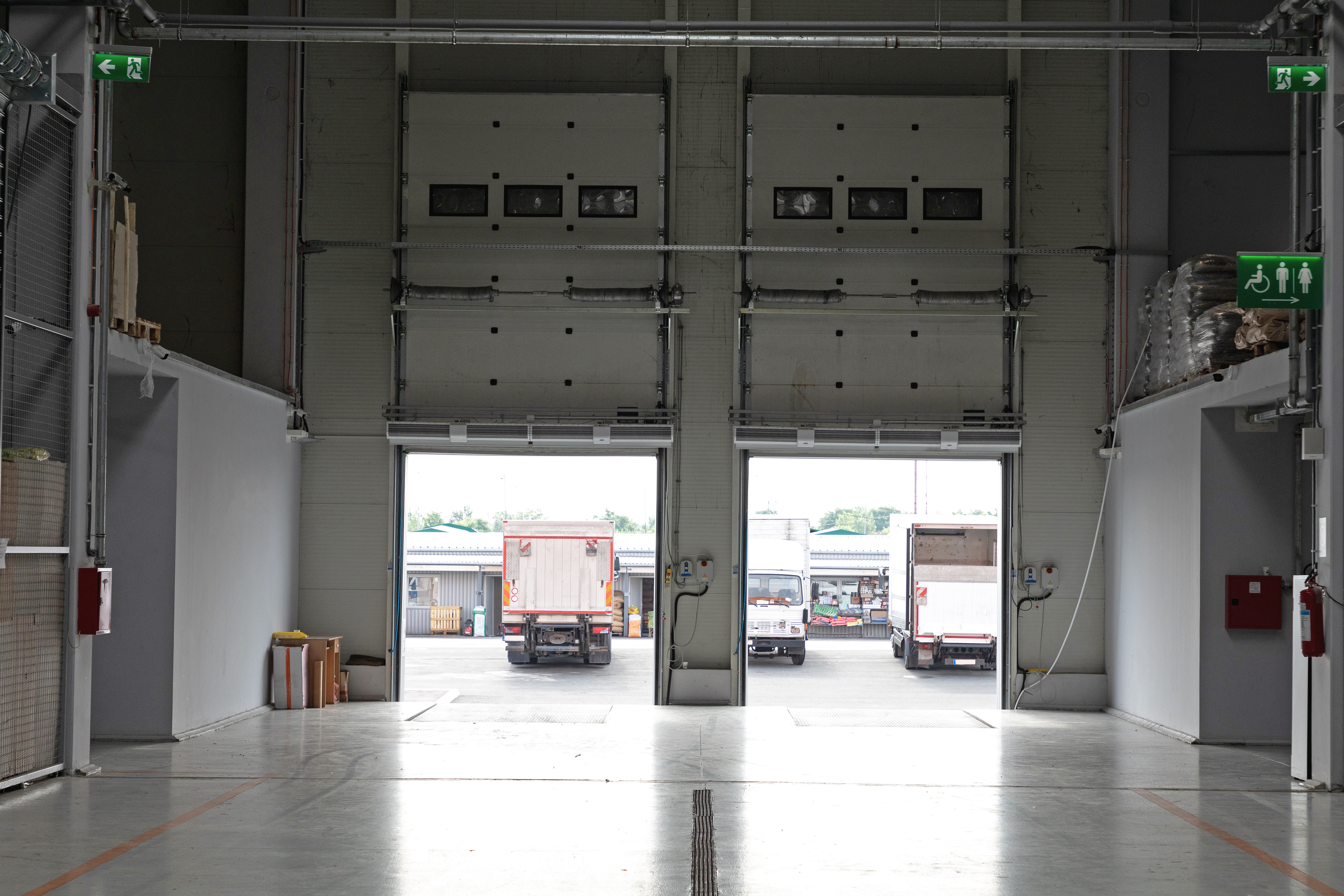
- Production and loading dock doors: These face the operational side of the brewery, handling deliveries of grain, hops, and supplies as well as keg and package distribution outbound. They need to be heavy-duty, cycle frequently, and hold up to the rigors of a working production environment. Industrial-grade construction, high-cycle operators, and weather sealing against rain and temperature swings are the priorities here.
- Taproom roll-up doors: These face the customer side and are part of the brewery’s brand and atmosphere. When open, they eliminate the boundary between the indoor taproom and an outdoor patio or beer garden. When closed, they need to seal well enough to maintain comfortable interior temperatures. Aesthetic quality matters here alongside function, because these doors are part of the customer’s experience of the space.
A brewery that tries to use the same door specification for both applications typically ends up with either an industrial door that looks out of place in the taproom or a taproom-style door on the loading dock that won’t hold up to production demands.
“The first conversation we have with brewery clients is always about separating the production side from the taproom side in the specification. They have genuinely different requirements, and the breweries that get this right have doors that serve both sides of their operation for years without problems. The ones that try to compromise usually end up calling us back within two years.” — The Team at Garage Door and More
Production and Loading Dock Door Specifications
The production side of a Charlotte brewery puts real demands on door hardware. Grain deliveries, keg movement, and supply logistics mean these doors cycle multiple times per day across every operating day of the year. The environment inside a production brewery also creates specific challenges: temperature differentials between the climate-controlled production space and the outside air cause condensation, cleaning chemicals used in sanitation can affect surfaces if seals aren’t tight, and the general activity level is higher than most commercial environments.
Key specification priorities for brewery production doors:
- High-cycle rated construction: Production doors should be specified with commercial-grade sectional doors or rolling steel doors rated for high daily cycle counts. Our Industrial Series overhead doors are built for this level of demand.
- Insulation for temperature control: The cold side of a production brewery runs at controlled temperatures that are expensive to maintain if the loading dock door seals poorly. Insulated door construction and full perimeter weather sealing are worth the added cost relative to the energy loss of a non-insulated door with gaps. Our Energy Series with Intellicore covers the insulated commercial door category.
- Operator duty rating: Production door operators need to be specified for the actual cycle frequency of the facility. A medium-duty commercial operator on a door that cycles 20 times per day will wear out quickly. Our commercial operator lineup covers the full range from medium to industrial duty.
- Corrosion-resistant finish: Brewery environments expose hardware to moisture, cleaning chemicals, and CO2. Specifying doors and hardware with galvanized or powder-coated finishes rated for washdown environments reduces long-term maintenance.
Taproom Roll-Up Door Specifications
The taproom door is where brewery character and operational function intersect. Charlotte’s mild climate for much of the year means breweries can keep these doors open for significant portions of the operating calendar, and when they do, the door essentially disappears into the ceiling and the outdoor space becomes part of the taproom. The door needs to be visually appropriate for the brand, thermally adequate for the off-season, and reliable enough that it doesn’t become an operational headache.
Key specification priorities for brewery taproom doors:
- Full-view aluminum and glass: For breweries going for a contemporary industrial aesthetic, full-view aluminum frame doors with glass panels create a visual connection to the outdoors even when closed and look architecturally intentional when open. Our Avante full-view aluminum door is a popular choice for this application.
- Sectional wood or faux-wood: Breweries with a more rustic or craft aesthetic often prefer a wood or wood-look door for the taproom. This aligns with the handcrafted brand positioning that many Charlotte craft breweries cultivate and reads as intentional rather than industrial in a customer-facing space.
- Opening width and ceiling clearance: Taproom doors are often wider than standard commercial openings to maximize the indoor-outdoor connection. Multiple doors side by side or a single wide door opening requires careful planning of header height and ceiling track clearance to achieve the desired fully-open appearance.
- Insulation for year-round comfort: Charlotte’s summers require effective door sealing to keep conditioned air in when the taproom is closed. A taproom door that looks great but seals poorly creates comfort and energy cost problems in July and August.
Charlotte’s Climate and Brewery Door Performance
Charlotte’s humidity creates specific maintenance considerations for brewery doors beyond the standard commercial context. The combination of high ambient humidity and the moisture generated inside a production brewery, from steam, cleaning operations, and fermenter condensation, means hardware throughout the facility is under more corrosion pressure than a dry warehouse environment.
Humidity and environment impact on brewery door components:
| Component | Brewery-Specific Risk | Recommended Mitigation |
|---|---|---|
| Springs | Accelerated corrosion from high humidity and washdown | Stainless or coated springs; regular lubrication |
| Cables | Interior wire corrosion in high-moisture environment | Inspected every 6 months; proactive replacement schedule |
| Track hardware | Rust at bolt heads and mounting points | Galvanized or stainless hardware; annual inspection |
| Operator | Condensation inside housing in temperature-differential zones | Sealed housing operators; position away from direct steam exposure |
| Bottom seals | Chemical exposure from floor cleaning | Chemical-resistant seal materials; annual replacement |
“Brewery environments are genuinely harder on door hardware than standard commercial spaces. The combination of Charlotte’s ambient humidity with the moisture that production brewing generates is tough on springs and cables. We recommend more frequent inspections for brewery clients than we would for a standard warehouse, and we’re direct about building that into their maintenance planning.” — The Team at Garage Door and More
What Does Brewery Garage Door Installation Cost in Charlotte?
Approximate cost ranges for brewery door installations in Charlotte:
| Application | Approximate Cost Range | Notes |
|---|---|---|
| Production / loading dock door (insulated) | $2,500 – $5,000 per door | Commercial sectional with heavy-duty operator |
| Taproom full-view glass door | $3,000 – $7,000 per door | Aluminum frame with glass panels; varies by size |
| Taproom wood or faux-wood door | $2,000 – $5,000 per door | Carriage or contemporary style with standard operator |
| Wide-opening taproom configuration (16ft+) | $4,000 – $10,000+ | Custom sizing, header work may be required |
Our Team Understands What Charlotte Breweries Need
Brewery door installations require thinking through both the production function and the customer experience in the same project, and getting the specification right for each matters. Our team has worked with Charlotte-area brewery and hospitality facilities and understands the distinct demands of each door application in this context.
If you’re planning a new brewery facility, expanding an existing one, or replacing doors that aren’t holding up to your operational environment, request an estimate from Garage Door and More. We’ll walk through your facility’s specific needs, spec the right door for each application, and deliver an installation that works for your production operation and your taproom experience.