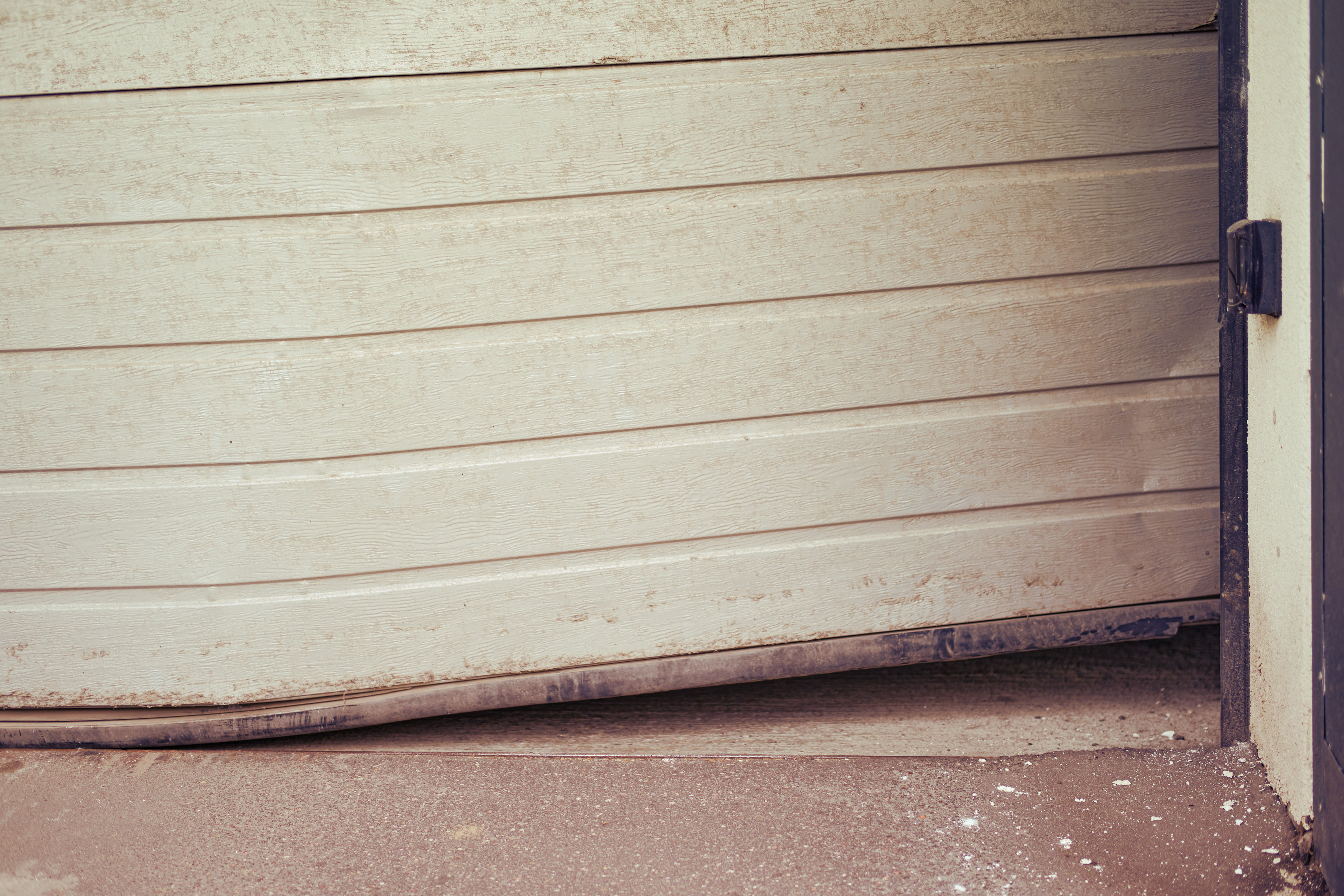
At Garage Door and More, we see garage door bowing more frequently than many Charlotte homeowners realize, particularly during our hot, humid summers when temperature extremes stress door materials beyond their limits. Bowing, also known as warping or sagging, creates that distinctive “caved-in” appearance where garage door panels curve inward, disrupting both the door’s functionality and your home’s curb appeal. This isn’t just a cosmetic issue – bowing indicates structural problems that can lead to complete door failure if left unaddressed.
Understanding what causes garage door bowing, recognizing early warning signs, and knowing available solutions helps homeowners protect their investment while maintaining safe, reliable garage door operation. The good news is that early-stage bowing often responds well to reinforcement measures, while severe cases may require panel replacement or complete door upgrades. The key lies in addressing the problem promptly before minor bowing becomes major structural failure.
Understanding What Causes Garage Door Bowing and Why It Happens
Garage door bowing occurs when panels lose their structural integrity and begin curving inward under various stresses, creating visible deformation that affects both appearance and function. The primary causes include inadequate structural support for wide door spans, material fatigue from age and weather exposure, and mechanical stress from improperly balanced or undersized opener systems. Charlotte’s climate compounds these issues through extreme temperature fluctuations and high humidity that accelerate material deterioration.
Wide garage doors, particularly double-wide installations spanning 16 feet or more, are especially susceptible to bowing because they lack sufficient internal reinforcement to support their own weight across such spans. Without proper strut reinforcement, the center sections gradually sag under gravitational pull, creating the characteristic bowed appearance that worsens over time. This problem becomes more pronounced as doors age and their original structural integrity diminishes.
Material-related factors play a significant role in bowing susceptibility, with lightweight doors and those made from thinner gauge materials being particularly vulnerable. Wood doors face additional challenges from moisture absorption and temperature-related expansion and contraction that can warp panels over time. Steel doors may bow when exposed to intense heat, particularly dark-colored doors that absorb more solar energy during Charlotte’s summer months.
Primary Causes of Garage Door Bowing:
- Inadequate Support: Wide doors lacking proper strut reinforcement to maintain structural integrity
- Material Fatigue: Age-related weakening of door materials from repeated stress cycles
- Weather Exposure: Temperature extremes and humidity causing material expansion and contraction
- Mechanical Stress: Improperly balanced systems placing uneven stress on door panels
- Poor Installation: Inadequate initial reinforcement or improper mounting creating stress points
- Spring Problems: Weakened or broken springs forcing panels to support excessive weight
Spring system failures create particularly problematic conditions for bowing because doors rely on springs to counterbalance their weight during operation. When springs weaken or break, panels must support additional stress that they weren’t designed to handle, accelerating bowing and potentially causing rapid deterioration. This explains why bowing often appears suddenly after spring problems develop, even in doors that previously showed no signs of structural issues.
“Charlotte’s hot summers are particularly hard on garage doors, especially dark-colored ones that absorb heat all day. We see bowing problems increase significantly during heat waves when doors expand beyond their design limits. The combination of heat stress and inadequate reinforcement creates perfect conditions for panel failure, which is why preventive reinforcement is so important for wide doors in our climate.” – Garage Door and More Structural Specialist
How Garage Door and More Identifies Bowing Risk Factors
At Garage Door and More, our technicians evaluate door construction, reinforcement adequacy, and environmental exposure factors during routine maintenance visits to identify bowing risks before problems develop. This proactive approach helps Charlotte homeowners address vulnerability factors through preventive reinforcement rather than costly emergency repairs after bowing occurs.
Recognizing Early Warning Signs Before Bowing Becomes Severe
Early detection of garage door bowing enables intervention before minor deformation becomes major structural failure requiring expensive repairs or complete door replacement. The first signs often appear as subtle changes in door appearance or operation that homeowners might initially dismiss as minor issues. Watching for these early indicators helps catch problems while they remain manageable and cost-effective to address.
Visual inspection reveals the most obvious bowing signs, including slight inward curvature of panels, gaps appearing at the door center when closed, and uneven spacing between panel sections. These changes often start subtly but become more pronounced over time, particularly after exposure to temperature extremes or mechanical stress from opener operation. Regular visual inspection helps homeowners notice changes before they become severe.
Operational changes frequently accompany early bowing, including increased noise during door movement, uneven opening or closing patterns, and garage door opener strain indicated by motor noise or slower operation. These symptoms suggest that bowing is affecting door balance and creating additional resistance that stresses the entire system. Addressing these operational changes promptly prevents cascading problems throughout the garage door mechanism.
Early Warning Signs of Garage Door Bowing:
- Subtle Panel Curvature: Slight inward bending visible when viewing the door from the side
- Center Gaps: Spaces appearing at the door center when fully closed
- Uneven Panel Spacing: Inconsistent gaps between horizontal door sections
- Operational Changes: Increased noise, uneven movement, or opener strain during cycles
- Weather Seal Problems: Bottom seal not contacting the ground evenly across the door width
- Track Stress: Unusual wear patterns on rollers or tracks from uneven door movement
Environmental indicators can also signal developing bowing problems, particularly after severe weather events, extended periods of extreme temperatures, or seasonal transitions when materials experience significant expansion and contraction cycles. Charlotte homeowners should pay particular attention to door condition following summer heat waves or winter cold snaps that place exceptional stress on door materials and structural components.
Professional assessment becomes valuable when early warning signs appear because experienced technicians can distinguish between minor issues that respond to adjustment versus developing structural problems requiring reinforcement or replacement. Early professional intervention often prevents minor bowing from progressing to severe structural failure that necessitates complete door replacement.
| Warning Stage | Visual Signs | Operational Impact | Action Required |
|---|---|---|---|
| Early | Slight curvature, minor gaps | Minimal operational changes | Preventive reinforcement |
| Moderate | Obvious bowing, significant gaps | Increased noise, uneven movement | Structural reinforcement |
| Severe | Pronounced deformation, panel stress | Operational difficulties, safety concerns | Panel replacement or door upgrade |
“The homeowners who save the most money on bowing problems are those who notice the early signs and act quickly. Once bowing becomes visually obvious from a distance, you’re often looking at more expensive solutions like panel replacement. But when we catch it early with slight curvature or minor gaps, simple strut reinforcement usually solves the problem completely at a fraction of the cost.” – Garage Door and More Early Detection Specialist
How Garage Door and More Helps You Monitor Door Condition
At Garage Door and More, we provide Charlotte homeowners with visual inspection guides and condition monitoring tips during service visits, helping them recognize early bowing signs before problems require expensive solutions. Our systematic approach to condition monitoring enables early intervention that protects door investments while maintaining safe, reliable operation.
Effective Solutions for Addressing Garage Door Bowing
Strut reinforcement represents the most common and effective solution for early to moderate garage door bowing, involving installation of horizontal metal reinforcement bars that distribute weight evenly across door panels and prevent further sagging. These steel or aluminum struts mount on the interior side of affected panels, typically at the point of maximum bowing, providing structural support that stops progression while often improving existing deformation. Professional strut installation ensures proper sizing, positioning, and attachment for optimal effectiveness.
The strut selection process considers door size, material, and severity of existing bowing to determine appropriate reinforcement specifications. Standard residential struts range from 1.5-inch by 1.5-inch angle iron for light applications to heavier structural members for severe cases or commercial installations. Proper strut placement typically positions reinforcement at the point of maximum stress, usually the door center for wide spans, with secure attachment through existing panel frameworks.
Panel replacement becomes necessary when bowing has created permanent structural damage including cracks, creases, or metal fatigue that strut reinforcement cannot address effectively. Individual damaged panels can often be replaced without affecting the entire door, provided replacement panels match existing door specifications and the underlying cause of bowing has been addressed through proper reinforcement or system rebalancing.
Bowing Solution Options:
- Strut Reinforcement: Horizontal steel bars providing structural support to prevent further bowing
- Panel Replacement: Individual section replacement when damage exceeds reinforcement capabilities
- System Rebalancing: Spring adjustment and mechanical optimization to reduce panel stress
- Complete Door Upgrade: Full replacement with properly reinforced door designed for the application
- Track Realignment: Correcting mechanical issues that contribute to uneven stress distribution
- Opener Upgrades: Installing properly sized openers that don’t overstress door components
Complete door replacement provides the most comprehensive solution when multiple panels show bowing, when underlying structural inadequacies make reinforcement impractical, or when doors have reached the end of their service life. Modern replacement doors incorporate improved reinforcement designs, better materials, and engineering advances that prevent bowing problems while providing superior performance and longevity compared to older installations.
Professional evaluation helps determine optimal solutions by assessing bowing severity, underlying causes, and cost-effectiveness of different approaches. Experienced technicians can distinguish between situations where simple reinforcement will be effective versus cases requiring more extensive intervention, helping homeowners make informed decisions that provide lasting solutions rather than temporary fixes.
“The right solution for garage door bowing depends entirely on how far the problem has progressed and what caused it initially. Early-stage bowing often responds beautifully to strut reinforcement that costs a few hundred dollars, while waiting too long might require complete door replacement costing thousands. That’s why we always recommend addressing bowing as soon as homeowners notice it rather than hoping it will somehow improve on its own.” – Garage Door and More Solution Specialist
Prevention Strategies for Avoiding Future Bowing Problems
Proper initial installation with adequate reinforcement prevents most bowing problems by ensuring doors have sufficient structural support for their intended application from the beginning. This includes specifying appropriate strut reinforcement for wide doors, using proper mounting techniques that distribute stress evenly, and ensuring opener systems are properly sized for door weight and dimensions. Quality installation may cost more initially but prevents expensive problems later.
Regular maintenance helps preserve door structural integrity by keeping mechanical systems balanced, maintaining proper lubrication, and addressing minor problems before they create excessive stress on door panels. Annual professional maintenance includes inspection of reinforcement components, assessment of door balance, and adjustment of spring systems to ensure optimal operation that minimizes panel stress throughout the door’s service life.
Environmental protection strategies help minimize weather-related stress that contributes to bowing, including proper insulation to reduce temperature extremes, adequate ventilation to control humidity, and protective finishes that resist moisture absorption and UV degradation. Charlotte homeowners benefit particularly from these measures due to the challenging local climate conditions that accelerate door deterioration.
Bowing Prevention Strategies:
- Proper Reinforcement: Adequate strut installation during initial door selection and installation
- Regular Maintenance: Annual professional service to maintain balance and identify developing problems
- Climate Control: Insulation and ventilation to minimize temperature-related stress
- Quality Materials: Selecting doors with appropriate gauge materials and construction quality
- Proper Sizing: Ensuring opener systems match door requirements without creating operational stress
- Prompt Repairs: Addressing mechanical problems immediately to prevent cascading stress effects
Quality door selection considers local climate conditions, intended usage patterns, and structural requirements to choose doors with appropriate reinforcement and materials for long-term performance. Charlotte’s climate demands doors with adequate weather resistance and thermal stability, while busy families need doors with sufficient structural integrity to handle frequent operation without developing stress-related problems.
Conclusion: Protecting Your Garage Door Investment Through Prompt Action
Garage door bowing represents a serious structural issue that requires prompt attention to prevent expensive repairs, safety hazards, and complete system failure. Understanding the causes, recognizing early warning signs, and implementing appropriate solutions helps Charlotte homeowners maintain safe, functional garage doors while protecting their property investment. The key lies in addressing bowing problems early when simple reinforcement solutions remain effective and affordable.
Professional evaluation provides the expertise needed to assess bowing problems accurately and recommend solutions that address root causes rather than just symptoms. The investment in proper diagnosis and appropriate repairs typically pays significant dividends through extended door life, improved operation, and prevention of more expensive problems that develop when bowing goes unaddressed.
Don’t ignore signs of garage door bowing that could lead to complete system failure and expensive emergency repairs. Contact Garage Door and More today when you notice panel curvature, operational changes, or other warning signs of developing structural problems. Our experienced team provides comprehensive bowing solutions that restore your door’s integrity while preventing future problems, ensuring your Charlotte home maintains safe, reliable garage access for years to come.