A full-view glass and aluminum garage door is a design purchase, and the buying decision goes wrong the moment anyone pretends otherwise. The door will flood your garage with daylight, modernize the front of your house more than any other single change, and cost you most of your insulation, a heavier spring package, and $2,500 to $8,000 installed to do it. We install these doors across Charlotte and we like them. We also tell homeowners exactly what they trade away to get one, because the manufacturer brochures will not. This guide covers the real numbers: what full-view doors cost in 2026, what they insulate like, what they weigh, which glass to pick, and what the resale data actually says.
You Are Buying a Wall of Windows That Moves
A full-view door is an extruded aluminum grid holding panels of tempered glass, and every part of that sentence matters to your wallet. The rails and stiles are commercial-grade aluminum, usually around 2 to 2-5/8 inches deep, finished in anodized silver, bronze, black, or a powder coat from a palette of 188 colors. The panels are tempered glass, the same safety glass in your car’s side windows: roughly four times stronger than plate glass, and it breaks into small pellets instead of shards. The door runs on standard sectional track with a torsion spring and a normal opener, so it fits any garage opening that holds a conventional door today.
Aluminum earns its place here for two reasons. It is light enough to carry large panes without a monstrous spring package, and it forms its own oxide skin, so it will not rust in Charlotte humidity the way neglected steel eventually does. C.H.I. publishes a sound transmission rating of STC 27 for its full-view aluminum doors, which puts them in the range of a typical interior wall. Frameless variants exist, with glass mounted flush over a hidden frame, and they cost meaningfully more than the standard grid design while giving up field-replaceable panels.
If you are weighing this style against steel or wood, start by looking at garage door models side by side rather than photos on a design blog. A garage door replacement is a 15-to-30-year decision, and full-view doors photograph better than they winter.
What One Costs Installed in 2026
Budget $2,500 to $8,000 installed for a full-view aluminum and glass door, and know that the glass, not the frame, moves the number. HomeGuide’s 2026 cost data puts the door alone at $1,800 to $7,000, with anodized finishes adding $100 to $300 over painted ones and glass upgrades adding $300 to $3,000 on top. Angi’s 2026 figures stretch the full range to $2,500 to $12,000 once laminated and impact-rated glass enter the picture, with tempered glass at the bottom of that range and insulated glass in the middle. For scale, the national average job cost for a standard door replacement was $4,672 in Zonda’s 2025 Cost vs. Value Report, so a mid-spec full-view door lands near the price of a good insulated steel door, and a loaded one costs double.
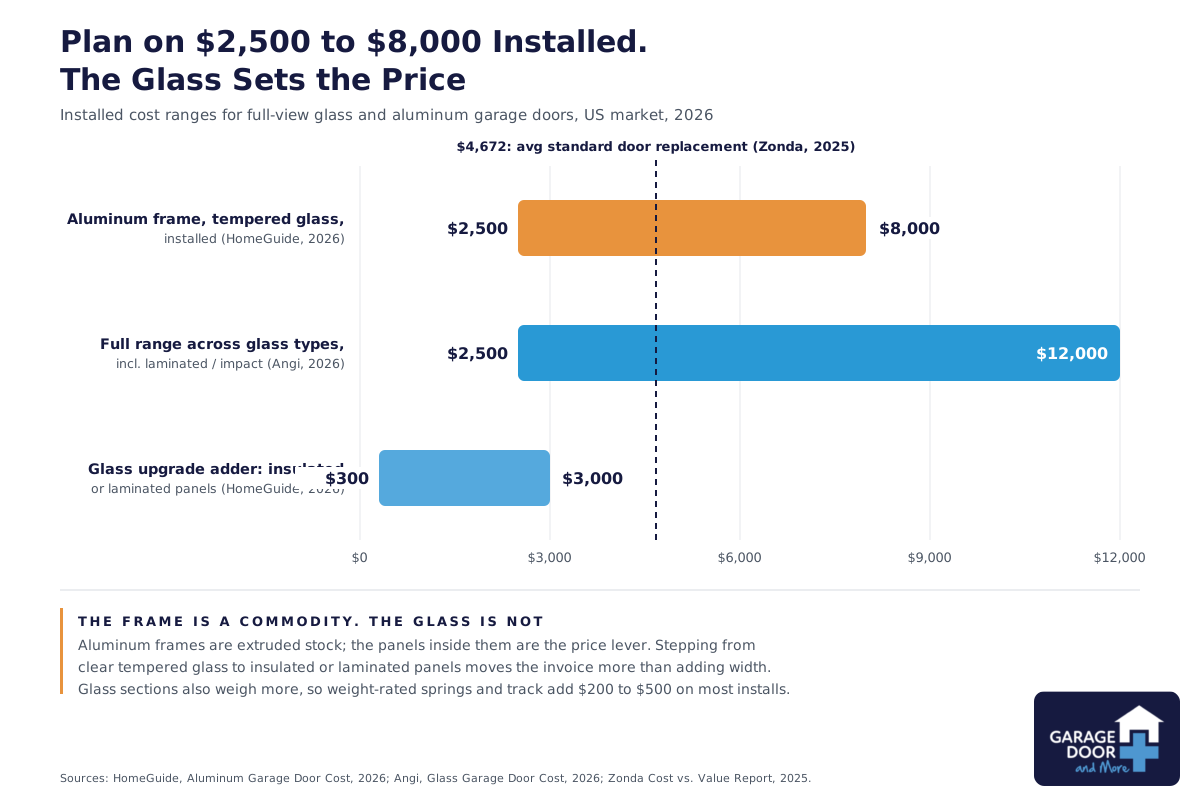
Two line items surprise buyers. First, the glass upgrade is where the invoice grows: stepping from clear tempered panels to insulated or laminated glass can add more than the jump from a single to a double door. Second, hardware: glass sections weigh more than the steel door they replace, and HomeGuide’s data shows heavier springs and track adding $200 to $500 to most installs. If you want the local math on the whole project, we broke down how much a new garage door costs for Charlotte homes in a separate guide.
The Insulation Math the Brochure Leaves Out
The best full-view door on the market insulates like a decent window, and a window is a hole in your wall. A non-insulated full-view door rates near R-1, the thermal resistance of single-pane glass. Clopay’s Avante Collection, the strongest full-view spec we install, reaches R-3.8 with polyurethane-insulated rails and stiles and insulated glazing. Clopay’s Intellicore polyurethane steel doors rate R-18.4. That is not a rounding difference. The steel door resists heat flow almost five times better than the best glass door, because foam-filled steel traps air while aluminum conducts heat and glass barely slows it.
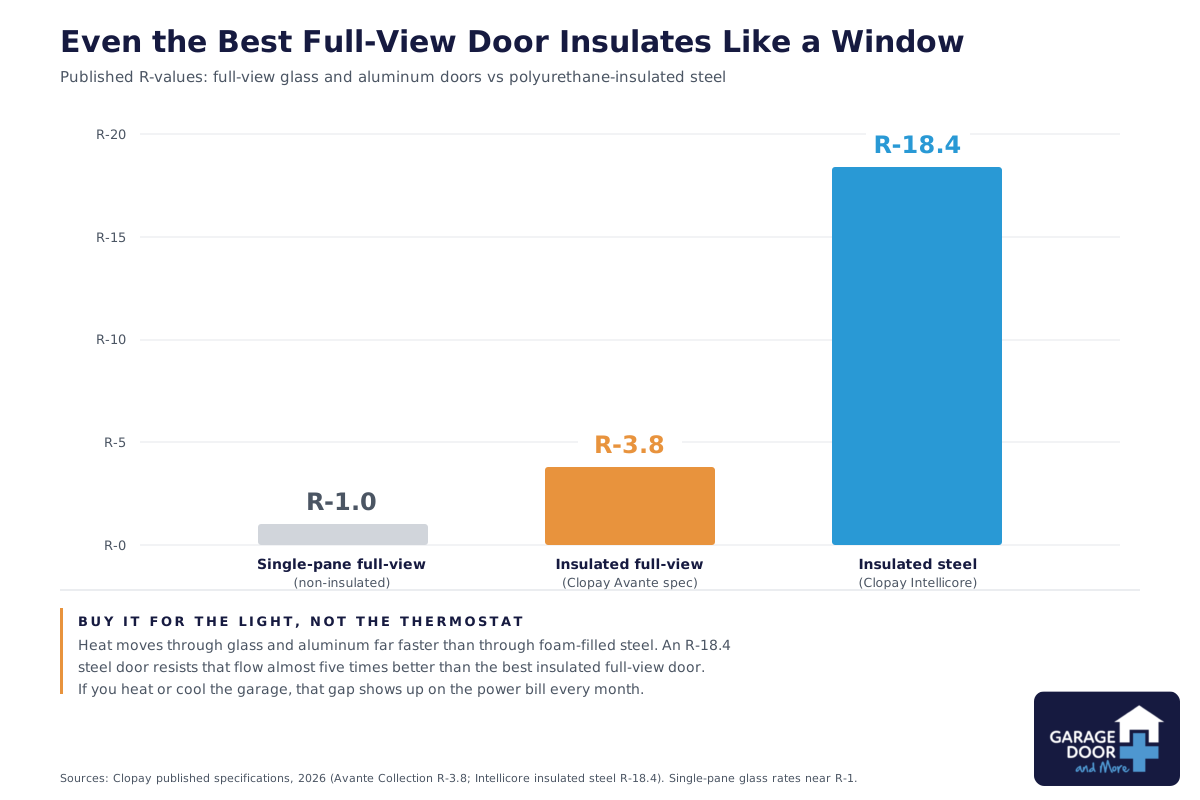
What this means depends on what sits behind and above the door. Charlotte is full of two-story homes with a bonus room over the garage, and that room borrows its winter comfort from the garage below it. Put an R-1 wall of glass on that garage and the bonus room floor gets cold, the HVAC runs longer, and the power bill records the decision every month. Insulated dual-pane glass cuts heat loss through the door by up to 50% compared to single-pane tempered glass, per HomeGuide’s 2026 data, and it is the minimum spec we will recommend for any garage that is heated, cooled, or capped by living space. We walk through the underlying garage door R-values math for Charlotte’s climate in its own article, and you can compare garage doors spec for spec before you fall for a photo.
“If you heat that garage, I’ll talk you out of single-pane glass every time. Buy the insulated panels on day one or keep the steel door. Swapping the glass later costs more than the upgrade ever did.” The Technicians at Garage Door and More
For a detached garage that stores a car and a mower, the insulation penalty barely matters, and the daylight is pure gain. That is the honest split: unconditioned space, buy the view; conditioned space, buy insulated glass or keep the steel.
Condensation Is Physics, Not a Defect
Your full-view door will fog, and it will fog on schedule. Condensation forms when air holding moisture touches a surface colder than its dew point, and glass is always the coldest surface in the room because it faces the outdoors directly. Charlotte’s humid summers put the fog on the outside of a cooled garage in the morning; January puts it on the inside of a heated one. Every shower, pot of pasta, and parked wet car feeds the indoor side.
Insulated dual-pane glazing is the fix, and it is the same fix your house windows use: the inner pane stays closer to room temperature, so it sits above the dew point more of the time. A ceiling fan and a working vent fan handle most of the rest. What does not work is expecting single-pane glass in a conditioned Charlotte garage to stay clear through a humid August. Buy the door knowing that.
Glass Is Heavy: Springs, Openers, and the Retrofit Requote
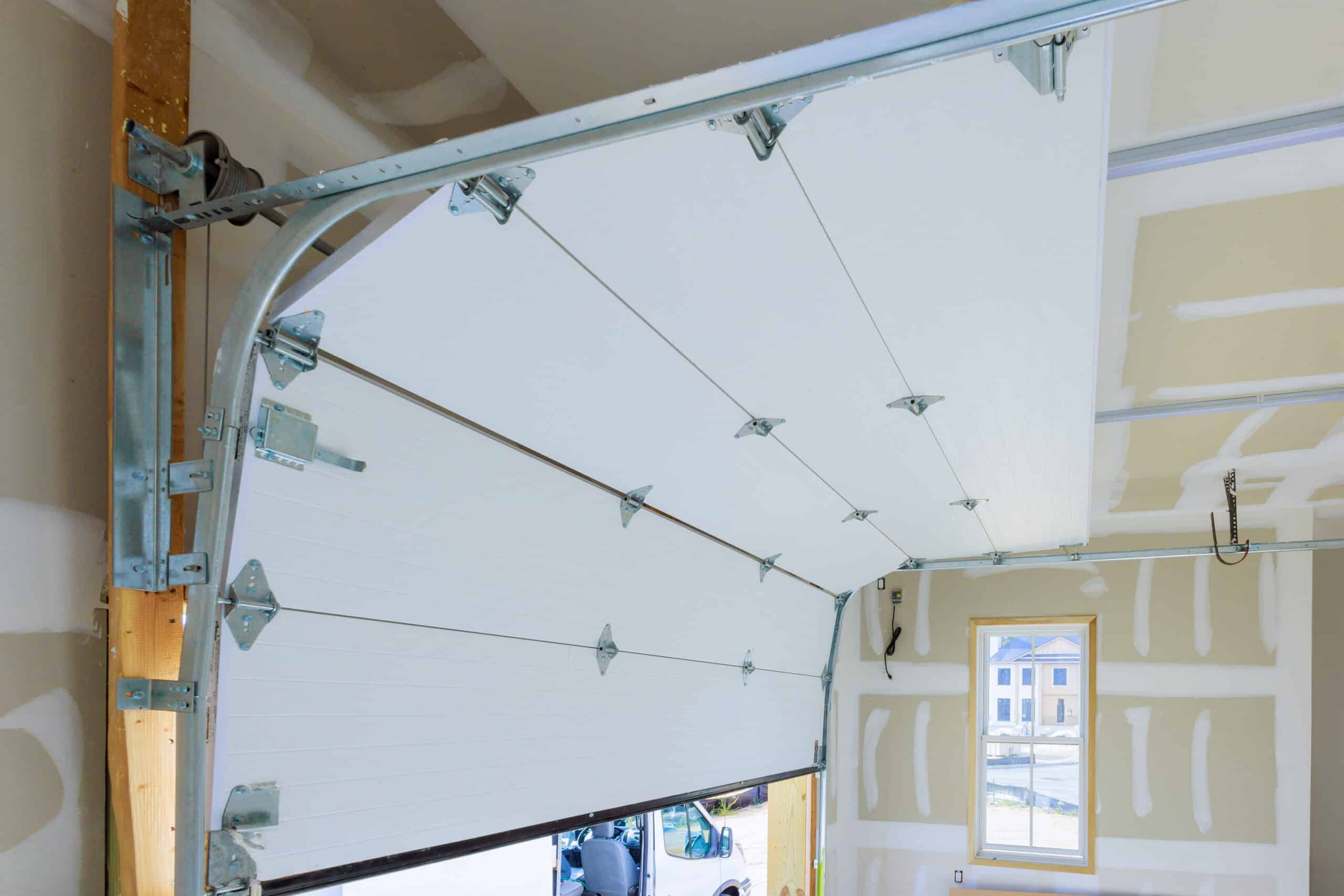
A full-view door usually weighs more than the steel door it replaces, and your existing hardware does not get a vote. Tempered glass runs about 3 pounds per square foot per pane; a 16-foot door carries well over a hundred square feet of it. Torsion springs are counterweights wound to lift one specific door weight, so a heavier door on the old springs leaves the opener dragging the difference. That burns out motors, throws off the safety-reverse force settings, and shortens the life of every moving part in the system. The right answer on a retrofit is springs, track, and often rollers sized to the new weight, which is the $200 to $500 hardware line from the cost section, and an opener check against the door’s real weight. Our guide to garage door opener horsepower covers how motor ratings map to door weight.
“The quote changes when we weigh the door, not before. A sixteen-foot wall of glass can run a couple hundred pounds heavier than the steel it replaces, and the springs that lifted the old door will fight the new one every cycle.” The Technicians at Garage Door and More
One bright line: none of this hardware work is a homeowner job. A wound torsion spring stores enough energy to break bones, and glass sections punish a dropped corner in a way steel forgives. We will explain every step of how the counterbalance works while we do it, and professional garage door installation in Charlotte is the only way we will put one of these doors on your house.
Choosing the Glass: The Panel Decides the Price and the Privacy
Pick the glass for the room the garage actually is, not the showroom photo. Clear tempered glass gives the full view in both directions, which is the point on a golf-course lot and a problem on a busy street where your tool wall becomes a storefront display. Frosted and satin-etched glass pass nearly the same daylight while blurring everything behind them, and they are what we spec for most street-facing Charlotte installs. Tinted glass knocks down western-sun glare and some heat gain. Mirrored glass gives daytime privacy and a distinctive face, at the cost of a fishbowl effect after dark when the interior lights come on.
Then there are the two upgrades that change performance instead of appearance. Insulated dual-pane units are the thermal fix covered above. Laminated glass sandwiches a plastic interlayer between panes, so a broken panel holds together instead of falling out of the frame, and it deadens outside noise; Angi’s 2026 data puts laminated and impact-rated glass at the top of the price range. Our picks are plain: busy street, frosted; conditioned garage, insulated; garage gym or band room, laminated; storm-exposed opening, ask us about impact-rated panels and wind-load framing before you order, not after.
What a Full-View Door Does at Resale
Garage door replacement recouped 267.7% of its cost at resale in 2025, the highest return of all 28 projects in Zonda’s Cost vs. Value Report, with a $4,672 average job cost returning $12,507 in value. In the South Atlantic region that includes North Carolina, the 2025 figures were a $5,126 job cost and a 228% recoup. The mechanism is no mystery: the door fronts up to a third of the facade, so it is the cheapest way to change most of what a buyer photographs from the street, which is why curb appeal projects keep beating kitchens in this report. The trend line is the part nobody quotes: the same project recouped 102.7% in 2023 and 193.9% in 2024 before the 267.7% print in 2025, per the Cost vs. Value Report series. Numbers that triple in two years are telling you about buyer psychology, not carpentry.
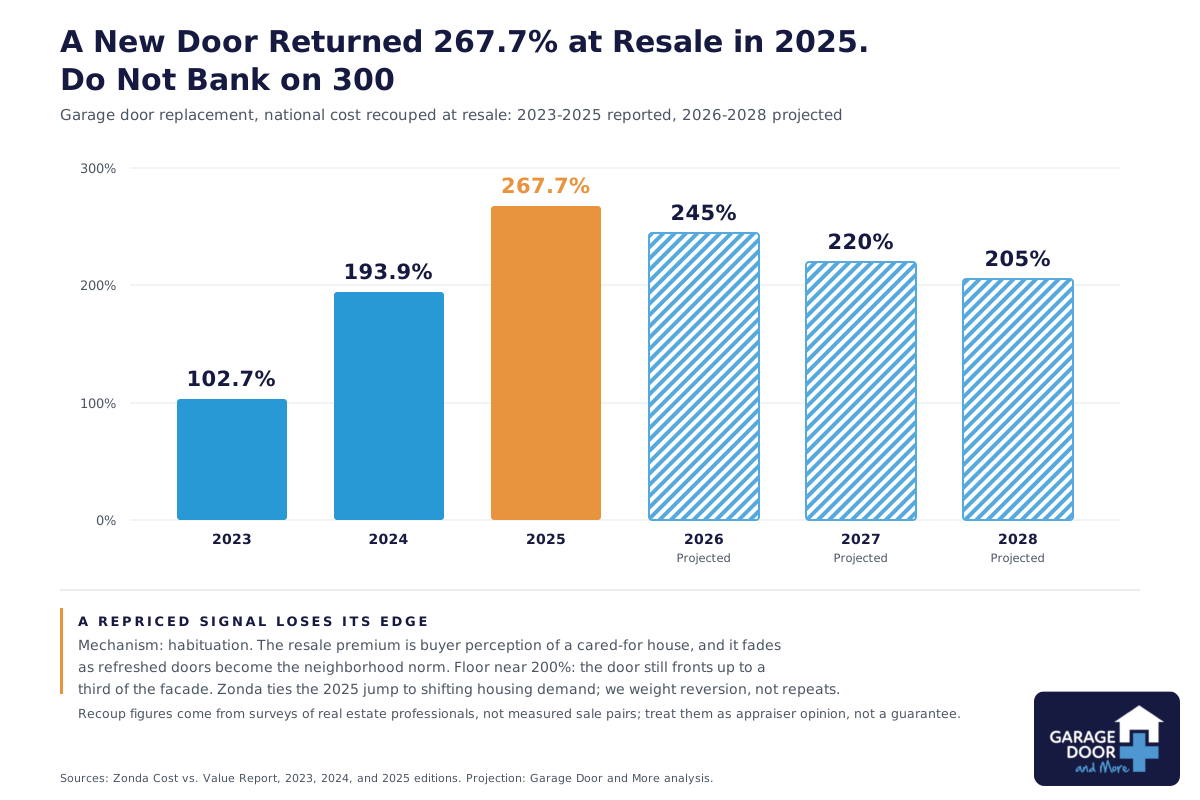
Projection: Garage Door and More analysis based on habituation (the resale premium fades as refreshed doors become the neighborhood norm), assuming a floor near 200% because the door still fronts up to a third of the facade, cross-checked against Zonda’s 2025 commentary tying the jump to shifting housing demand.
We expect that number to ease, not repeat. A resale premium built on buyer perception loses its edge as more sellers replace their doors before listing and a fresh door becomes the norm rather than the standout. We project the recoup drifting back toward 200% by 2028, still first or near-first in the report, because the facade math does not change even when the novelty does. Two honest caveats travel with all of this. The recoup figures come from Zonda’s surveys of real estate professionals, so they measure expert opinion rather than matched sale prices, and sellers who replace doors before listing tend to have maintained everything else too. And the report prices a standard upscale door, not an $8,000 glass wall; a full-view door at twice the average job cost should not expect to inherit the full 267.7% multiple, because percentage returns favor mid-priced doors. The direction of the effect is hard to argue with; the exact multiple on a premium door is. We take up whether a new garage door increases home value in its own article on our blog.
Why These Doors Are Suddenly on Every Street
Aluminum-glass doors are the fastest-growing product on our truck, and the industry data backs the driveway impression. Mordor Intelligence’s 2025 market analysis has aluminum-glass hybrid doors growing at a 7.2% annual rate through 2030 against 5.18% for the overall garage and overhead door market, while steel still held 63% of 2024 material sales. Compound those published rates and the glass segment grows roughly half again by 2030 while the market as a whole grows about a third.
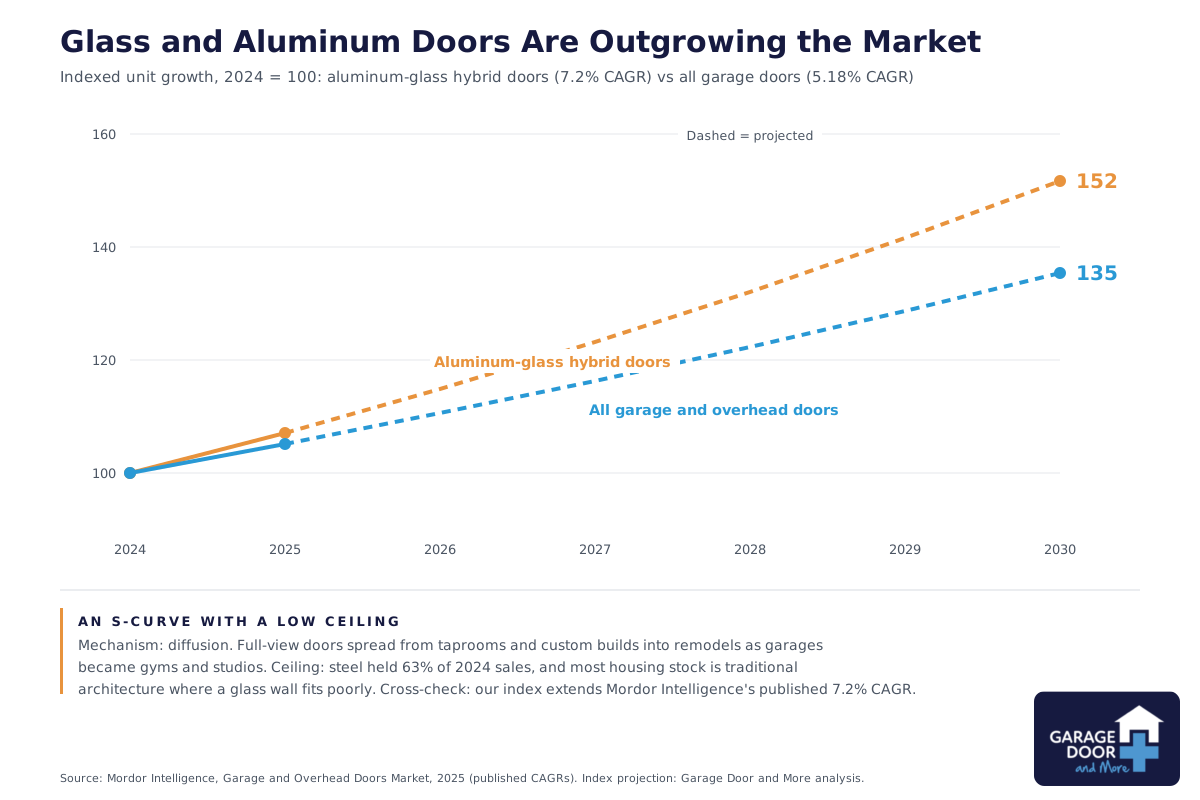
Projection: Garage Door and More analysis extending Mordor Intelligence’s published 2025 segment forecasts (7.2% and 5.18% CAGR), assuming the segment’s share plateaus well below steel’s 63% because most housing stock is traditional architecture where a glass wall fits poorly, cross-checked against that same 2025 Mordor Intelligence outlook.
The mechanism is classic diffusion. Full-view doors started as commercial architecture; the same panels you see on glass garage doors for restaurants and taprooms across Charlotte trained a decade of homeowners to want the look at home. Then the garage itself changed jobs. Home gyms, studios, and workshops want daylight in a way parked cars never did, and a wall of glass delivers it. The ceiling on this curve is architectural: a glass grid flatters a modern or transitional house and fights a traditional brick colonial, and Charlotte has far more of the latter. The segment plateaus; it does not take over. Current garage door trends point the same direction, with black frames and satin glass leading our order sheet.
Who Should Buy One, and Who Should Keep Their Steel Door
Buy a full-view door if all three of these are true: the house’s architecture is modern or transitional, the garage is either unconditioned or you are budgeting insulated glass from day one, and the total with hardware fits without squeezing the glass spec. Under those conditions it is the strongest facade upgrade money buys, and you will use the daylight every single day you own the house.
Keep your steel door if the garage is conditioned and the budget only reaches single-pane glass, or if the house is traditional architecture where the grid will read as a storefront. And here is the sentence a door company is not supposed to write: if your current door is under 15 years old, structurally sound, and merely dated, fix what is broken and keep your money. A spring, a tune-up, or new rollers costs a fraction of a new door, and we would rather earn the $220 repair honestly than sell a $6,000 door your house did not need. One more Charlotte-specific check before you order anything: HOA garage door rules in many neighborhoods restrict frame colors and glass transparency, and an architectural review takes weeks you want on the calendar, not on your driveway.
If you want to see the door before you commit, upload a photo of your house to the garage door design tool and try frame colors and glass options against your actual brick and trim. When you are ready for real numbers, we will come measure the opening, weigh the decision with you in the driveway, and quote the door your house calls for, whether that is a wall of glass or a better steel door. Family owned, decades in the Charlotte market, and more than a thousand reviews from driveways like yours.