Commercial garage door installation is a different conversation from residential work in nearly every dimension: door types, cycle requirements, operator specifications, code compliance, and the consequences of downtime. If you’re planning a new install, a renovation, or a replacement for your Charlotte business, understanding these differences before you start getting quotes will save you time, money, and problems down the line. At Garage Door and More, we handle commercial installations across the Charlotte metro and see the same planning gaps come up repeatedly. This guide covers what you need to know from the beginning.
How Commercial Installations Differ From Residential Work
The most important distinction is operational demand. A residential garage door might cycle 4 to 6 times per day. A commercial door on a loading dock, service bay, or warehouse can cycle that many times per hour. Standard residential door components are not built for that kind of load, and installing them in a commercial environment produces premature failure, unsafe conditions, and ongoing maintenance costs that a properly spec’d commercial door would have avoided.
Commercial doors are rated by cycle count, with industrial-grade options available at 100,000 cycles or more. They use heavier gauge steel, reinforced track systems, and operators specifically designed for high-frequency use. The investment in proper commercial equipment pays back quickly compared to the cost of repeated service on undersized hardware.
“The most common mistake we see in smaller commercial jobs, a shop, a small warehouse, a service company facility, is someone who installs a residential door because it costs less upfront. Within two years they’re calling for service every few months. The right commercial door for the application is almost always the better economic choice over any reasonable time horizon.” — The Team at Garage Door and More
What Types of Commercial Garage Doors Are Available?
Commercial overhead doors come in several configurations, and the right type depends on your application, clearance requirements, and operating environment.
Common commercial garage door types and their applications:
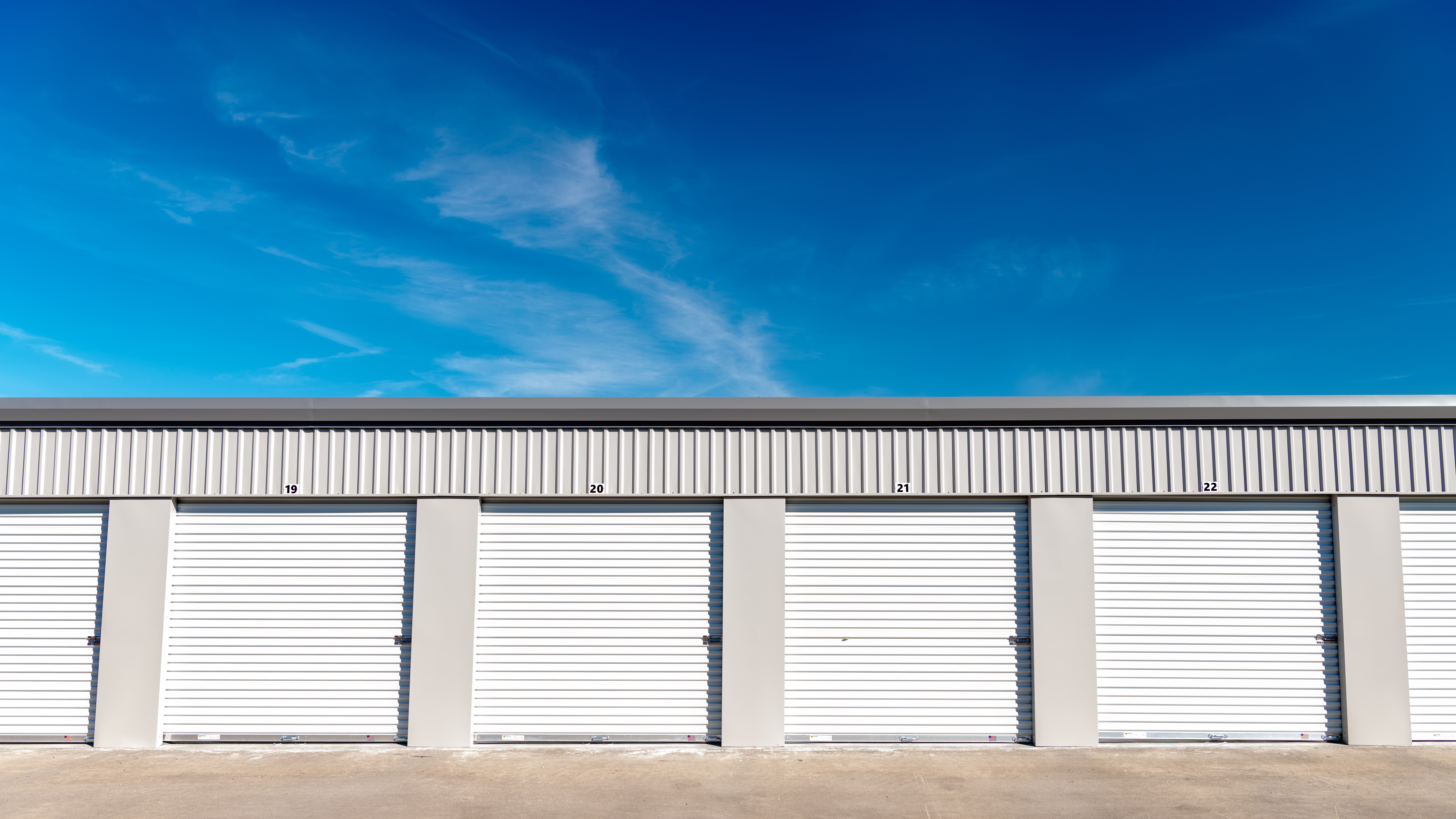
- Sectional commercial doors: The most common type for warehouses, service facilities, and general commercial use. They open vertically and store horizontally along the ceiling, making them suitable for standard-clearance openings. Available in insulated and non-insulated configurations. Our Energy Series with Intellicore and standard Energy Series lines cover insulated options for temperature-sensitive environments.
- Rolling steel doors: A coiling door that rolls up into a drum housing above the opening. Takes up very little overhead space, making it the right choice when ceiling clearance is limited. Well-suited to loading docks, parking structures, and facilities where headroom is at a premium. See our roll-up sheet door options for this application.
- Industrial series doors: Built for the heaviest use environments, including manufacturing facilities, distribution centers, and applications where the door sees constant high-cycle operation. Our Industrial Series covers this tier.
- Security grilles: Used in retail environments, parking structures, and spaces where visual access or ventilation is needed alongside access control. Our security grille options cover storefront and facility security applications.
- Service doors: Pedestrian access doors integrated into commercial spaces for personnel entry without opening the primary vehicle door. Our commercial service door options address this need.
What Operator Do You Need for a Commercial Door?
Commercial door operators are categorized by duty rating, drive type, and mounting configuration. The operator you need depends on the door’s weight, its cycle frequency, and the physical constraints of the installation space.
Key commercial operator categories available in Charlotte:
| Operator Type | Best Application | Cycle Rating |
|---|---|---|
| Trolley (chain or belt) | Light to medium commercial, service bays, warehouses | Medium duty |
| Jackshaft (side-mount) | Limited headroom, high-cycle facilities | Medium to heavy duty |
| Hoist operator | Very heavy doors, industrial loading environments | Heavy to industrial duty |
| Direct drive | High-cycle distribution and logistics facilities | Heavy to industrial duty |
| Gear head | Industrial rolling steel, high-demand cycling | Industrial duty |
For a side-by-side look at the specific commercial operator models we carry and their specifications, the commercial door operator comparison chart is the most direct resource. Our full lineup of commercial operators covers every duty level from medium commercial through industrial.
What Code and Compliance Factors Apply to Commercial Installations in Charlotte?
Commercial garage door installations in Charlotte fall under several regulatory frameworks that residential installs don’t. These include:
Compliance considerations for commercial garage door installations:
- Building permits: Most commercial door installations in Charlotte require a permit, particularly for new construction or significant modifications to an existing opening. Permit requirements vary based on scope and the type of facility.
- Fire-rated doors: Facilities with specific occupancy classifications, including warehouses, manufacturing, and storage, may require fire-rated overhead doors at certain openings. Fire-rated commercial operators, such as the LM21AFCB fire-rated operator, are required in these applications and must be installed by qualified technicians with the correct documentation.
- ADA and egress requirements: Commercial facilities need to maintain adequate egress pathways, and door placement and operation must not block required exit routes.
- Wind load requirements: Commercial doors in North Carolina are subject to wind load standards that affect door construction and bracing specifications. This is particularly relevant for doors on building perimeters in exposed locations.
- Dock leveler and seal compatibility: For loading dock installations, the door must be spec’d to work correctly with dock levelers, dock seals, and truck restraint systems already in place or being installed simultaneously.
“Compliance is where a lot of contractors who primarily do residential work get tripped up on commercial jobs. The permit process is different, fire-rating requirements are more specific, and getting an inspection signed off requires documentation that a residential installer may not be set up to provide. It matters who you hire for commercial work.” — The Team at Garage Door and More
How Many Doors and What Opening Sizes Do You Need?
Planning the right number of door openings and specifying the correct dimensions is a decision that’s much more costly to get wrong in commercial construction than in residential. Rough opening dimensions need to account for track clearance, header space, and operator mounting requirements, all of which vary by door type and operator configuration. A door that’s slightly too wide for the spec’d track system or a header that’s too low for the operator housing creates problems that require costly modification.
For facilities with vehicle access requirements, the door opening height needs to account for the tallest vehicle that will regularly use it, with an appropriate clearance margin. Trucks, vans, and specialty vehicles all have different height requirements, and underspecifying door height is a recurring issue in facilities that serve varied vehicle types.
What Does Commercial Installation Cost in Charlotte?
Approximate commercial garage door installation cost ranges for Charlotte businesses:
| Application | Approximate Installed Cost Range | Notes |
|---|---|---|
| Light commercial sectional (per door) | $1,500 – $3,000 | Service bays, small warehouses, shop facilities |
| Medium commercial sectional (per door) | $2,500 – $5,000 | Larger openings, medium-duty operators |
| Rolling steel door (per door) | $2,000 – $6,000 | Varies by size, gauge, and operator selection |
| Industrial-grade door with heavy operator | $5,000 – $15,000+ | Manufacturing, distribution, high-cycle environments |
| Fire-rated door installation | $3,500 – $8,000 | Includes compliant operator and required documentation |
For more detail on what drives commercial installation costs and how to budget across different facility types, our overview of commercial garage door installation covers the full scope of what a professional installation involves.
Our Commercial Team Is Ready to Help Plan Your Charlotte Installation
Commercial garage door installation requires a different level of planning, product knowledge, and technical execution than residential work. Our team handles commercial projects across Charlotte, from single-door service bay installs to multi-door warehouse and distribution center configurations, and we’re set up to manage permits, compliance documentation, and phased installations for occupied facilities.
To get started with a commercial installation quote for your Charlotte business, request an estimate from Garage Door and More. We’ll assess your facility, specify the right door and operator configuration, and give you a clear picture of the project scope and timeline before any work begins.