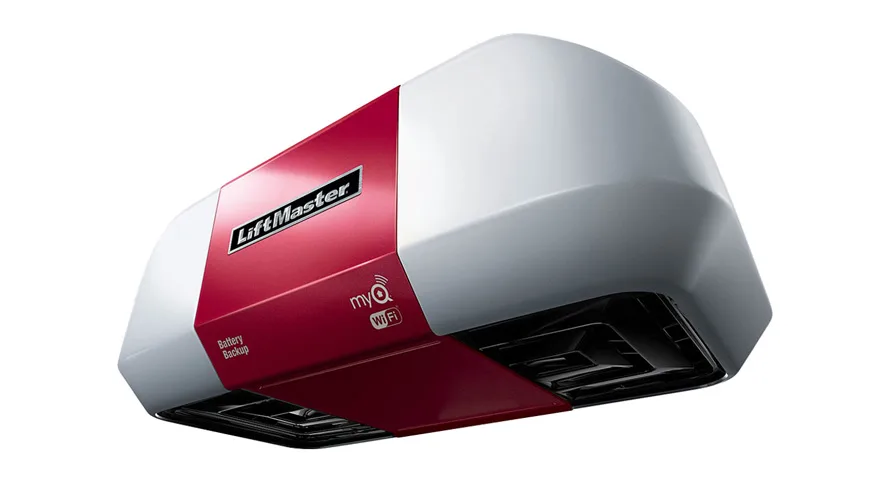
When choosing a LiftMaster garage door opener, the drive system decision affects your daily experience more than any other feature. The Charlotte area homeowners we work with at Garage Door and More consistently ask about noise levels, maintenance requirements, and long-term reliability. After installing hundreds of both belt drive and chain drive LiftMaster models throughout North Carolina, we understand exactly how these systems perform in real-world conditions.
Belt drive systems use a reinforced rubber or polyurethane belt to move your garage door up and down. This belt runs along a metal track, similar to a conveyor belt system, providing smooth and virtually silent operation. The belt material eliminates metal-to-metal contact during normal operation, which dramatically reduces noise and vibration. Most belt drive systems incorporate steel cables or fibers within the belt material for added strength and durability while maintaining their quiet characteristics.
Chain drive systems employ a metal chain similar to a bicycle chain that pulls the trolley along the track to operate your garage door. The chain connects to sprockets on both ends of the track system, creating a robust mechanical linkage capable of handling heavy loads and frequent use. This steel construction provides exceptional durability and lifting power, making chain drives ideal for oversized doors or high-usage applications where reliability takes priority over noise considerations.
| Feature | Belt Drive | Chain Drive |
|---|---|---|
| Noise Level (dB) | 45-55 dB (very quiet) | 60-80 dB (moderate to loud) |
| Typical Lifespan | 10-15 years (belt may wear) | 15-20 years (with maintenance) |
| Maintenance Frequency | Low (no lubrication needed) | Medium (regular lubrication required) |
| Best For | Attached garages, noise-sensitive areas | Detached garages, heavy doors |
| Door Weight Capacity | Standard residential doors | Heavy and oversized doors |
| Price Range | $200 – $550 | $150 – $400 |
| Operation Speed | Fast and smooth | Moderate |
| Durability | Good (belt can stretch over time) | Excellent (steel chain) |
| Weather Performance | May slip in extreme humidity/heat | Performs well in all weather |
“The noise difference between belt and chain drive systems is immediately obvious during our installations. Belt drives operate at whisper-quiet levels that barely register above ambient room noise, while chain drives produce the classic garage door sound most people expect. For Charlotte homes with bedrooms above or adjacent to the garage, belt drives eliminate the early morning and late evening disruptions that chain drives can cause, making them worth the extra investment for family harmony.” – Garage Door and More Technicians
Noise Level Analysis: How Drive Systems Impact Your Home Environment
The acoustic performance difference between belt and chain drive systems becomes critical when your garage shares walls or ceiling space with living areas. Belt drive systems typically operate between 45-55 decibels, roughly equivalent to a quiet conversation or library environment. This noise level rarely penetrates walls or disturbs household activities, making belt drives ideal for attached garages where sound transmission concerns exist.
Chain drive systems generate 60-80 decibels during operation, comparable to normal conversation levels or background city traffic. While not excessively loud, this noise level becomes noticeable in quiet environments and can easily travel through shared walls, ceilings, and ductwork. The metallic nature of chain drive sounds tends to carry further and penetrate building materials more effectively than the smooth hum of belt drives.
The startup and shutdown phases represent the noisiest moments for both systems. Chain drives create sharp engagement sounds as the motor activates and the chain tensioning adjusts. Belt drives start more gradually with their flexible material allowing smoother power transfer without sudden mechanical stress. During operation, chain drives maintain consistent noise levels throughout the door’s travel, while belt drives remain nearly silent except for the motor’s gentle hum.
| Garage Configuration | Chain Drive Suitability | Belt Drive Suitability | Recommended Choice |
|---|---|---|---|
| Detached Garage | Excellent – Noise not a concern | Good – Quiet but not necessary | Chain Drive (save money) |
| Attached Garage (No Bedroom Above) | Good – Noise minimal impact | Excellent – Quiet operation ideal | Either (preference-based) |
| Attached Garage (Bedroom Above) | Poor – Noise disrupts sleep | Excellent – Essential for peace | Belt Drive (mandatory) |
| Attached Garage (Bedroom Adjacent) | Fair – Noise noticeable | Excellent – Prevents disturbance | Belt Drive (highly recommended) |
| Garage Under Living Space | Poor – Noise travels to multiple rooms | Excellent – Minimizes noise transfer | Belt Drive (highly recommended) |
Factors That Amplify or Reduce Garage Door Opener Noise:
- Door Balance: Properly balanced doors reduce strain on openers, minimizing noise from both systems
- Track Alignment: Misaligned tracks cause doors to bind, creating additional noise regardless of drive type
- Roller Condition: Worn or damaged rollers increase operational noise significantly
- Motor Mounting: Vibration isolation mounts reduce noise transmission to building structures
- Maintenance Level: Well-maintained systems of both types operate more quietly than neglected ones
“We regularly help Charlotte families choose between belt and chain drives based on their home’s layout. The deciding factor usually comes down to whether anyone sleeps near the garage. A $100-200 premium for belt drive pays for itself quickly in better sleep quality and family peace. However, for detached garages or homes where noise isn’t a concern, chain drives offer excellent value and proven reliability.” – Garage Door and More Technicians
Durability and Performance: Which Drive System Lasts Longer
Chain drive systems demonstrate superior longevity in most applications, with properly maintained units lasting 15-20 years or more. The steel chain construction withstands heavy usage, extreme temperatures, and high-cycle applications without significant degradation. Chain drives excel in demanding environments where doors open and close frequently, such as commercial applications or busy family garages with multiple daily cycles.
Belt drive systems typically last 10-15 years before requiring belt replacement, though the motor and other components often continue functioning well beyond this timeframe. The flexible belt material can stretch over time, particularly in high-temperature environments or with heavy door applications. However, belt drives place less stress on the motor and drive components due to their smoother operation, potentially extending the overall system’s lifespan.
Weather resistance varies significantly between drive types. Chain drives perform consistently across all weather conditions, with steel construction unaffected by temperature extremes, humidity, or seasonal changes. Proper lubrication maintains chain flexibility and prevents corrosion in challenging climates. Belt drives can experience performance variations in extreme conditions, with high humidity potentially causing belt slippage and temperature extremes affecting belt flexibility and tension.
| Model | Drive Type | Motor Power | Noise Level | Key Features | Price Range |
|---|---|---|---|---|---|
| LiftMaster 87504-267 Secure View | Belt | 1.25 HP | Ultra-Quiet (45-50 dB) | Camera, Battery Backup, MyQ | $500-$550 |
| LiftMaster 8550W Elite | Belt | 1.0 HP | Ultra-Quiet (55 dB) | DC Motor, Battery Backup, Wi-Fi | $400-$500 |
| LiftMaster 84505R | Belt | 1.0 HP | Very Quiet (50-55 dB) | LED Lights, MyQ, Quiet | $300-$400 |
| LiftMaster 87802 Elite Series | Chain | 1.0 HP | Moderate (60-70 dB) | Heavy Duty, Battery Backup, 2000 Lumens | $350-$400 |
| LiftMaster 8365-267 | Chain | 0.5 HP | Moderate to Loud (65-75 dB) | MyQ, Budget-Friendly | $200-$280 |
| LiftMaster 83650-267 | Chain | 0.5 HP | Moderate (60-70 dB) | Wi-Fi, MyQ, AC Motor | $200-$250 |
Performance Advantages of Chain Drive Systems:
- Heavy Door Capability: Chain drives handle oversized, solid wood, or heavily insulated doors without performance degradation
- Temperature Stability: Steel chain maintains consistent operation across Charlotte’s seasonal temperature variations
- Mechanical Reliability: Simple chain and sprocket system provides predictable, serviceable performance
- High-Cycle Durability: Commercial-grade construction withstands frequent daily operation
- Weather Resistance: Performs consistently in humid summers and occasional winter weather
Performance Advantages of Belt Drive Systems:
- Smooth Operation: Flexible belt material provides vibration-free door movement
- Motor Protection: Reduced mechanical stress extends motor lifespan and reduces repair frequency
- Fast Cycling: Belt systems often operate faster than chain drives for quicker door movement
- Consistent Tension: Auto-tensioning systems maintain optimal belt position with minimal adjustment
- Reduced Wear: Smooth power transfer minimizes wear on door hardware and track systems
Maintenance Requirements: Time and Cost Considerations
Maintenance requirements differ significantly between belt and chain drive systems, affecting both your time investment and long-term ownership costs. Chain drives require regular lubrication every 3-6 months using specific garage door lubricants on the chain, sprockets, and pivot points. This maintenance prevents premature wear and ensures smooth operation, but requires homeowners to remember and perform these tasks consistently.
Belt drive systems need minimal ongoing maintenance beyond periodic visual inspections and occasional cleaning. The belt material requires no lubrication and typically maintains proper tension automatically through built-in tensioning systems. Most maintenance involves wiping down the belt surface and checking for signs of wear or damage, tasks that take minutes rather than hours.
Long-term maintenance costs vary between systems due to different replacement schedules and part costs. Chain drives require chain replacement approximately every 15-20 years at costs ranging from $50-150 including labor. Belt drives need belt replacement every 10-15 years at costs ranging from $150-300, though this often coincides with other system updates or upgrades.
| Maintenance Task | Belt Drive | Chain Drive |
|---|---|---|
| Lubrication | Not required | Every 3-6 months |
| Chain/Belt Tension Check | Minimal (auto-tensioning on most models) | Every 6 months |
| Cleaning | Simple wipe-down as needed | Regular cleaning required |
| Inspection Frequency | Every 12-18 months | Every 6-12 months |
| Replacement Parts Cost | $150-$300 (belt replacement) | $50-$150 (chain replacement) |
| Annual Maintenance Time | 30-60 minutes per year | 2-3 hours per year |
DIY Maintenance Tasks for Belt Drive Systems:
- Visual Belt Inspection: Check for cracking, fraying, or stretching every six months
- Belt Cleaning: Wipe surface clean with damp cloth to remove dust and debris
- Tension Assessment: Verify belt maintains proper tension without excessive sagging
- Track Alignment: Ensure belt runs straight along track without binding or rubbing
- Motor Housing Cleaning: Keep motor area clean and free from debris accumulation
DIY Maintenance Tasks for Chain Drive Systems:
- Chain Lubrication: Apply garage door lubricant to chain links and sprockets quarterly
- Tension Adjustment: Check and adjust chain tension to prevent sagging or over-tightening
- Sprocket Inspection: Examine sprockets for wear, damage, or debris accumulation
- Chain Cleaning: Remove dirt and old lubricant before applying fresh lubrication
- Pivot Point Service: Lubricate all moving pivot points and connection hardware
“The maintenance difference between belt and chain drives becomes apparent over time. Chain drive owners need to stay on top of regular lubrication schedules, while belt drive owners can often forget about maintenance entirely. However, when chain drives are properly maintained, they often outlast belt drives significantly. We recommend choosing based on whether you prefer regular small maintenance tasks or occasional larger expenses.” – Garage Door and More Technicians
Cost Analysis: Initial Investment Versus Long-Term Value
Initial purchase prices favor chain drive systems, with entry-level models starting around $150-200 compared to belt drives beginning around $250-300. This price difference reflects the simpler manufacturing requirements and materials costs for chain systems. However, total cost of ownership calculations must include installation, maintenance, and eventual replacement costs over the system’s lifespan.
Professional installation costs remain similar between drive types, typically ranging from $150-400 depending on complexity and local labor rates. Both systems use similar mounting hardware and electrical requirements, though belt drives may install slightly faster due to their lighter weight and simpler tensioning systems. DIY installation is possible for both types, though chain drives may require more precise tension adjustments during setup.
Long-term value calculations depend heavily on your specific application and maintenance habits. Chain drives provide excellent value for detached garages or situations where noise isn’t a concern, offering 15-20 years of reliable service with proper maintenance. Belt drives justify their higher initial cost in attached garage applications where quiet operation is essential, and the reduced maintenance requirements appeal to homeowners preferring minimal upkeep.
Factors Affecting Total Cost of Ownership:
- Usage Frequency: High-cycle applications favor chain drives’ superior durability
- Maintenance Capability: DIY maintenance favors chain drives with simpler, cheaper service tasks
- Professional Service: Belt drives cost more to service but require service less frequently
- Door Specifications: Heavy doors may require chain drives regardless of noise preferences
- Home Configuration: Noise considerations may mandate belt drives despite higher costs
Making the Right Choice for Your Charlotte Home
Your optimal drive system choice depends on balancing noise tolerance, maintenance preferences, door specifications, and budget considerations. Charlotte-area homes with attached garages, bedrooms above garages, or shared walls with living spaces typically benefit from belt drive systems despite their higher initial cost. The investment in quiet operation pays dividends in family comfort and property value preservation.
Choose chain drive systems for detached garages, heavy doors over 200 pounds, high-frequency usage applications, or situations where budget constraints are primary concerns. Chain drives offer proven reliability and lower maintenance costs when noise isn’t a limiting factor. Their ability to handle oversized doors and extreme usage conditions makes them ideal for specific applications where belt drives might struggle.
Consider your long-term plans when making this decision. If you plan to stay in your home for many years, the higher initial investment in belt drives often provides better value through reduced maintenance and improved daily convenience. For shorter-term ownership or rental properties, chain drives’ lower initial costs and proven durability offer practical advantages.
Choose Belt Drive Systems When You Have:
- Attached Garages: Living spaces adjacent to or above garage areas where noise matters
- Standard Doors: Residential doors under 200 pounds that don’t require maximum lifting power
- Minimal Maintenance Preference: Desire for low-maintenance, set-and-forget operation
- Noise Sensitivity: Family members who work night shifts or have sleep sensitivity
- Premium Features: Want latest technology and smart home integration features
Choose Chain Drive Systems When You Have:
- Detached Garages: Noise transmission isn’t a concern for household comfort
- Heavy Doors: Solid wood, heavily insulated, or oversized doors requiring maximum lifting power
- Budget Constraints: Need reliable performance at lowest possible initial investment
- High Usage: Commercial applications or busy families with frequent daily cycles
- Maintenance Capability: Comfortable performing regular maintenance tasks for optimal performance
How Garage Door and More Can Help You Choose the Right LiftMaster Model
Selecting between belt and chain drive systems shouldn’t involve guesswork or incomplete information. Our team serves Charlotte and surrounding areas with comprehensive garage door opener consultations, including on-site assessments of your specific situation. We evaluate your door weight, garage configuration, family needs, and budget requirements to recommend the optimal LiftMaster model for your home.
We provide professional installation for both belt and chain drive systems, ensuring proper setup, tension adjustment, and safety feature activation. Our installations include complete testing, homeowner training, and warranty coverage on both labor and materials. We also offer ongoing maintenance services for both drive types, helping you maximize your investment’s lifespan and performance. Whether you choose the whisper-quiet convenience of belt drives or the proven reliability of chain drives, our team ensures your new LiftMaster opener provides years of dependable service for your Charlotte-area home.