When your garage door opener stops responding, the cause is usually one of a handful of common issues, and many of them can be isolated quickly before you even call a technician. At Garage Door and More, we diagnose opener problems across Charlotte every day, and there’s a reliable pattern to what actually causes most failures. This guide walks through the most likely causes in order, from the simplest checks to the more involved repairs, so you can understand what you’re dealing with before anyone arrives at your door.
Start Here: The Checks That Take 60 Seconds
Before assuming the opener itself has failed, run through a few basic checks. A surprising number of service calls turn out to be one of these simple situations.
Quick checks before diagnosing a deeper problem:
- Power to the unit: Confirm the opener is plugged in and that the outlet has power. Outlets in garages are often on GFCI circuits; check for a tripped GFCI button on a nearby outlet or on the breaker panel. A circuit that tripped during a storm or a power fluctuation is a common and easily missed cause.
- Remote battery: A dead remote battery is one of the most common reasons an opener appears unresponsive. If the wall button works but the remote doesn’t, the battery is almost always the issue. If neither works, the problem is with the unit or its wiring.
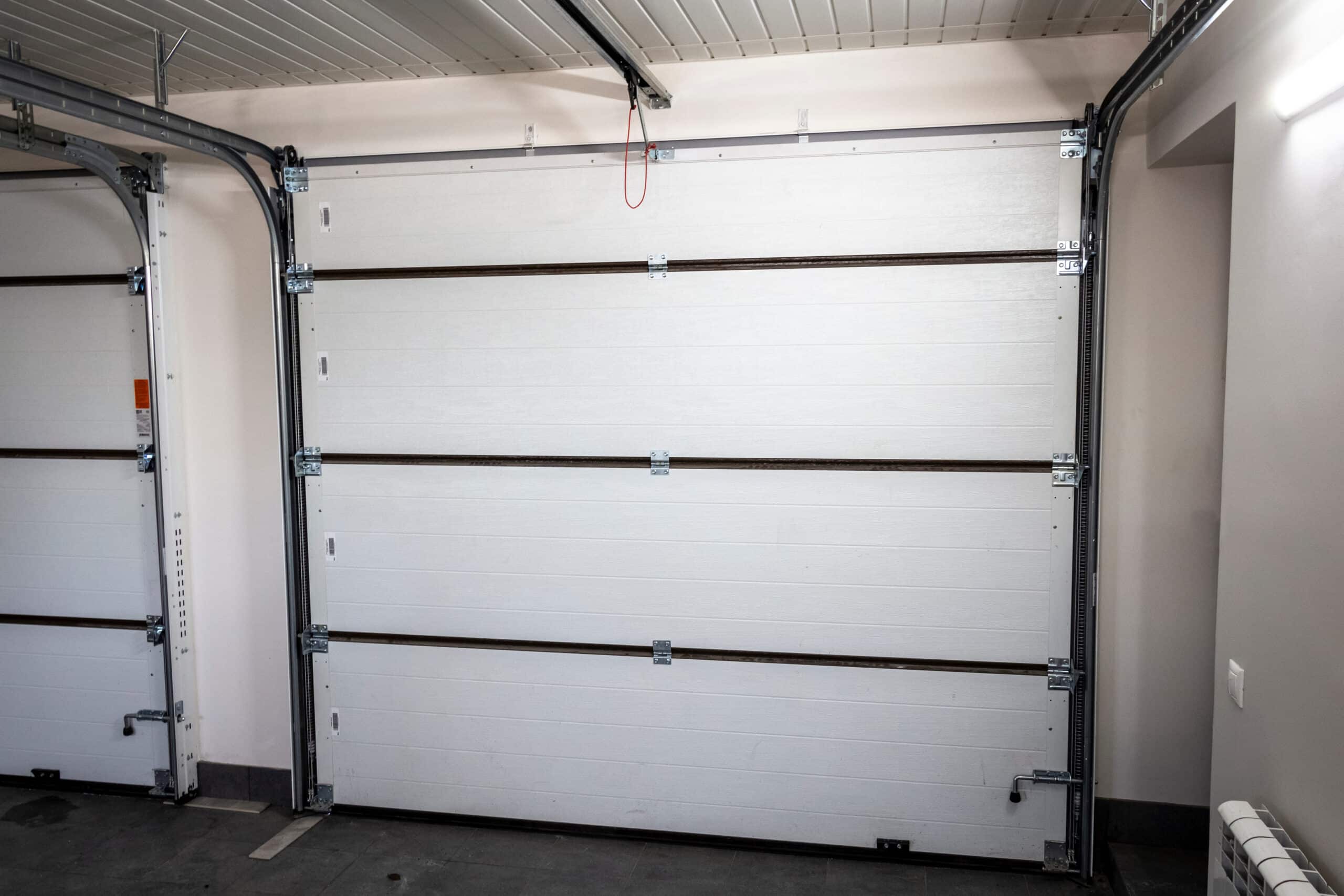
- Emergency release cord: If someone pulled the red emergency release cord to disconnect the door from the opener, pressing the remote or wall button will run the motor but the door won’t move. Look at the trolley carriage on the rail; if the release has been pulled, the carriage will be disconnected from the door. Reconnecting it is straightforward.
- Lock mode activated: Most LiftMaster and Chamberlain openers have a lock mode that disables remote operation while allowing wall button use. If the wall button has an indicator light and someone held it down, lock mode may have been activated accidentally. Holding the lock button again typically disables it.
Safety Sensor Problems: A Very Common Culprit
The photo-eye safety sensors mounted near the floor on each side of the door opening are required on all openers manufactured after 1993, and they’re one of the most common sources of opener malfunction. If the sensors are misaligned, blocked, or have a wiring issue, most openers will refuse to close the door and will signal the problem through a flashing light sequence on the motor unit.
Each sensor unit has a small indicator light. One side sends an infrared beam; the other receives it. When both lights are solid and steady, the beam is unbroken and the sensors are aligned. If one light is blinking or off, the beam is interrupted or the sensor is out of alignment.
Common sensor issues and how to address them:
- Misalignment: Sensors can be knocked out of alignment by a bump from a vehicle, lawn equipment, or a child’s bicycle. Loosen the mounting wing nut slightly, adjust the sensor until both lights are solid, and retighten. This takes under five minutes and resolves a large percentage of sensor complaints.
- Obstructed beam: A leaf, cobweb, or piece of debris sitting in front of a sensor lens will break the beam even with perfect alignment. Wipe both lenses with a dry cloth and clear the area around the sensors.
- Direct sunlight interference: Strong afternoon sunlight hitting a sensor lens directly can overwhelm the receiver and cause false interruptions. This is more common in west-facing garages during summer months. Shading the sensor or adjusting its angle slightly can resolve it.
- Wiring damage: Sensor wires run along the door frame and are vulnerable to being pinched, cut by door hardware, or chewed by pests. Visible damage to the wiring requires professional repair.
For a full walkthrough of sensor diagnosis by opener brand and model, our post on broken garage door sensors covers the diagnostic process in detail, including what the specific light flash patterns on LiftMaster and Chamberlain units mean.
“Sensor calls are probably 20% of our opener service visits, and the majority of them are alignment issues or debris on the lens. It’s genuinely one of the first things we check because it’s so common and so quick to confirm. If the motor runs but the door won’t close, the sensors should be your first look.” — The Team at Garage Door and More
Remote or Keypad Not Communicating With the Opener
If the wall button works correctly but the remote or keypad doesn’t trigger a response, the issue is with the communication between the remote and the opener rather than the opener itself.
Remote and keypad communication issues and their causes:
- Dead battery: The most common cause. Replace the battery and test again before anything else.
- Remote out of range: Openers have a rated operating range, typically 100 to 150 feet for standard models. If you’re pressing the remote from further away or through multiple building materials, range can drop. Test from a shorter distance.
- Radio frequency interference: Nearby devices including LED bulbs in the opener housing, certain smart home devices, and some security systems can interfere with the 315 or 390 MHz frequencies most openers use. LED bulb interference is particularly common; replacing the bulb in the opener unit with an incandescent or a specifically rated garage door opener LED can resolve this.
- Remote needs reprogramming: Power surges or battery replacement can sometimes clear a remote’s programming. Most LiftMaster and Chamberlain remotes can be reprogrammed in under a minute using the learn button on the motor unit.
- Antenna issue on the motor unit: The short hanging antenna wire on the motor unit needs to hang freely and be undamaged. A coiled, crimped, or missing antenna reduces signal reception significantly.
The Motor Runs But the Door Doesn’t Move
If you can hear the opener motor running but the door stays in place or only moves slightly, the mechanical connection between the motor and the door has broken down somewhere. This is distinct from a spring or sensor issue and points to internal opener components.
Causes when the motor runs but the door doesn’t respond:
- Stripped drive gear: Chain and screw-drive openers use a plastic drive gear that meshes with the motor shaft. This gear is intentionally made of a softer material so it strips rather than damaging the motor when overloaded. A stripped gear is one of the most common mechanical failures in older openers and produces a grinding or spinning sound from the motor unit with no door movement. Gear replacement is a repair rather than a full opener replacement in most cases.
- Broken trolley carriage: The trolley carriage rides along the rail and connects the drive mechanism to the door arm. A cracked or broken carriage disconnects the door from the drive even when the motor operates normally.
- Disconnected door arm: The curved metal arm connecting the trolley to the top of the door can separate from either attachment point. Check both ends of the arm for a missing or broken fastener.
- Broken spring (not an opener issue): If the spring is broken, the opener motor may run but the door won’t move because the load is too great. This is a spring problem, not an opener problem, but it presents the same way. The manual lift test (disconnecting the opener and trying to lift the door by hand) distinguishes between the two causes.
Opener Runs Briefly Then Stops or Reverses
An opener that starts moving the door and then stops or reverses before completing the travel cycle is usually responding to a safety or calibration condition.
Causes of partial travel and auto-reversal:
| Symptom | Most Likely Cause | Action Required |
|---|---|---|
| Door reverses just before closing fully | Down-limit setting too far; floor contact triggers reversal | Adjust down-limit on opener unit |
| Door stops partway open | Up-limit setting incorrect or obstruction in track | Check for debris; adjust up-limit |
| Door reverses when closing, sensors clear | Close-force set too low for door weight | Adjust force setting on opener |
| Door opens fine, reverses immediately when closing | Sensor misalignment or wiring fault | Inspect and realign sensors |
| Door stops mid-travel, motor hums | Obstruction, broken spring, or thermal cutout triggered | Check for obstruction; test spring balance |
Limit and force settings drift over time as springs lose tension and door weight distribution changes. A technician recalibrates these settings during a professional maintenance visit, which is one of the reasons an annual tune-up prevents the kind of gradual performance degradation that leads to service calls.
The Logic Board Has Failed
The logic board is the circuit board inside the motor unit that processes inputs from the wall button, remote, and sensors and controls the motor accordingly. Logic board failures are less common than the issues above but do occur, particularly in openers that have experienced power surges or are 10 or more years old.
Signs pointing to a logic board failure include the opener not responding to any input at all despite confirmed power to the unit, erratic behavior such as running without being triggered, or specific error codes that point to board-level faults. Our resource on garage door opener error codes by brand covers what the flash sequences on LiftMaster and Chamberlain units indicate and which point toward board replacement.
“Logic board replacements are a judgment call. If the opener is under 8 years old and otherwise in good shape, a board replacement makes sense. If it’s 12 years old and the board has failed, we usually recommend putting that money toward a new unit with current safety features and smart connectivity. We give homeowners the real numbers on both options and let them decide.” — The Team at Garage Door and More
When Repair Makes Sense vs. When to Replace the Opener
Not every opener problem warrants full replacement, but some repairs don’t make economic sense relative to the cost and features of a current unit. Here’s a general framework for thinking through the decision:
Repair vs. replacement decision factors for Charlotte homeowners:
- Repair makes sense when: The opener is under 8 to 10 years old, the failed component is a standard replaceable part (battery, gear, sensor, remote), and the repair cost is under 50% of a comparable new unit installed.
- Replacement makes sense when: The opener is over 10 to 12 years old, lacks current safety features, has had repeated issues, or when the repair cost approaches or exceeds what a new unit would cost. New openers also offer smart connectivity, battery backup, and quieter belt-drive operation that older units don’t provide.
For a detailed look at how to evaluate this decision, our garage door opener repair service page and our guide on choosing the right garage door opener both provide useful context.
Our Team Can Diagnose and Fix Your Opener the Same Day
Most opener problems are diagnosable and repairable in a single visit. Our technicians serve Charlotte and the surrounding communities and carry common replacement parts, remotes, and sensors on every truck.
If your opener isn’t responding and the basic checks haven’t resolved it, schedule a service appointment with Garage Door and More. We’ll run a full diagnostic, tell you what’s wrong, and give you an honest recommendation on repair versus replacement before any work begins.