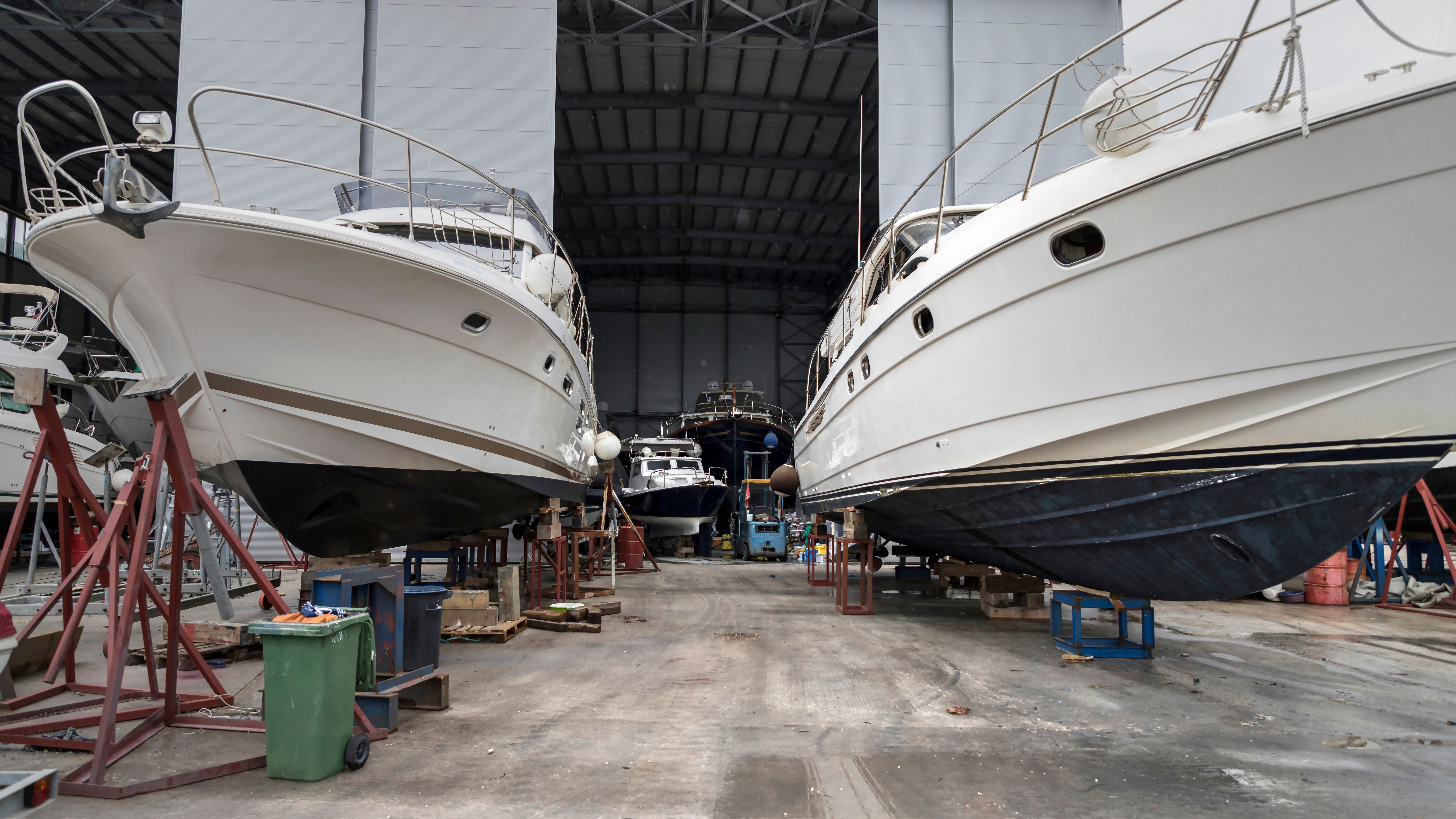
Marinas and boat storage facilities in the Charlotte area face a set of door maintenance challenges that most commercial properties don’t encounter. Proximity to water, exposure to humidity that stays elevated around the clock, salt or mineral content from lake water that settles on surfaces, and the heavy use demands of a storage facility that operates year-round in all weather conditions combine to create an environment where standard commercial door hardware deteriorates faster than most operators expect. At Garage Door and More, we work with marine storage and marina facilities across the Charlotte metro, and the service profile for these properties is distinct enough to cover directly.
Why Marina Environments Are Hard on Garage Door Hardware
Lake Norman, Mountain Island Lake, Lake Wylie, and the other impoundments in the greater Charlotte area all create localized microclimates around their shorelines. Humidity near the water surface stays higher than inland locations even on dry days, and spray, fog, and condensation deposit mineral content from the lake water on any exposed surface. This creates an accelerated corrosion environment compared to a standard commercial property even a few miles away from the water.
Marina facilities also tend to operate across a wide temperature range. Boat storage buildings hold vehicles that may not move for weeks during winter, then see intensive access periods during peak boating season. Doors cycle from nearly unused to heavily used in short windows, and the combination of infrequent use followed by heavy demand is its own wear pattern on hardware that hasn’t been kept maintained during quiet periods.
“We’ve seen springs on marina storage buildings that look years older than they are compared to the same spring in an inland warehouse. The constant moisture near the water just works on the metal faster. It’s not a maintenance failure by the facility operator; it’s an environmental reality that requires a different service interval than a standard commercial account.” — The Team at Garage Door and More
What Fails First in Marina Door Systems
The corrosion-accelerated environment at waterfront facilities creates a predictable sequence of component failures. Understanding this pattern helps marina operators prioritize inspections and maintenance investments correctly.
Common marina door component failures in order of typical occurrence:
- Spring corrosion and fatigue: Springs develop surface rust at coil contact points, which accelerates fatigue and shortens cycle life significantly compared to inland installations. Torsion springs in marina buildings should be inspected for rust penetration every six months rather than annually.
- Cable corrosion: Lift cables in high-humidity environments develop interior wire corrosion before the exterior surface shows obvious signs. Cables that look serviceable from the outside can have significant interior wire damage. Proactive replacement on a scheduled basis rather than waiting for visible failure is the right approach for waterfront facilities.
- Track and hardware rust: Track mounting hardware, hinge pivot points, and bottom bracket hardware all show accelerated rusting in waterfront environments. Rust at hinge pivots limits range of motion; rust at bottom bracket hardware creates a structural concern since these components are under cable tension.
- Bottom seal deterioration: Bottom seals in marina environments are exposed to standing water, wave splash during storm events, and biological growth that degrades rubber compounds faster than in dry environments. Annual seal replacement is appropriate for most waterfront door applications.
- Operator circuit board moisture damage: In facilities where the humidity stays very high and temperature swings cause condensation inside the operator housing, circuit board failures occur more frequently than in dry commercial environments. Sealed housing operators and occasional inspection of the housing interior are worth prioritizing.
Wide-Span Door Requirements for Boat Storage
Boat storage buildings present specific dimensional requirements that differ from standard commercial applications. Trailer-mounted boats require wide and often tall openings to clear the beam of the hull and the height of the boat on its trailer. Getting these dimensions right at installation is critical because modifying a structural rough opening after construction is expensive.
Door opening dimension considerations for boat storage facilities:
| Storage Application | Typical Beam Width | Recommended Door Width | Recommended Door Height |
|---|---|---|---|
| Small boat / PWC storage | 8 – 10 ft on trailer | 12 ft minimum | 10 ft minimum |
| Mid-size powerboat (20–28 ft) | 10 – 12 ft on trailer | 14 ft minimum | 12 ft minimum |
| Large powerboat / sailboat (28–40 ft) | 12 – 14 ft on trailer | 16 ft minimum | 14 ft minimum |
| Commercial / charter vessel | 14 ft+ | Custom specification required | Custom specification required |
For facilities storing boats with towers, T-tops, or elevated antennas, the height clearance needs additional consideration since these structures can significantly exceed the hull’s waterline profile. It’s worth measuring the tallest vessel expected to use the building with its accessories in place before finalizing door height specifications.
What Door Types Work Best for Marina Applications?
The corrosion demands of a waterfront environment influence door type selection as much as the dimensional requirements.
Door type recommendations for Charlotte-area marina facilities:
- Commercial sectional doors with galvanized hardware: Sectional overhead doors remain the most practical option for most marina storage buildings, combining reliable operation with good weather sealing when properly specified. The key in waterfront environments is specifying galvanized or stainless hardware throughout rather than standard painted steel, which will rust through significantly faster near the water. Our commercial overhead door options include configurations appropriate for this application.
- Rolling steel doors for tight-clearance facilities: Marina facilities where ceiling space is limited or where the opening dimensions require a very compact door mechanism benefit from rolling steel doors that coil into a compact drum above the opening. Our roll-up sheet door line covers this application.
- Insulated doors for climate-sensitive storage: Facilities offering climate-controlled boat storage, increasingly popular for protecting boat electronics, upholstery, and gelcoat finishes from humidity damage, require insulated door construction with tight perimeter sealing. The Energy Series with Intellicore delivers the insulation values needed for these applications.
Repair vs. Replace: Making the Right Call on Aging Marina Doors
Marina facility operators sometimes hold on to aging door systems longer than the economics justify because replacement feels like a large capital expense. But a door system that requires frequent service calls, has hardware that’s extensively corroded, or fails at critical times during peak boating season has a real cost that accumulates in service fees and lost tenant confidence.
When assessing whether to repair an aging marina door or replace it, the relevant factors are the age and condition of the spring system, the condition of the cables and hardware, the current door’s insulation performance if the facility offers climate-controlled storage, and whether the current door meets the dimensional requirements of the boats currently using the facility. If any of these factors have become problematic, replacement delivers better long-term value than continued repair investment on a compromised system.
“We give marina clients a straight assessment. If the door’s spring and cable system has significant corrosion and the hardware is showing advanced rust, putting a new bottom seal on it and calling it serviced doesn’t actually address the facility’s situation. We’d rather have that honest conversation than take the service fee and come back in six months for the same door.” — The Team at Garage Door and More
Recommended Service Intervals for Charlotte-Area Marina Doors
Service frequency recommendations for waterfront storage facilities near Charlotte:
| Service Task | Recommended Frequency | Notes |
|---|---|---|
| Full professional inspection | Every 6 months | Spring, cable, hardware, and operator assessment |
| Spring and cable lubrication | Every 6 months | More frequent than inland commercial standard |
| Bottom seal replacement | Annually | Waterfront exposure degrades seals faster |
| Hardware rust treatment and replacement | As needed at each inspection | Address before rust penetrates to structural components |
| Spring replacement (proactive) | Every 5 – 7 years | Shorter interval than inland due to accelerated corrosion |
| Cable replacement (proactive) | Every 4 – 6 years | Interior corrosion not visible without replacement |
Our Team Serves Charlotte-Area Marina and Boat Storage Facilities
Marina and boat storage door work requires understanding the specific demands that waterfront environments place on hardware, and planning service intervals and specifications accordingly. Our team handles commercial door repair and installation across the Charlotte metro area including properties near Lake Norman, Lake Wylie, and Mountain Island Lake.
If your marina or boat storage facility has door issues that need attention, or if you’re planning new door installations for a waterfront property, request an estimate from Garage Door and More. We’ll assess your specific facility, recommend the right door specifications and service schedule for your waterfront environment, and keep your boats and equipment protected year-round.